A new zoning amendment facilitates housing construction on properties owned by faith-based institutions.


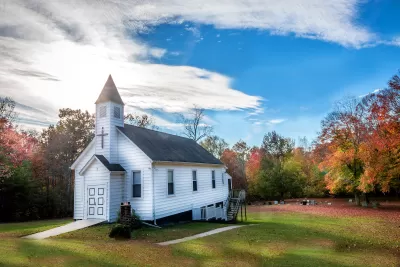
The county council in Montgomery County, Maryland approved a zoning reform measure that makes it easier for churches and other places of worship to build housing on property they own, a movement colloquially known as ‘Yes in God’s Backyard.’
According to a press release from the county, “Zoning Text Amendment (ZTA) 24-01, also known as the Facilitating Affordable Inclusive Transformational Housing (FAITH) ZTA, will remove barriers to the creation of affordable housing and provide reasonable flexibility in the development standards for multi-unit and townhouse living on properties associated with faith and educational institutions.”
Qualifying projects will be required to meet one of five affordability thresholds. According to Pastor Will Ed Green, a supporter of the measure, the ZTA “opens up creative opportunities for those communities to address challenges like aging infrastructure, accessibility challenges, and environmentally unsafe buildings so that these vital services we are already providing our community aren't interrupted.”
Read the full story: Council Passes Zoning Measure to Allow Affordable Housing Adjacent to Places of Worship
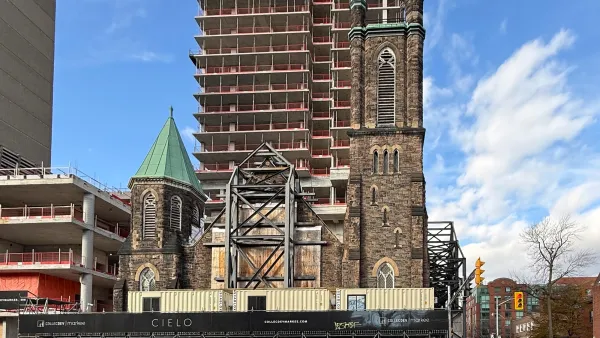
Five simple zoning changes that any city can make to increase housing affordability
Zoning for more affordable housing is not rocket science, says Donald Elliot, author of "An Even Better Way to Zone." Here’s his five-step guide to getting started.

The Matchmakers Bringing Churches and Developers Together
Several groups are serving as mediators for faith-based development, helping congregations access funding, navigate long-term development processes, and avoid developer exploitation.
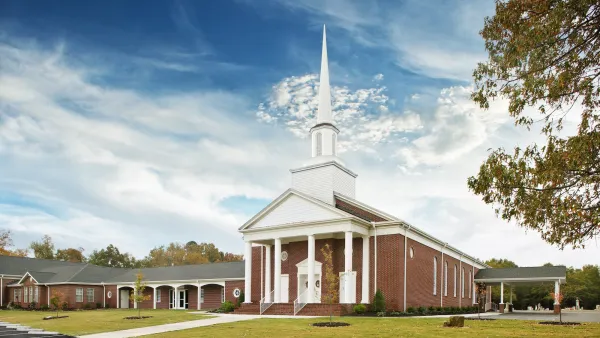
Virginia Assembly Passes ‘Yes in God’s Backyard’ Bill
The law would require 60% affordability and ensure that projects have access to water and sewage lines.

Planetizen Federal Action Tracker
A weekly monitor of how Trump’s orders and actions are impacting planners and planning in America.

California plans to bury El Niño’s downpour
If the state plays its cards right, it may be able to store a billion acre-feet of El Niño’s water in aquifers.

Desperate measures: Advocates weigh draining Lake Powell to fill Colorado River
Draining the reservoir could reduce evaporation losses by a couple hundred thousand acre-feet.

In Texas, data centers are swallowing promised parkland
Residents who moved to Taylor, Texas for a rural community now have to contend with three data centers in their backyard.

How a Chicago-sized wind farm beat the odds and powered on
The project spanned five presidential administrations and a standoff with a U.S. military base.

MTA gives itself 30 days to transform pit into basketball court
The site has been under construction since 2022; the city originally estimated it would finish the court in 2024.

FREE Course: Walkable City 1: Why Walkability?
After describing his path towards focusing on walkability as the essence of good planning, Jeff Speck marches through his five principal reasons for making more walkable places.
Reinventing Malls: Planning Alchemy—Turning Gray Fields Into Gold
The course focuses on the opportunities and imperatives that shape reinvention of mall sites.

City of Rosemead
Rutgers University, Edward J. Bloustein School of Planning and Public Policy
One Hundred Miles
Hunter College, City University of New York (CUNY)
The Architects Foundation
University of Cincinnati Online
City of Cambridge
Montrose County
The Pocatello Development Authority