An adjustment to federal pollution limits will require a greater share of low-carbon vehicles, but the rule also gives automakers some flexibility in deploying electric and hybrid cars.


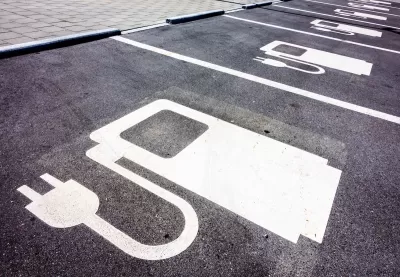
A new federal rule is “expected to drive a significant shift from gas-powered to electric vehicle (EV) sales,” according to a report by Rachel Frazin in The Hill.
While not explicitly mandating any particular fuel types, the rule tightens pollution standards, making them hard to achieve without a significant shift toward electric or other low-carbon vehicles. “Chris Harto, a senior policy analyst for transportation and energy at Consumer Reports, noted that since the rule is not a mandate, automakers will have at least some wiggle room to find the mix of technologies that best matches up with consumer demand.”
The rule could lead to a greater adoption of hybrid vehicles over all-electric cars. John Bozzella, president and CEO of Alliance for Automotive Innovation, an auto industry group, said in a press release, “These adjusted EV targets — still a stretch goal — should give the market and supply chains a chance to catch up. It buys some time for more public charging to come online, and the industrial incentives and policies of the Inflation Reduction Act to do their thing.”
FULL STORY: What you should know about the new electric vehicle rule

'Charging as a Service' Could Accelerate Decarbonization
The proliferation of private EV charging services, coupled with federal investment in charging stations, has the potential to reduce 'charging anxiety' and encourage a faster switch to electric vehicles.
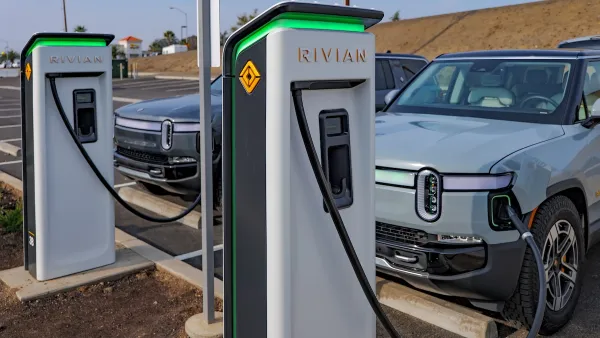
US Senate Reverses California EV Mandate
The state planned to phase out the sale of gas-powered cars by 2035, a goal some carmakers deemed impossible to meet.
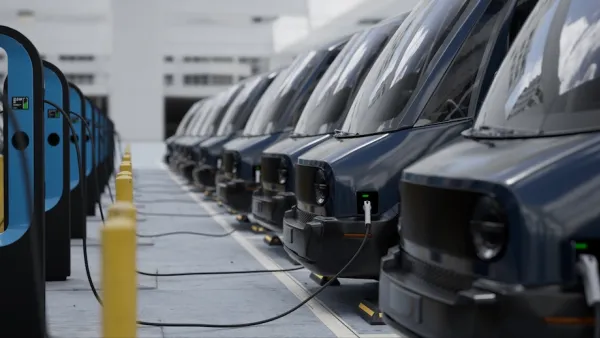
USDOT Unveils Strategies to Achieve Near-Zero Transportation Emissions
Three key strategies — reducing travel distances, increasing energy-efficient travel modes, and transitioning to zero-emission vehicles and fuels — are recommended to meet national climate goals under the Paris Agreement.

The state-sanctioned urbicide of Austin
People don’t kill cities. Freeways do.

US to reduce Colorado River water deliveries to Mexico
A new Colorado Treaty amendment reduces Mexico’s Colorado River water allocation by 250,000 acre feet.

New Jersey’s second-largest city bans standalone data centers
Jersey City will continue to allow co-location facilities, such as those meant for research institutions that store their own data.

Amtrak not solely to blame for New Jersey commuter rail's unreliability, report finds
A new study from the Garden State Initiative found that NJ Transit’s budget grew 20% across a 4 year period, but reliability declined significantly over the same period.

EPA erases limits on planet-warming pollution from power plants
Under Monday’s plan, power plants would still have some limits on how much mercury, arsenic and other contaminants they can emit.

Phoenix announces new on-demand transit service, more frequent RAPID buses
Both new services will launch in October, and are part of Phoenix's Project Effective Access Solutions for Easing Congestion.

FREE Course: Walkable City 1: Why Walkability?
After describing his path towards focusing on walkability as the essence of good planning, Jeff Speck marches through his five principal reasons for making more walkable places.
Reinventing Malls: Planning Alchemy—Turning Gray Fields Into Gold
The course focuses on the opportunities and imperatives that shape reinvention of mall sites.

Eagle County Government
Harvard University Graduate School of Design
Nashville Planning Department
The Architects Foundation
University of Cincinnati Online
The Pocatello Development Authority
The Urban Renewal Agency of the City of Pocatello
Journal of the American Planning Association