Cooperative ownership can provide housing stability for low-income residents and protect them from land rent spikes and poor management.


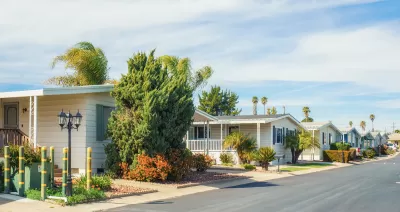
In an article for the Daily Yonder, Lia Kvatum highlights the benefits of resident-owned mobile home parks, which provide added housing security for low-income households.
Resident-owned parks are one solution to a growing affordability crisis in the sector, where institutional investors have been buying up mobile home parks and raising land rents, forcing former residents out. As Kvatum explains, “In a resident-owned community, residents own and manage the property cooperatively. Residents get a say in setting rent and investing in upkeep and improvements.”
Mobile home parks, while often overlooked, are an important source of affordable housing. “A 2023 article in the Journal of the American Planning Association found that ‘more Americans live in manufactured housing than in public and federally subsidized rental housing combined.’”
To date, nineteen states have legislation that offers residents some protection when a manufactured home park goes up for sale, but those don’t include the states with the highest number of mobile home parks. “According to Carolyn Carter at the National Consumer Law Center, only eight states have “strong” protections for residents when a community is sold.”
Meanwhile, the loans available to manufactured housing residents are more like car loans than home mortgages, meaning rates are typically higher. “And because in most states they are not considered houses but vehicles, owners don’t qualify for home equity loans for any improvements they make.”
FULL STORY: Building Stability Through Resident-Owned Mobile Home Parks

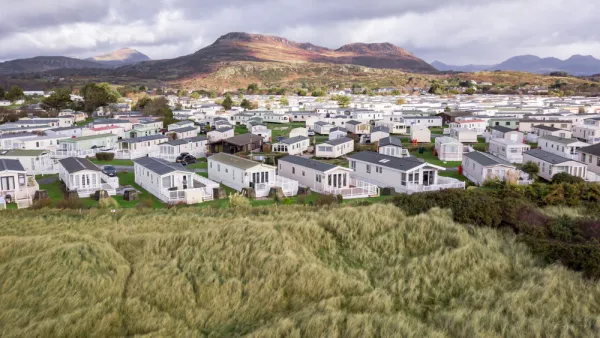
States Move to Protect Mobile Home Park Residents
Making it easier for mobile home park residents to collectively purchase the land they live on can protect their housing affordability for the long term.
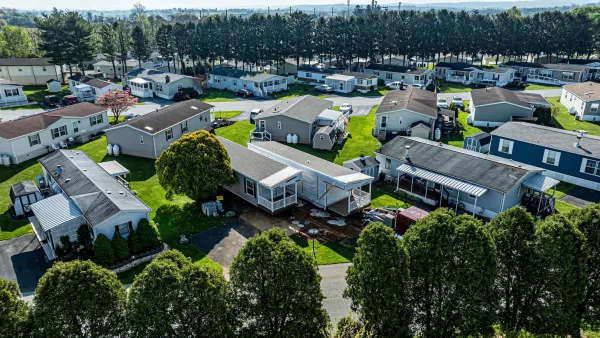
Should the public sector buy mobile home parks?
One writer argues that the crisis facing the nation's mobile home owners warrants public intervention.
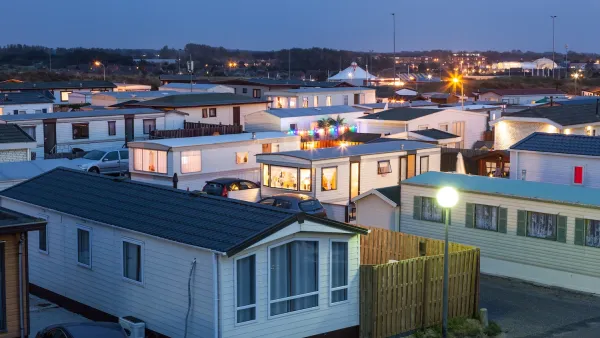
Poor Conditions in Mobile Home Parks Put Residents at Risk
Failing infrastructure, poor water and air quality, and predatory owners endanger the health of manufactured home residents, many of whom are elderly and low-income.

Planetizen Federal Action Tracker
A weekly monitor of how Trump’s orders and actions are impacting planners and planning in America.

The state-sanctioned urbicide of Austin
People don’t kill cities. Freeways do.

US to reduce Colorado River water deliveries to Mexico
A new Colorado Treaty amendment reduces Mexico’s Colorado River water allocation by 250,000 acre feet.

Mamdani overhauls NYC's Vision Zero plan with 100 new policy goals
The overhaul aims to reduce traffic deaths and make streets safer for pedestrians, cyclists and drivers through lower speed limits, new safety infrastructure and more.

Amtrak not solely to blame for New Jersey commuter rail's unreliability, report finds
A new study from the Garden State Initiative found that NJ Transit’s budget grew 20% across a 4 year period, but reliability declined significantly over the same period.

EPA erases limits on planet-warming pollution from power plants
Under Monday’s plan, power plants would still have some limits on how much mercury, arsenic and other contaminants they can emit.

FREE Course: Walkable City 1: Why Walkability?
After describing his path towards focusing on walkability as the essence of good planning, Jeff Speck marches through his five principal reasons for making more walkable places.
Reinventing Malls: Planning Alchemy—Turning Gray Fields Into Gold
The course focuses on the opportunities and imperatives that shape reinvention of mall sites.

Eagle County Government
Harvard University Graduate School of Design
Nashville Planning Department
The Architects Foundation
University of Cincinnati Online
The Pocatello Development Authority
The Urban Renewal Agency of the City of Pocatello
Journal of the American Planning Association