Newly announced federal funding will help resolve the decades’ long sewer crisis faced by rural majority-Black communities in Alabama and Mississippi.


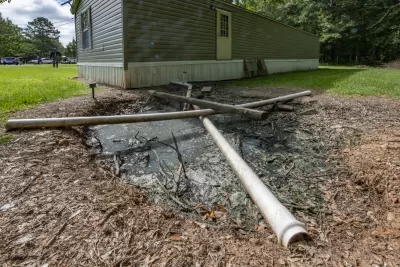
This week the Federal Environmental Protection Agency (EPA) announced funding that will help address years of neglect of wastewater infrastructure in the Black Belt, “a crescent of rural, majority-Black communities stretching from eastern Texas to southern Virginia,” reports Willy Blackmore in an article for Word in Black.
The funding, part of the Biden Administration's Closing the Water Access Gap, will go toward creating or upgrading sewers, drainage, and septic systems in 150 rural U.S. communities, including several mostly-Black enclaves in Alabama and Mississippi. It represents an expansion of a successful pilot program in Lowndes County, Alabama — “a majority-Black, low-income community where residents lacked access to the kind of municipal water infrastructure that most people take for granted,” Blackmore writes.
Lack of investment in water and sewer systems has been a critical issue in the Black Belt for decades, even prompting a federal civil rights investigation. A Columbia University study estimates that 90 percent of septic systems in Alabama’s Black Belt are functioning poorly or not at all, largely because of the region’s heavy poor-draining clay soil, causing waste to back up into houses during heavy rains. According to an article in Southern Science, an estimated 50 percent of homes in that region have raw sewage on the ground due to inadequate or failing treatment systems.
“In expanding the program to 150 additional communities, we are working to restore dignity and opportunity to underserved communities nationwide,” Radhika Fox, the EPA’s assistant administrator for water, said in a statement.
Read the full story: Feds Are Finally Taking Action on Alabama’s Black Belt Sewer Crisis

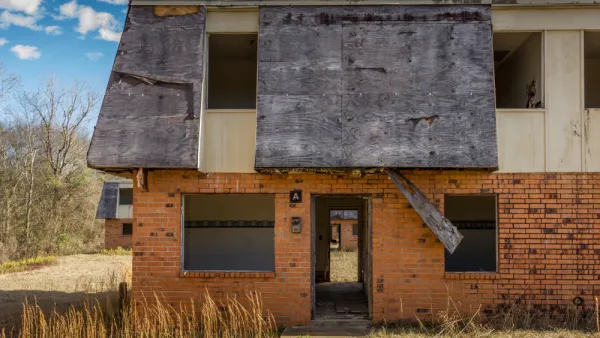
The Legacy of Structural Poverty in Alabama
In rural Alabama, a long history of racial inequality and poverty has left people struggling to survive in uninhabitable housing.
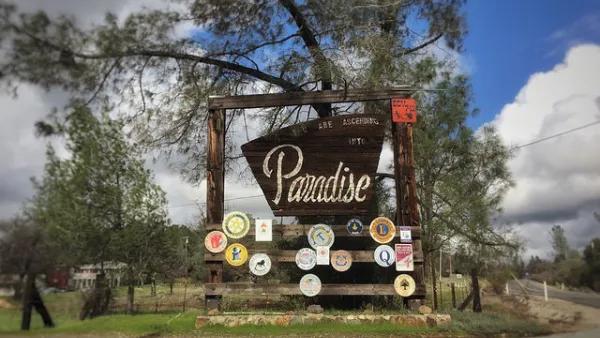
Rebuilding Paradise: Time to Consider Sewers
Paradise is the largest incorporated city west of the Mississippi River lacking a public sewer system. The town of of 27,000 relies on septic systems, now potentially damaged. Without sewers, multi-family housing construction becomes more difficult.
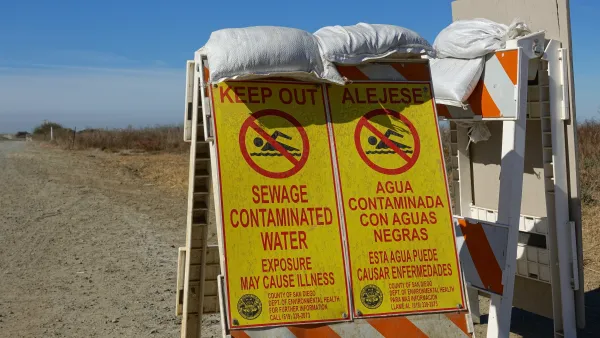
San Diego County to build treatment plant for Tijuana River sewage pollution crisis
The river has carried millions of gallons of untreated sewage into San Diego’s South Bay region.

Planetizen Federal Action Tracker
A weekly monitor of how Trump’s orders and actions are impacting planners and planning in America.

Amtrak, CN end decades-long dispute with eight-year agreement
The new operating agreement establishes an updated framework for the companies to work together, including processes to resolve disputes.

Judges permit Denver to divert 77,000 acre feet from the Colorado River for reservoir expansion
Overuse and climate change have caused the Colorado River’s water levels to plummet.

NYC DOT wants faster, more permanent street upgrades
The city is examining ways to build more concrete infrastructure without getting entangled in 'decades-long' projects.

'Something we’ve never seen before:' rising utility rates could strain city finances nationwide
Data centers, climate change and other factors have caused utility rates in the United States to increase by 38% since 2020.

Trump to overrule local leaders, lease millions of acres of America’s Pacific Island territories’ seafloors to mining companies
International law says that the Indigenous people of America’s territories have a right to prior and informed consent regarding projects that impact their countries.

FREE Course: Walkable City 1: Why Walkability?
After describing his path towards focusing on walkability as the essence of good planning, Jeff Speck marches through his five principal reasons for making more walkable places.
Reinventing Malls: Planning Alchemy—Turning Gray Fields Into Gold
The course focuses on the opportunities and imperatives that shape reinvention of mall sites.

Harvard University Graduate School of Design
KFH Group Inc.
Greater Baltimore Committee
The Architects Foundation
University of Cincinnati Online
The Pocatello Development Authority
The Urban Renewal Agency of the City of Pocatello