The proposal targets areas near transmission lines in 11 western and southwestern states.


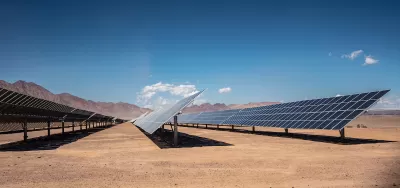
A proposed plan from the Interior Department identifies 22 million acres in Idaho, Montana, Oregon, Washington, Wyoming, and six other Western states that are suitable for solar energy development. “The draft plan published on Wednesday would update an Obama-era policy that established special zones for solar projects in six states - Arizona, California, Colorado, Nevada, New Mexico and Utah,” notes a Reuters article
The proposal “is focused on lands within 10 miles of existing or planned transmission lines because those areas are easier to develop, Interior said,” and is designed to “facilitate faster and easier responsible permitting in priority areas and improve consistency in processing rights of way for utility-scale solar projects,” according to Interior acting deputy secretary Laura Daniel-Davis.
The plan excludes 126 million acres to protect sensitive wildlife habitats, cultural resources, and recreation areas.
Read the full story: US unveils solar energy plan for western public lands
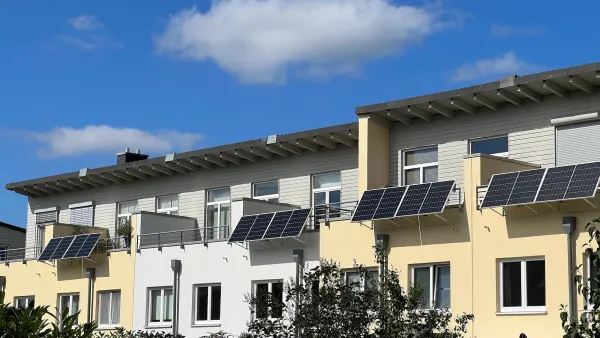
28 States and DC Could Legalize ‘Balcony Solar’
Plug-in solar panels, which are becoming popular across Europe, live in a regulatory gray area in the United States.
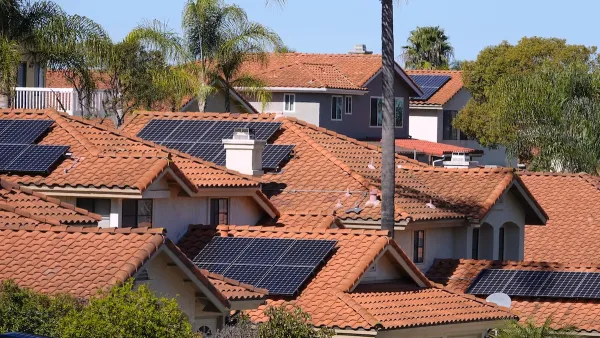
California Leads in Solar Rooftops
A combination of state and local incentives and building code mandates has helped California far outpace other states in residential rooftop solar permits.

Rooftop Solar on Mexico City Market to Power 300 Transit Buses
A solar project atop a massive food market will provide electricity to Mexico City's public transit buses.

Planetizen Federal Action Tracker
A weekly monitor of how Trump’s orders and actions are impacting planners and planning in America.

California plans to bury El Niño’s downpour
If the state plays its cards right, it may be able to store a billion acre-feet of El Niño’s water in aquifers.

Desperate measures: Advocates weigh draining Lake Powell to fill Colorado River
Draining the reservoir could reduce evaporation losses by a couple hundred thousand acre-feet.

US buildings threatened, destroyed by fires set to triple by 2060
Researchers found a high fire risk for socioeconomically vulnerable neighborhoods in the American West.

LA residents may be allowed to paint their own crosswalks
Councilwoman Katy Yaroslavsky put out a motion instructing the Los Angeles Department of Public Transportation to study the feasibility of allowing volunteers to paint crosswalks.

Dallas moves to overhaul its zoning code
The city's zoning reform will allow more multi-family and mixed-use developments.

FREE Course: Walkable City 1: Why Walkability?
After describing his path towards focusing on walkability as the essence of good planning, Jeff Speck marches through his five principal reasons for making more walkable places.
Reinventing Malls: Planning Alchemy—Turning Gray Fields Into Gold
The course focuses on the opportunities and imperatives that shape reinvention of mall sites.

City of Rosemead
Rutgers University, Edward J. Bloustein School of Planning and Public Policy
One Hundred Miles
Hunter College, City University of New York (CUNY)
The Architects Foundation
University of Cincinnati Online
City of Cambridge
Montrose County
The Pocatello Development Authority