Minnesota’s on-demand microtransit service is helping connect residents to fixed-route service and daily needs.


Some transit services that are including on-demand services are seeing bigger increases in ridership, according to an article in the Minnesota Reformer, as post-pandemic travel patterns shift away from the typical 9-to-5 commutes.
In Minnesota, the Minnesota Valley Transit’s Connect service “is so popular that it’s having trouble keeping up with demand, even as the Legislature allocated over $9 million last year to build out Connect and similar systems statewide.”
Unlike other dial-a-ride services, Connect and other microtransit options offer service within an hour or less. It also lets passengers board without a reservation when the bus stops to pick up someone else.
Microtransit options can work well in less-dense areas and suburbs where few other transit options are available and where ridership is sparse. However, the per-mile cost of these services can be prohibitive to some agencies and, some have argued, does not scale well. For example, “To manage demand, MVTA only allows riders to book rides up to three hours ahead of time, while also cutting some regular bus service in September to ensure they have enough drivers to provide the service in their existing areas.”
FULL STORY: Local transit agencies mimicking Uber and Lyft are seeing big ridership gains

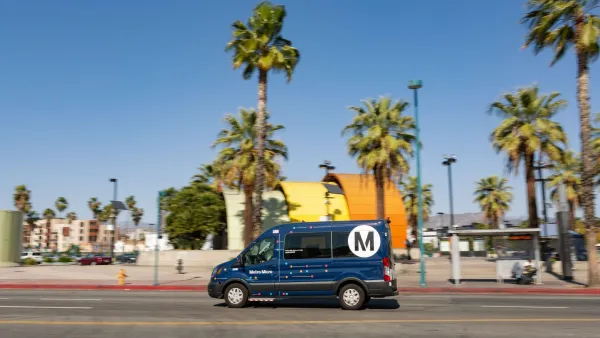
It's a Bus! It's a Van! It's… Microtransit?
Microtransit is in vogue. Cultivating a strong understanding for what it can and can't do will help prevent you from getting rizzed up by this charismatic mode of transportation.
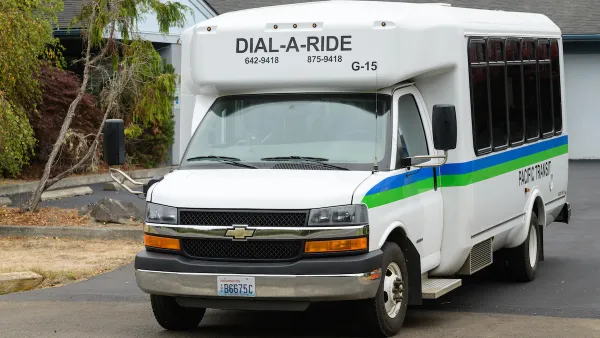
Opinion: Microtransit Isn’t the Answer to Transit Woes
On-demand services can’t scale successfully without massive government subsidies, and could obscure the impacts of car-centric sprawl.

West Memphis to launch new transit system
The city across the Mississippi River from Memphis, Tennessee will soon begin service on its own, on-demand transit system.

The state-sanctioned urbicide of Austin
People don’t kill cities. Freeways do.

US to reduce Colorado River water deliveries to Mexico
A new Colorado Treaty amendment reduces Mexico’s Colorado River water allocation by 250,000 acre feet.

New Jersey’s second-largest city bans standalone data centers
Jersey City will continue to allow co-location facilities, such as those meant for research institutions that store their own data.

Amtrak not solely to blame for New Jersey commuter rail's unreliability, report finds
A new study from the Garden State Initiative found that NJ Transit’s budget grew 20% across a 4 year period, but reliability declined significantly over the same period.

EPA erases limits on planet-warming pollution from power plants
Under Monday’s plan, power plants would still have some limits on how much mercury, arsenic and other contaminants they can emit.

Phoenix announces new on-demand transit service, more frequent RAPID buses
Both new services will launch in October, and are part of Phoenix's Project Effective Access Solutions for Easing Congestion.

FREE Course: Walkable City 1: Why Walkability?
After describing his path towards focusing on walkability as the essence of good planning, Jeff Speck marches through his five principal reasons for making more walkable places.
Reinventing Malls: Planning Alchemy—Turning Gray Fields Into Gold
The course focuses on the opportunities and imperatives that shape reinvention of mall sites.


Eagle County Government
Harvard University Graduate School of Design
Nashville Planning Department
The Architects Foundation
University of Cincinnati Online
The Pocatello Development Authority
The Urban Renewal Agency of the City of Pocatello
Journal of the American Planning Association