Explore the trajectory of federal investment in green city projects, focusing on sustainable infrastructure, renewable energy, and eco-friendly policies.



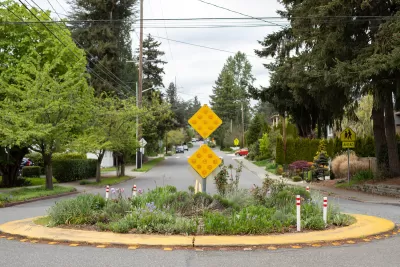
Green city initiatives make cities more sustainable by using eco-friendly tools like energy efficiency, waste management, and open spaces. These practices are growing, focusing on sustainable urban development.
However, cities often need more funds to embrace these efforts fully. Federal funding is vital to boost and ensure widespread adoption, creating eco-friendly and resilient urban areas.
Government programs and policies
These government initiatives highlight a commitment to green city development, supporting eco-friendly urban planning and sustainable transportation:
Environmental Protection Agency's (EPA) Smart Growth Program
This program promotes sustainable urban planning and emphasizes environmentally conscious development strategies. It encourages compact, walkable communities, reducing urban sprawl.
Portland, Oregon, implemented smart growth policies, leading to increased public transit use and a vibrant city center. Currently, 51 percent of Portland's waterproof surfaces are managed by green stormwater infrastructure.
Department of Transportation's (DOT) Transportation Investments Generating Economic Recovery (TIGER) Program
This program funds transportation projects for economic growth by focusing on resilient and sustainable transportation systems. The TIGER-funded Indianapolis Cultural Trail improved mobility, boosted economic activity, and promoted sustainable transportation.
The importance of green infrastructure
Green infrastructure, such as parks and open spaces, acts as a natural buffer against environmental challenges like floods and extreme weather events. President Biden signed the $1.2 trillion Infrastructure Investment and Jobs Act (IIJA) into law, allocating $550 billion over the next five years for U.S. infrastructure.
The focus is improving roads, bridges, public transportation, and water systems. The IIJA prioritizes funding for climate mitigation, social equity, and environmental justice. Incorporating green elements helps preserve biodiversity within urban areas, promoting a healthier ecosystem and supporting various plant and animal species.
Trees and green roofs absorb carbon dioxide, mitigating the urban heat island effect and helping combat climate change, creating a more sustainable urban environment. Healthy wetlands and forests act as natural sponges, absorbing and storing water to recharge groundwater supplies. This approach supports long-term sustainability in the United States and provides over 68,000 communities with filtered drinking water.
Green infrastructure aids in managing stormwater, reducing runoff, and preventing flooding. This sustainable approach to water management enhances a city's adaptability to changing climate patterns.
Innovative building lighting systems automatically adapt to occupancy and natural light, reducing energy use and expenses. They're also remotely controllable and offer convenient customization options. Access to green spaces improves city dwellers' physical and mental well-being to create a more livable and enjoyable urban development.
Funding opportunities for green infrastructure
These federal funding opportunities provide financial support for cities and communities looking to implement green infrastructure projects, promoting sustainability, environmental resilience, and improved urban living conditions:
- EPA's Clean Water State Revolving Fund (CWSRF): Supports infrastructure projects emphasizing water quality improvement. Local governments can apply for low-interest loans and grants to fund projects like green stormwater management systems.
- HUD's Community Development Block Grant (CDBG) Program: Addresses community development needs, including infrastructure projects. Cities can apply for grants to fund various initiatives, including green infrastructure projects and enhancing community sustainability.
- Transportation Infrastructure Finance and Innovation Act (TIFIA): Targets transportation projects incorporating green elements. State and local governments and private entities can apply for low-interest loans to fund sustainable transportation infrastructure projects.
- USDA Rural Development Water and Environmental Program: Supports water and waste management projects in rural areas. Rural communities can access loans, grants, and guarantees to implement green infrastructure solutions for sustainable water management.
Successful green infrastructure projects
Here are some case studies demonstrating the successful implementation of green infrastructure projects supported by federal programs:
- Philadelphia Green City, Clean Waters Program: The program was funded by EPA's CWSRF. Philadelphia implemented green stormwater management practices, including rain gardens and permeable pavements, reducing stormwater runoff and improving water quality. Hundreds of structures and buildings, along with 10,000 acres of public common space, are managed by Philadelphia Parks and Recreation.
- Portland's Sustainable Stormwater Management: Portland utilized federal funding like EPA's CWSRF and HUD's CDBG program to implement green infrastructure projects such as eco-roofs and streets. These initiatives managed stormwater effectively and enhanced the city's overall sustainability.
- Lost Angeles River Revitalization: HUD's CDBG's federal funding supported the revitalization of the Los Angeles River, integrating green spaces, bike paths, and recreational areas.
Implementing green city initiatives
Federal funding for green city projects is looking promising. Governments are increasingly recognizing the importance of supporting eco-friendly practices. Continued investment in green infrastructure, renewable energy, and adaptive policies is essential for creating vibrant, inclusive, resilient cities.

Federal Dollars Could Pave the Way for Greener, More Equitable Infrastructure
Houston's director of Transportation and Drainage Operations wants to see more sustainable development in the city that has historically depended on freeways as its critical infrastructure.

DC Installing Public, Curbside EV Chargers in All Wards
DDOT hopes the pilot program will make EV charging easier and more accessible for residents in denser neighborhoods and apartment dwellers.

How the ‘Big Beautiful Bill’ Impacts Transportation
Five ways the bill negatively impacts U.S. transportation policy.

Planetizen Federal Action Tracker
A weekly monitor of how Trump’s orders and actions are impacting planners and planning in America.

Amtrak, CN end decades-long dispute with eight-year agreement
The new operating agreement establishes an updated framework for the companies to work together, including processes to resolve disputes.

Colorado’s Largest Data Center Could Rise Next to Homes — Without a Public Hearing
The proposed campus would consume 11 times the power of Denver International Airport; as it has across the country, opposition mounts.

Federal judge strikes down DOE orders to keep Michigan power plant open past retirement date
The decision is one of the first successful legal challenges to President Trump’s “national energy emergency” ruling, which instructs federal agencies to use emergency powers to increase fossil fuel production.

'This is going to be painful:’ Virginia stares down $1.7 billion funding gap for highway maintenance
The state may address the deficit by shifting $290 million from its construction budget to maintenance projects.
Judges permit Denver to divert 77,000 acre feet from the Colorado River for reservoir expansion
Overuse and climate change have caused the Colorado River’s water levels to plummet.

FREE Course: Walkable City 1: Why Walkability?
After describing his path towards focusing on walkability as the essence of good planning, Jeff Speck marches through his five principal reasons for making more walkable places.
Reinventing Malls: Planning Alchemy—Turning Gray Fields Into Gold
The course focuses on the opportunities and imperatives that shape reinvention of mall sites.

KFH Group Inc.
Greater Baltimore Committee
Eagle County Government
The Architects Foundation
University of Cincinnati Online
The Pocatello Development Authority
The Urban Renewal Agency of the City of Pocatello

