It can often take months for unhoused residents to access supportive housing. When they do, conditions can be unbearable.


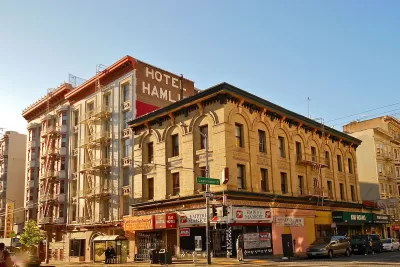
According to an SFist article by Joe Kukura, San Francisco has cut the vacancy rate in its single-room occupancy hotels (SROs), designed as supportive housing for formerly unhoused people, from 11.5 percent to 7.8 percent.
While poor building conditions are to blame for some vacancies—run-down units, vermin infestations, and high crime rates make some buildings unlivable—“the primary reason most of those units are sitting empty is paperwork — someone wants a unit, but the wheels of bureaucracy are still spinning to get them into it.”
An article in the San Francisco Chronicle adds, “In an investigative series called Broken Homes, the Chronicle found widespread disrepair and staffing shortages in many supportive-housing SROs, along with an alarming number of fatal drug overdoses. A lack of funding and oversight from HSH had allowed such problems to fester.” Now, the city is working to reduce wait times, make capital improvements, and bring the vacancy rate down further. The city’s Department of Homelessness and Supportive Housing (HSH) “recently embarked on a monthslong campaign to fill half of the 140 empty units in four of the most challenging buildings. The department is now trying to move people into other similarly underutilized properties,” with a goal of reducing vacancies to 7 percent or lower.
Read the full story: SF Finally Getting Somewhat Better at Filling Long-Vacant Supportive Housing Units

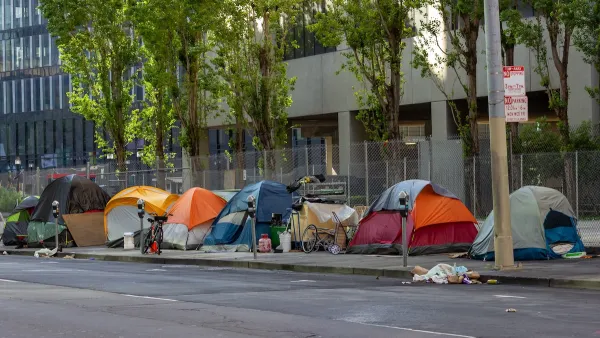
San Francisco Scrambles to Build Shelters Faster
Mayor Breed directed city officials to double its shelter expansion goal.

San Francisco Aims to Speed up Supportive Housing Placement
The city wants to expedite the process for getting people into available housing units.
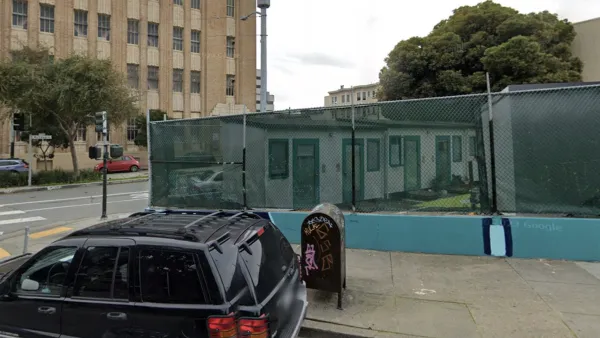
San Francisco Halts Tiny Home Project
Citing ‘absurd’ costs and community concerns, city supervisors are reevaluating a plan to build a ‘tiny home village’ for unhoused residents in the Mission District.

Planetizen Federal Action Tracker
A weekly monitor of how Trump’s orders and actions are impacting planners and planning in America.

Colorado’s Largest Data Center Could Rise Next to Homes — Without a Public Hearing
The proposed campus would consume 11 times the power of Denver International Airport; as it has across the country, opposition mounts.

US to reduce Colorado River water deliveries to Mexico
A new Colorado Treaty amendment reduces Mexico’s Colorado River water allocation by 250,000 acre feet.

'This is going to be painful:’ Virginia stares down $1.7 billion funding gap for highway maintenance
The state may address the deficit by shifting $290 million from its construction budget to maintenance projects.

Judges permit Denver to divert 77,000 acre feet from the Colorado River for reservoir expansion
Overuse and climate change have caused the Colorado River’s water levels to plummet.

Amtrak, CN end decades-long dispute with eight-year agreement
The new operating agreement establishes an updated framework for the companies to work together, including processes to resolve disputes.

FREE Course: Walkable City 1: Why Walkability?
After describing his path towards focusing on walkability as the essence of good planning, Jeff Speck marches through his five principal reasons for making more walkable places.
Reinventing Malls: Planning Alchemy—Turning Gray Fields Into Gold
The course focuses on the opportunities and imperatives that shape reinvention of mall sites.


KFH Group Inc.
Greater Baltimore Committee
Eagle County Government
The Architects Foundation
University of Cincinnati Online
The Pocatello Development Authority
The Urban Renewal Agency of the City of Pocatello