AI-powered permitting is accelerating solar deployments in cities across California, automating compliance checks and approvals for efficient and rapid solar project installations.



An article from Canary Media delves into the revolutionary impact of AI-powered permitting on expediting solar deployments in California. Particularly, a Stanford-led team has deployed its computational law technology to play a pivotal role in revolutionizing the permitting process for solar projects. By harnessing the power of artificial intelligence, regulatory checks are streamlined, resulting in swift approvals and accelerated solar installations. This technological innovation not only addresses bureaucratic challenges but also significantly enhances the overall efficiency of the permitting system.
In the context of California's commitment to clean energy, the integration of AI in permitting reflects a progressive step towards achieving renewable energy goals. These innovations in AI-powered solutions, as applied to planning and building, mitigate public confusion around regulatory complexities, eliminate friction at the counter, and ultimately facilitate a more rapid and seamless transition to sustainable energy practices in the state.
Read the full story: AI-powered permitting is speeding up solar deployments in California

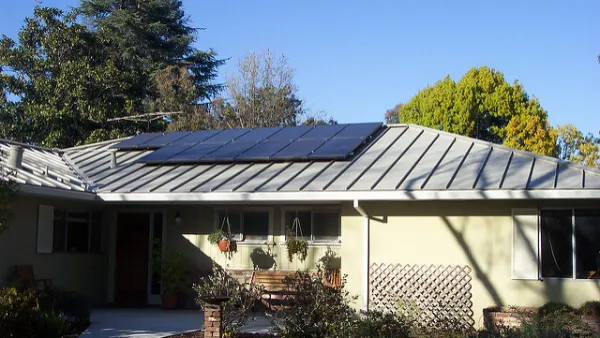
Details of the Golden State's Residential Solar Requirement
San Francisco Chronicle energy reporter David R. Baker sheds some light on the nation's first state building code requiring that solar panels be included in new home construction, adopted by the California Energy Commission on May 9.
New Guidelines to Streamline New Energy Storage Projects Adopted in New York City
The city of New York wants more capacity to store energy, so it's making the process of permitting energy storage projects easier to understand and follows.
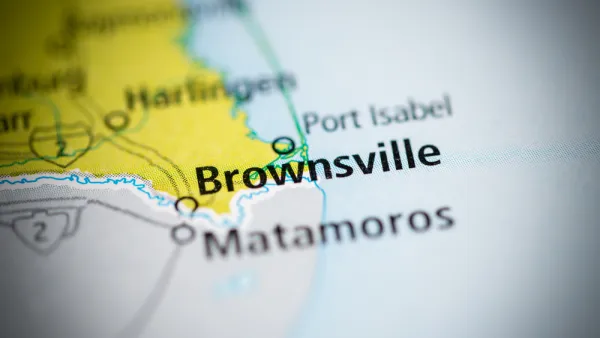
Border Town Removes Licensing Barrier to Encourage Solar
On the U.S.-Mexico border just west of the Gulf of Mexico, Brownsville looks to take advantage of its sunny territory.

Planetizen Federal Action Tracker
A weekly monitor of how Trump’s orders and actions are impacting planners and planning in America.

California plans to bury El Niño’s downpour
If the state plays its cards right, it may be able to store a billion acre-feet of El Niño’s water in aquifers.

Chicago breaks ground on $3 billion megadevelopment
The new neighborhood, titled Foundry Park, will one day host 3,700 residences.

Satanic Place Names
From streams and lakes to valleys and canyons, I mapped more than 1,000 places named after the Devil.

California High-Speed Rail Authority CEO resigns after $600,000 scandal
Under Ian Choudri, the authority used taxpayer dollars to fund first class flights and trips to nightclubs.

Want to study the Missouri River? Soon, you may need unanimous approval from 10 states
Legislation would require 10 governors’ permission to study or build projects moving water outside the basin.

FREE Course: Walkable City 1: Why Walkability?
After describing his path towards focusing on walkability as the essence of good planning, Jeff Speck marches through his five principal reasons for making more walkable places.
Reinventing Malls: Planning Alchemy—Turning Gray Fields Into Gold
The course focuses on the opportunities and imperatives that shape reinvention of mall sites.

City of Rosemead
Rutgers University, Edward J. Bloustein School of Planning and Public Policy
One Hundred Miles
Hunter College, City University of New York (CUNY)
The Architects Foundation
University of Cincinnati Online
City of Cambridge
Montrose County
The Pocatello Development Authority