Cooling mechanisms built into traditional architecture offer lessons for U.S. builders as heat waves grow more intense.


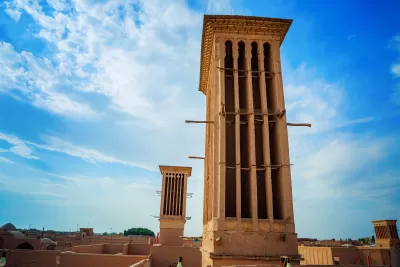
In an article in Time, Anna Gordon describes the centuries-old Middle Eastern architectural cooling techniques that could help U.S. households reduce their reliance on air conditioning, which “is believed to cause 1,950 million tons of CO2 emissions per year around the world, accounting for almost 4% of global carbon emissions.”
John Onyango, a professor at the University of Notre Dame School of Architecture, told Gordon, “Barajeels have passively cooled buildings for centuries. These wind towers can lower temperatures by up to 50 degrees Fahrenheit depending on how they are designed and the levels of wind.” These devices “work by funneling hot winds from outside to the lower floors of the building or even underground, where the air is cooled naturally. The cooled air is then released inside the building. So long as there is wind flowing, the barajeel works without ever requiring electricity.”
Other ways to improve air flow and cooling include chimney-like structures in tall buildings and high dome-shaped roofs. Gordon also points out the energy efficiency of many traditional Middle Eastern building materials. “Unlike the production process for steel or concrete, the production of stone and mud bricks does not lead to large amounts of carbon emissions.”
FULL STORY: The U.S. Should Ditch AC and Use Middle Eastern Techniques to Cool Its Cities


The Pacific Northwest is an unlikely front in the fight for cooling
A 2021 heat dome killed over 250 people in the Pacific Northwest, bringing into sharp focus the potential of extreme heat to have deadly consequences even in historically cool climates.
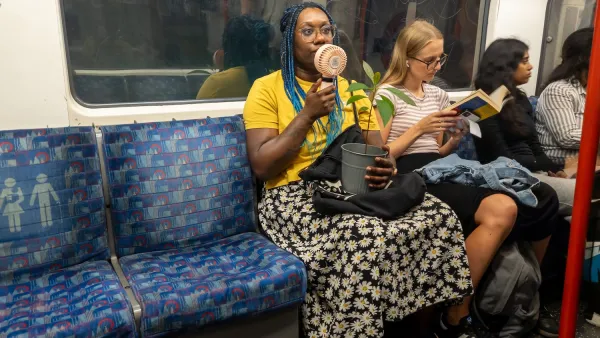
Temperatures in Subways Can Soar Well Above 100. What Some Cities are Doing About it.
Extreme heat can be even more dangerous in confined subway cars and stations.
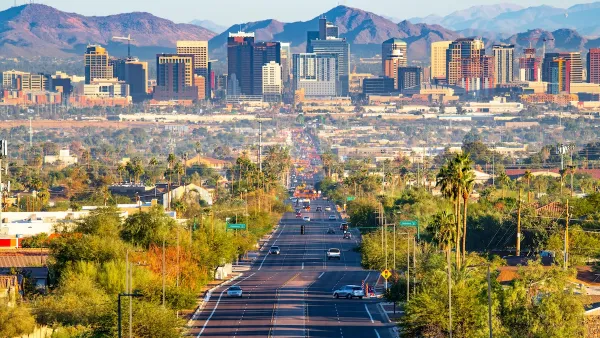
Phoenix Announces Shade Action Plan
The city has outlined 11 strategic priorities aimed at addressing the risks of extreme heat and protecting vulnerable residents from its impacts.

The state-sanctioned urbicide of Austin
People don’t kill cities. Freeways do.

US to reduce Colorado River water deliveries to Mexico
A new Colorado Treaty amendment reduces Mexico’s Colorado River water allocation by 250,000 acre feet.

New Jersey’s second-largest city bans standalone data centers
Jersey City will continue to allow co-location facilities, such as those meant for research institutions that store their own data.

Amtrak not solely to blame for New Jersey commuter rail's unreliability, report finds
A new study from the Garden State Initiative found that NJ Transit’s budget grew 20% across a 4 year period, but reliability declined significantly over the same period.

EPA erases limits on planet-warming pollution from power plants
Under Monday’s plan, power plants would still have some limits on how much mercury, arsenic and other contaminants they can emit.

Phoenix announces new on-demand transit service, more frequent RAPID buses
Both new services will launch in October, and are part of Phoenix's Project Effective Access Solutions for Easing Congestion.

FREE Course: Walkable City 1: Why Walkability?
After describing his path towards focusing on walkability as the essence of good planning, Jeff Speck marches through his five principal reasons for making more walkable places.
Reinventing Malls: Planning Alchemy—Turning Gray Fields Into Gold
The course focuses on the opportunities and imperatives that shape reinvention of mall sites.

Eagle County Government
Harvard University Graduate School of Design
Nashville Planning Department
The Architects Foundation
University of Cincinnati Online
The Pocatello Development Authority
The Urban Renewal Agency of the City of Pocatello
Journal of the American Planning Association