Data from smartphone apps and fitness trackers are helping planners to better understand park usage patterns and plan for new and improved parks.



There is no question that the field of parks and recreation has become increasingly data-driven. The Los Angeles County Department of Parks and Recreation (DPR), for example, recently began to use data from fitness trackers and smartphone apps, among many other data sources, to help identify and analyze regional and rural park and recreation needs.
In this article, park planner Clement Lau discusses the 2022 L.A. Countywide Parks Needs Assessment Plus (PNA+) and how data collected from fitness apps and mobile phones helped park planners better understand park access, use, and visitorship. In addition to smartphone data, planners also employed the latest digital tools to collect, analyze, and visualize community input as part of the PNA+.
Adopted by the L.A. County Board of Supervisors in December 2022, the PNA+ Final Report presents data, maps, analyses, public input, and recommended actions which support additional land conservation and restoration, transit to parks, and other strategies to meet local and regional recreation needs, especially in the most vulnerable communities.
To learn more, please read the source article.
FULL STORY: How Cellphone and Fitness App Data is Helping Create Equity in Public Parks

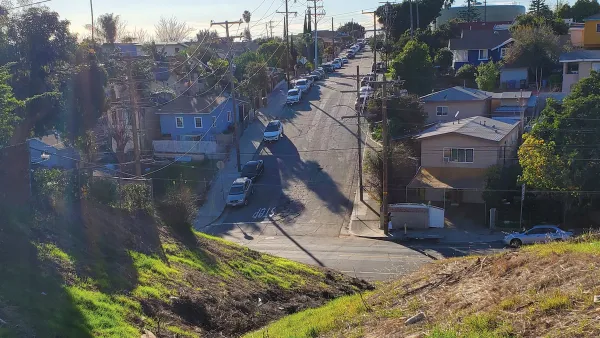
Envisioning a New Park in East Los Angeles
Los Angeles County is working towards transforming underutilized land into a vibrant pocket park in the City Terrace neighborhood of East LA.

New Park Coming to Chinatown in Los Angeles
A new half-acre park is taking shape on a previously undeveloped hillside property in Chinatown, one of the more densely populated and park-poor areas in L.A.
Monterey Park’s Blueprint for Equitable Parks
Monterey Park’s first-ever Parks System Master Plan offers a community-driven roadmap for creating more equitable, accessible, and vibrant public spaces.

Planetizen Federal Action Tracker
A weekly monitor of how Trump’s orders and actions are impacting planners and planning in America.

The state-sanctioned urbicide of Austin
People don’t kill cities. Freeways do.

US to reduce Colorado River water deliveries to Mexico
A new Colorado Treaty amendment reduces Mexico’s Colorado River water allocation by 250,000 acre feet.

5 New England states march closer to 800 megawatt wind energy project
Securing federal approval for the project may be complicated under the Trump administration, which has historically been hostile towards domestic wind power.

Baltimore to break ground on $50 million Transit Priority Project
The project will bring faster bus trips, safer streets and better bike connections to Baltimore.

Airbnb launches $250 million 'last-dollar financing' housing accelerator, makes first investment in Austin
The company will put $6.4 million towards affordable housing development in Texas’ capital.

FREE Course: Walkable City 1: Why Walkability?
After describing his path towards focusing on walkability as the essence of good planning, Jeff Speck marches through his five principal reasons for making more walkable places.
Reinventing Malls: Planning Alchemy—Turning Gray Fields Into Gold
The course focuses on the opportunities and imperatives that shape reinvention of mall sites.

Eagle County Government
Harvard University Graduate School of Design
Nashville Planning Department
The Architects Foundation
University of Cincinnati Online
The Pocatello Development Authority
The Urban Renewal Agency of the City of Pocatello
Journal of the American Planning Association