The city’s central business district is bustling with more activity than before the pandemic.


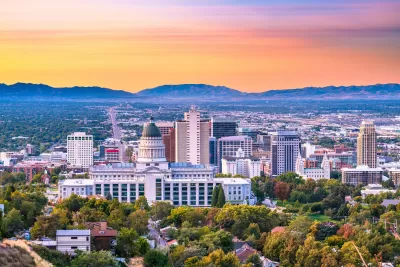
Based on an analysis of cell phone data, downtown Salt Lake City is seeing a stronger recovery than any U.S. city, reports Jared Brey in Governing. The study showed a 139 percent increase in downtown activity between March and May of this year as compared to the same period in 2019.
While there are several ways to measure ‘recovery,’ Karen Chapple, director of the School of Cities at the University of Toronto, says “when it comes down to it, the whole picture is given by humans being downtown.”
What worked in Salt Lake City? “Researchers say Utah did a relatively good job managing the pandemic, especially in terms of limiting economic damage,” Brey explains. “Ana Valdemoros, a Salt Lake City councilmember who represents the downtown, also says the city’s financial management helped set it up to avoid laying off public workers and to better support businesses in the early days of the pandemic.”
The region around Salt Lake City also has a diverse economy that drives the growth of the entire state. While neighboring states are generally specialized in industries like gaming or energy production, “Utah also has strong tech, tourism, agriculture, distribution, health and education sectors.”
Brey adds that downtown SLC has fewer residents than many other big cities, but over 3,000 housing units are currently under construction. Meanwhile, “State and local officials have been working to offset the growth in housing costs by passing bills to support new affordable housing and loosen zoning rules to permit more housing construction.”
FULL STORY: What’s Behind Salt Lake City’s Remarkable Recovery?

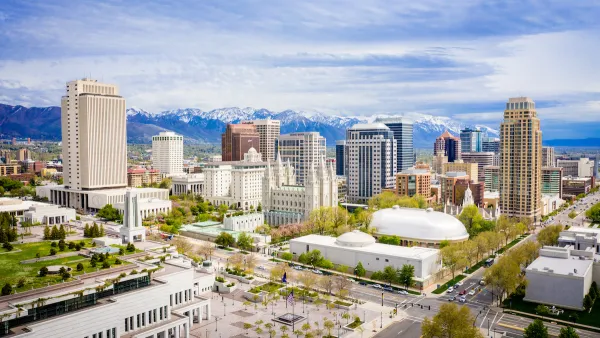
How Salt Lake City Maintained a Vibrant Downtown
Unlike other major cities, the Utah capital’s downtown has seen a steady stream of visitors even as demand for office space diminishes.
The nation's 10 'stickiest' downtowns
How often do residents visit your downtown?

Small 'maker' businesses are good for downtowns — and data proves it
Small-scale manufacturers tend to be more engaged in the local supply chain, contributing to economic revitalization.

The state-sanctioned urbicide of Austin
People don’t kill cities. Freeways do.

US to reduce Colorado River water deliveries to Mexico
A new Colorado Treaty amendment reduces Mexico’s Colorado River water allocation by 250,000 acre feet.

New Jersey’s second-largest city bans standalone data centers
Jersey City will continue to allow co-location facilities, such as those meant for research institutions that store their own data.

Amtrak not solely to blame for New Jersey commuter rail's unreliability, report finds
A new study from the Garden State Initiative found that NJ Transit’s budget grew 20% across a 4 year period, but reliability declined significantly over the same period.

EPA erases limits on planet-warming pollution from power plants
Under Monday’s plan, power plants would still have some limits on how much mercury, arsenic and other contaminants they can emit.

Phoenix announces new on-demand transit service, more frequent RAPID buses
Both new services will launch in October, and are part of Phoenix's Project Effective Access Solutions for Easing Congestion.

FREE Course: Walkable City 1: Why Walkability?
After describing his path towards focusing on walkability as the essence of good planning, Jeff Speck marches through his five principal reasons for making more walkable places.
Reinventing Malls: Planning Alchemy—Turning Gray Fields Into Gold
The course focuses on the opportunities and imperatives that shape reinvention of mall sites.

Eagle County Government
Harvard University Graduate School of Design
Nashville Planning Department
The Architects Foundation
University of Cincinnati Online
The Pocatello Development Authority
The Urban Renewal Agency of the City of Pocatello
Journal of the American Planning Association