Phoenix reimagined for shade. Los Angeles as a place where everybody walks. San Francisco with affordable housing. AI makes a vision of the future possible.



“[W]hat if we could reimagine the world’s cities unfettered by budgetary constraints, political roadblocks, or logistical challenges?”
That’s the question explored by a recent application of AI technology by Planetizen Founder Chris Steins on Medium. For example, the post imagines Los Angeles as a pedestrian’s paradise, Miami as a “resilient city designed to withstand rising sea levels,” and Cairo “as a high-tech city harmoniously blending with ancient ruins.”
According to Steins, the power of AI, in this case Midjourney, is more than speculation. “The power of AI lies in its ability to transcend human bias and conventional thinking, providing fresh perspectives on urban possibilities,” writes Steins. “In using AI, we can explore and visualize transformative urban solutions with unparalleled creativity and scale.”
The source article, linked below, includes many images with examples from the United States and abroad.
Read the full story: Phoenix to Bejing: Reimagining the World’s Cities Through AI’s Eyes


Friday Eye Candy: 20 AI-Generated Cityscapes
AI-generated images are creating new landscapes and cityscapes, capable of inspiring awe or fear.
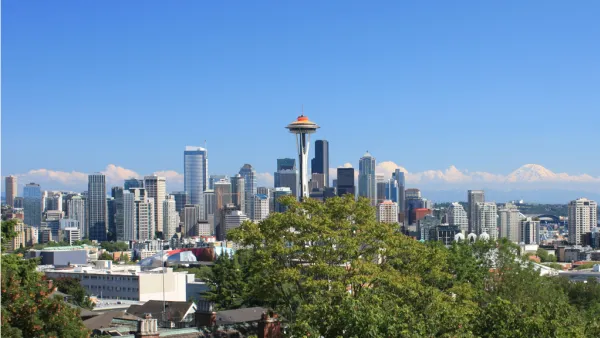
Friday Eye Candy: The Seattle Skyline of the Near Future
A series of renderings by a Seattle architect shows the recently completed high-rises, along with under construction, proposed, and rumored projects. Seattle is changing, quickly.
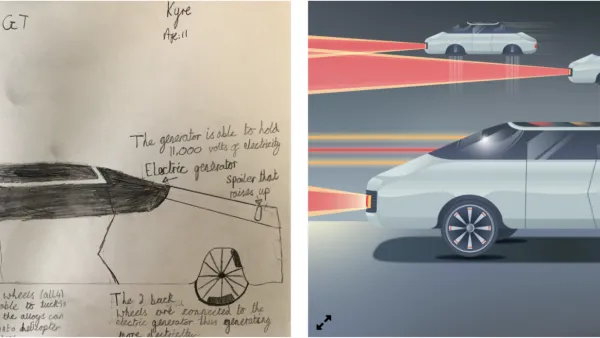
Friday Eye Candy: The Cars of the Future, Envisioned by Children
Ten children, ages six through 12, were asked to draw the cars of the future, and then a professional illustrator touched up their ideas.

Planetizen Federal Action Tracker
A weekly monitor of how Trump’s orders and actions are impacting planners and planning in America.

California plans to bury El Niño’s downpour
If the state plays its cards right, it may be able to store a billion acre-feet of El Niño’s water in aquifers.

Chicago breaks ground on $3 billion megadevelopment
The new neighborhood, titled Foundry Park, will one day host 3,700 residences.

Satanic Place Names
From streams and lakes to valleys and canyons, I mapped more than 1,000 places named after the Devil.

California High-Speed Rail Authority CEO resigns after $600,000 scandal
Under Ian Choudri, the authority used taxpayer dollars to fund first class flights and trips to nightclubs.

Want to study the Missouri River? Soon, you may need unanimous approval from 10 states
Legislation would require 10 governors’ permission to study or build projects moving water outside the basin.

FREE Course: Walkable City 1: Why Walkability?
After describing his path towards focusing on walkability as the essence of good planning, Jeff Speck marches through his five principal reasons for making more walkable places.
Reinventing Malls: Planning Alchemy—Turning Gray Fields Into Gold
The course focuses on the opportunities and imperatives that shape reinvention of mall sites.

City of Rosemead
Rutgers University, Edward J. Bloustein School of Planning and Public Policy
One Hundred Miles
Hunter College, City University of New York (CUNY)
The Architects Foundation
University of Cincinnati Online
City of Cambridge
Montrose County
The Pocatello Development Authority