The pollutant, emitted by gas-burning stoves, is a leading chemical cause of leukemia.



As cities and states consider banning gas-powered stoves and appliances, a new study of 87 homes in Colorado and California found high levels of benzene emitted by gas stoves, reports Oliver Milman in The Guardian. “Leaving a single gas hob on for 45 minutes raised benzene levels to above that found in secondhand tobacco smoking, or at the boundary of oil and gas plants, with emissions 10 to 25 times higher than that from electric coil stoves.”
According to Milman, “Even low doses of airborne benzene raise the risk of a variety of cancers, including lymphomas and leukemia, by damaging people’s bone marrow. Elevated levels of benzene can linger for six hours throughout a house or apartment after a gas stove is turned off.”
The study highlights the dangers of indoor air pollutants such as benzene, which are much less regulated than outdoor air pollution. “Joe Biden’s administration has attempted to formulate efficiency standards for new stoves to lower such pollution, with around half of all stoves currently sold likely to fail the proposed safeguards.”
Read the full story: Gas stoves emit benzene levels above secondhand smoke, US study finds


NYC Congestion Pricing Revenue Will Fund up to 1,000 Hybrid Refrigerated Trucks
Traffic to the Hunts Point Produce Market causes increased rates of asthma in surrounding neighborhoods.
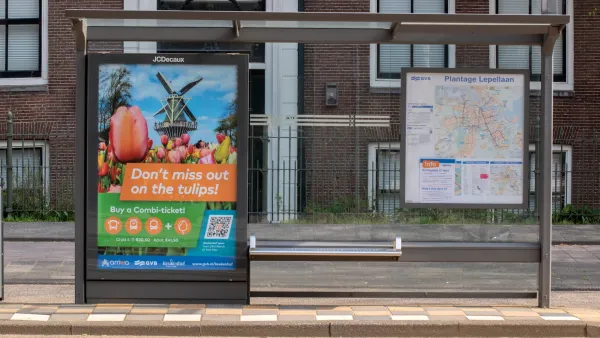
Amsterdam is First World Capital to Ban Ads for Fossil Fuels on Public Infrastructure
Several other Dutch cities have banned advertising for harmful or polluting industries on city-owned properties.

Improving Indoor Air Quality, One Block at a Time
A movement to switch to electric appliances at the neighborhood scale is taking off in California.

Planetizen Federal Action Tracker
A weekly monitor of how Trump’s orders and actions are impacting planners and planning in America.

California plans to bury El Niño’s downpour
If the state plays its cards right, it may be able to store a billion acre-feet of El Niño’s water in aquifers.

Desperate measures: Advocates weigh draining Lake Powell to fill Colorado River
Draining the reservoir could reduce evaporation losses by a couple hundred thousand acre-feet.

How a Chicago-sized wind farm beat the odds and powered on
The project spanned five presidential administrations and a standoff with a U.S. military base.

MTA gives itself 30 days to transform pit into basketball court
The site has been under construction since 2022; the city originally estimated it would finish the court in 2024.

Non-stop party: Chicago voters weigh permanent festival grounds
A stable place for bleachers, stages and drainage may streamline the setup and teardown of large events.

FREE Course: Walkable City 1: Why Walkability?
After describing his path towards focusing on walkability as the essence of good planning, Jeff Speck marches through his five principal reasons for making more walkable places.
Reinventing Malls: Planning Alchemy—Turning Gray Fields Into Gold
The course focuses on the opportunities and imperatives that shape reinvention of mall sites.

City of Rosemead
Rutgers University, Edward J. Bloustein School of Planning and Public Policy
One Hundred Miles
Hunter College, City University of New York (CUNY)
The Architects Foundation
University of Cincinnati Online
City of Cambridge
Montrose County
The Pocatello Development Authority