The Trust for Public Land (TPL) recently released its annual report which ranks park systems in the 100 most populous U.S. cities.


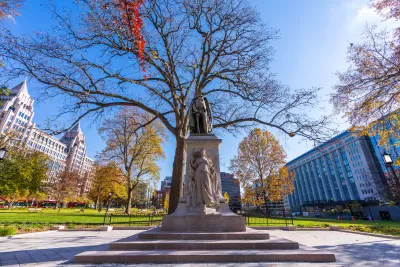
The Trust for Public Land (TPL) conducted a survey among the 100 largest cities as part of its annual ParkScore®️ index. These cities collectively shared almost 800 examples of what they consider to be the most effective ways of using their parks and recreation systems to promote physical activity, improve mental health, and increase social connections. TPL ranks these cities by comparing five park categories: equity, access, investment, amenities, and acreage. For 2023, the top 12 cities are:
- Washington, D.C.
- St. Paul, MN
- Minneapolis, MN
- Irvine, CA
- Arlington, VA
- Cincinnati, OH
- San Francisco, CA
- Seattle, WA
- Portland, OR
- Boston, MA (tied with New York, NY)
- New York, NY (tied with Boston, MA)
- Chicago, IL
TPL argues that cities with the highest ParkScore®️ rankings are healthier places to live. Please refer to their exclusive 2023 report to learn more, including what cities are already doing and what more they can do to achieve even better mental, physical, and environmental health outcomes through park investments and programming.
Read the full story: 2023 ParkScore®️ Report: The Power of Parks to Promote Health

Parks for All: LA Looks to Residents to Help Shape Park Equity and Access
Los Angeles is launching a citywide park needs assessment to gather resident input on improving its park system, addressing inequities in access, and making the case for increased funding and long-term investments.
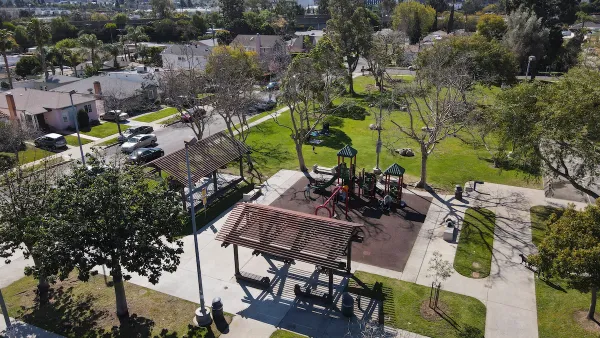
LA County Releases Funding for Parkland Acquisition in Underserved Communities
Los Angeles County has released $14.5 million in Measure A grant funds to support parkland acquisition in high-need areas, aiming to create additional green spaces and advance environmental justice and equity.

Healing Neighborhoods Through Park Equity
Learn more about ways to improve park equity with Norma García-González, the director of the Los Angeles County Department of Parks and Recreation, and Catherine Nagel, the executive director of the City Parks Alliance.

Planetizen Federal Action Tracker
A weekly monitor of how Trump’s orders and actions are impacting planners and planning in America.

Eastern Nebraska is running out of electricity
Data centers and electrification are straining eastern Nebraska’s grid, throttling economic development.

Washington state to charge fee to drivers with fuel-efficient cars
Revenue from the fee will go towards supporting the state’s highways.

Instead of building new housing, LA developers are turning mansions into mega-mansions
In the richest areas, the number of houses valued at $30 million with demolition permits has skyrocketed since 2018.

Illinois considers spending $1 billion in taxpayer money on data center
A quantum computing campus and data center are currently under construction in Chicago.

As development costs rise, Boston moves to lessen affordable housing requirements
The Boston Zoning Commission and the City Council still need to approve Boston Mayor Michelle Wu’s proposed changes

FREE Course: Walkable City 1: Why Walkability?
After describing his path towards focusing on walkability as the essence of good planning, Jeff Speck marches through his five principal reasons for making more walkable places.
Reinventing Malls: Planning Alchemy—Turning Gray Fields Into Gold
The course focuses on the opportunities and imperatives that shape reinvention of mall sites.

City of Charlotte
City of Rosemead
Rutgers University, Edward J. Bloustein School of Planning and Public Policy
University of Michigan School for Environment and Sustainability (SEAS)
Hunter College, City University of New York (CUNY)
The Architects Foundation
City of Cambridge
The Pocatello Development Authority
The Urban Renewal Agency of the City of Pocatello