Neighborhoods with preexisting internal contracts are exempted from new legislation requiring all Washington cities to permit duplexes and other ‘missing middle housing.’


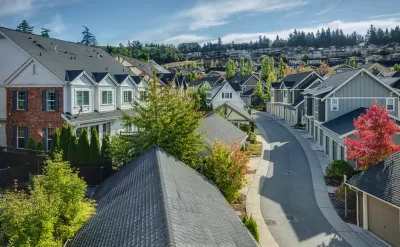
Earlier this year, the Washington state legislature passed legislation aimed at eliminating single-family zoning and creating more diverse and abundant housing options in the state. However, as David Gutman and Daniel Beekman report in The Seattle Times, “homeowner associations and other ‘common interest communities’ that have internal contracts or documents governing their zoning rules” are exempt from the new law, effectively allowing them to remain exclusively zoned for single-family homes.
“Because homeowner associations and common interest communities have preexisting, legally binding contracts regarding their zoning rules, the Legislature can’t change those, said Rep. Jessica Bateman, D-Olympia, the bill’s lead sponsor,” explaining the exemption. “The bill does explicitly bar homeowner associations from making new contracts or agreements to try to prohibit duplexes and other kinds of middle housing. But it only applies to future agreements, those enacted after the law becomes effective.”
According to University of Washington law professor Hugh Spitzer, “people can put restrictive covenants on their properties and you can’t have a law that comes in and wipes that out,” except in the event that the law is related to safety, such as the requirement to add a fire escape. Yet state law does, as Gutman and Beekman point out, govern some aspects of homeowner association rules, including legislation that bans HOAs from prohibiting certain flags, political signs, and solar panels.
The authors remind readers of the sordid history of HOAs. “In Seattle, and across the country, many homeowner associations were created a century ago for the express purpose of excluding racial and religious minorities.” The article continues, “These are the same communities that today won’t be touched by middle housing, which supporters of HB 1110 say can diversify neighborhoods by providing options at different price points.”
Read the full story: WA’s new ban on single-family zoning exempts some of Seattle’s wealthiest neighborhoods

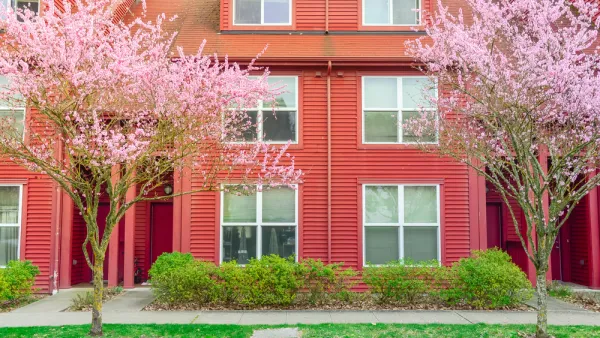
‘Missing Middle Housing’ Bill Passes in Washington Senate
The legislation would permit duplexes and, in some cases, fourplexes in residential areas in most Washington towns.
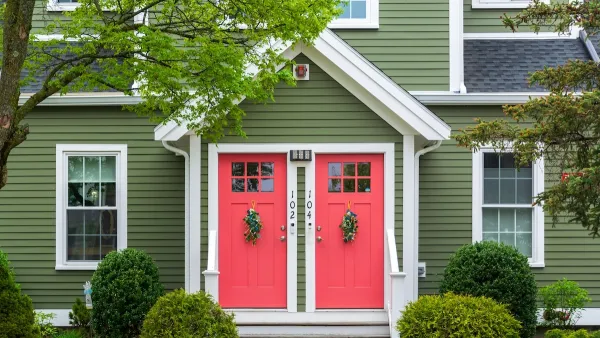
Harvard Report Cites Zoning, Construction Costs as Obstacles to New Housing
Zoning restrictions and onerous building codes make mid-sized multifamily housing prohibitively expensive or illegal to build.

Seattle’s Upzoning Plan is Ambitious, Light on Details
The city passed a ‘bare-bones’ framework to comply with state housing laws that paves the way for more middle housing, but the debate over how and where to build is just getting started.

Planetizen Federal Action Tracker
A weekly monitor of how Trump’s orders and actions are impacting planners and planning in America.

California plans to bury El Niño’s downpour
If the state plays its cards right, it may be able to store a billion acre-feet of El Niño’s water in aquifers.

Chicago breaks ground on $3 billion megadevelopment
The new neighborhood, titled Foundry Park, will one day host 3,700 residences.

Satanic place names
From streams and lakes to valleys and canyons, I mapped more than 1,000 places named after the Devil.

California High-Speed Rail Authority CEO resigns after $600,000 scandal
Under Ian Choudri, the authority used taxpayer dollars to fund first class flights and trips to nightclubs.

Want to study the Missouri River? Soon, you may need unanimous approval from 10 states
Legislation would require 10 governors’ permission to study or build projects moving water outside the basin.

FREE Course: Walkable City 1: Why Walkability?
After describing his path towards focusing on walkability as the essence of good planning, Jeff Speck marches through his five principal reasons for making more walkable places.
Reinventing Malls: Planning Alchemy—Turning Gray Fields Into Gold
The course focuses on the opportunities and imperatives that shape reinvention of mall sites.

City of Rosemead
Rutgers University, Edward J. Bloustein School of Planning and Public Policy
One Hundred Miles
Hunter College, City University of New York (CUNY)
The Architects Foundation
University of Cincinnati Online
City of Cambridge
Montrose County
The Pocatello Development Authority