The Covid 19 national emergency enacted by then-President Donald Trump in March 2020 was officially ended on Monday by President Joe Biden.


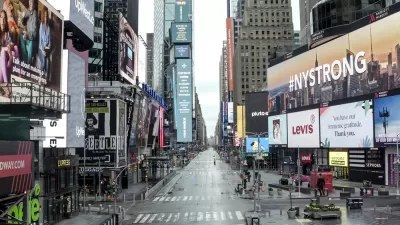
President Joe Biden signed legislation on Monday that ended the Covid 19 national emergency a few weeks before it was set to expire. President Biden signed the legislation behind closed doors after opposing the legislation but stopping short of a veto.
The legislation enables changes including the end of the U.S. Department of Housing and Urban Development’s COVID-19 mortgage forbearance program. More than 1.13 million Americans have died of Covid 19 in the last three-plus years, according to data from the Centers for Disease Control and Prevention. More than 1,700 Americans died of Covid 19 in the week ending on April 5.
While the legislation ends the national emergency, the public health emergency will continue until May 11, according to multiple reports.
News coverage of the legislation’s approval is available from the Associated Press, the Washington Post, CNN, Politico, and more.
Planetizen has been tracking the pandemic’s influence on communities and the practice of planning for the past three years. Revisit some of the historical record on Planetizen’s pages:
FULL STORY: Biden signs bill ending Covid-19 national emergency

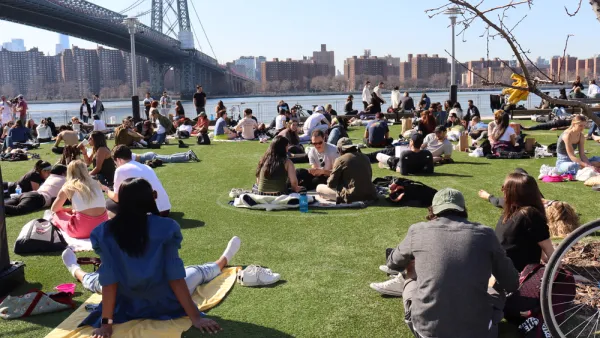
Most Questions About the Long-Term Impact of the Pandemic Still Unanswered
Planetizen started gathering articles attempting to predict the post-pandemic future in March 2020. The work goes on, with many questions left still to be answered.
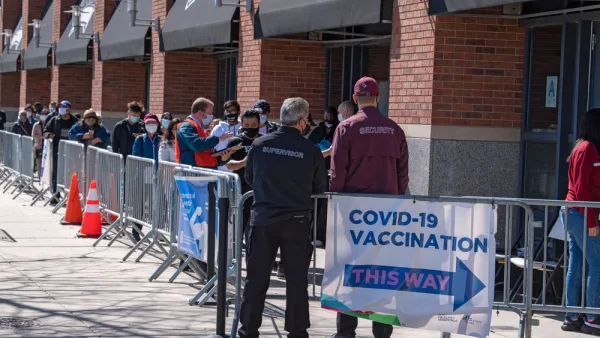
Light at the End of the Tunnel Reveals the Work to Come
The latest edition of an ongoing compendia of articles trying to make sense of the deep uncertainties of the pandemic—and what it all means for the future of cities.

Haves and Have Nots: Planning and the Deep Divides of the Pandemic
The latest in a series of compendia gathering news and analysis about the effects of the COVID-19 on the built and natural environments—now and long into the future.

The state-sanctioned urbicide of Austin
People don’t kill cities. Freeways do.

US to reduce Colorado River water deliveries to Mexico
A new Colorado Treaty amendment reduces Mexico’s Colorado River water allocation by 250,000 acre feet.

New Jersey’s second-largest city bans standalone data centers
Jersey City will continue to allow co-location facilities, such as those meant for research institutions that store their own data.

Amtrak not solely to blame for New Jersey commuter rail's unreliability, report finds
A new study from the Garden State Initiative found that NJ Transit’s budget grew 20% across a 4 year period, but reliability declined significantly over the same period.

EPA erases limits on planet-warming pollution from power plants
Under Monday’s plan, power plants would still have some limits on how much mercury, arsenic and other contaminants they can emit.

Phoenix announces new on-demand transit service, more frequent RAPID buses
Both new services will launch in October, and are part of Phoenix's Project Effective Access Solutions for Easing Congestion.

FREE Course: Walkable City 1: Why Walkability?
After describing his path towards focusing on walkability as the essence of good planning, Jeff Speck marches through his five principal reasons for making more walkable places.
Reinventing Malls: Planning Alchemy—Turning Gray Fields Into Gold
The course focuses on the opportunities and imperatives that shape reinvention of mall sites.

Eagle County Government
Harvard University Graduate School of Design
Nashville Planning Department
The Architects Foundation
University of Cincinnati Online
The Pocatello Development Authority
The Urban Renewal Agency of the City of Pocatello
Journal of the American Planning Association