A proposal from Gov. DeSantis would require Hillsborough County to return revenue collected from the tax to residents who paid it and bar the county from using any remaining funds on transit projects.


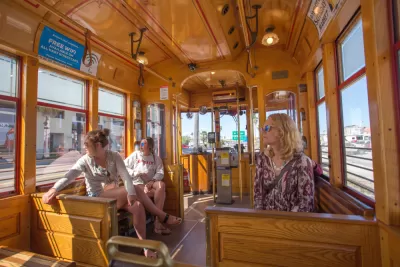
Officials in Hillsborough County, Florida, which includes Tampa, must decide how to redistribute revenue gained through a voter-approved sales tax, which was voided by the state’s Supreme Court in 2021. As C.T. Bowen explains in the Tampa Bay Times, “Voters approved the tax referendum by 57% to 43% in November 2018. Under that plan, 45% of the tax money was earmarked for transit.” The recent court decision agreed with a suit challenging the legality of the tax, claiming that allocations should be set by elected officials rather than by ballot.
Governor Ron DeSantis has some ideas. In his proposed budget, the governor suggests first returning the tax to people who paid it. “The Department of Revenue would transfer whatever remains on April 1, 2024, to the state Department of Transportation, which then would detail a project list by June 1.” DeSantis made clear that any remaining funds should be used for road and bridge projects, but not public transit. Florida cities will have to scale back their plans for transit projects, including Tampa’s TECO Streetcar line.
FULL STORY: Gov. Ron DeSantis to Hillsborough: Refund sales tax. No spending on transit

Popular Tampa Bus Route Going Fare-Free
The initiative, which starts on January 5, is funded by parking fees.
Tampa Awarded Federal Transit Planning Grant
The city will use the money to open a new office aimed at guiding major transit projects in the region.
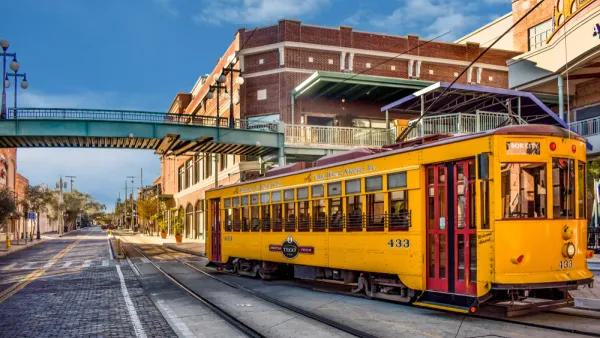
Tampa Streetcar: From Tourist Trap to Transit Lifeline
Despite the line’s reliability and success, funding for its future expansion and operations remains undetermined.

Planetizen Federal Action Tracker
A weekly monitor of how Trump’s orders and actions are impacting planners and planning in America.

The state-sanctioned urbicide of Austin
People don’t kill cities. Freeways do.

US to reduce Colorado River water deliveries to Mexico
A new Colorado Treaty amendment reduces Mexico’s Colorado River water allocation by 250,000 acre feet.

5 New England states march closer to 800 megawatt wind energy project
Securing federal approval for the project may be complicated under the Trump administration, which has historically been hostile towards domestic wind power.

Baltimore to break ground on $50 million Transit Priority Project
The project will bring faster bus trips, safer streets and better bike connections to Baltimore.

Airbnb launches $250 million 'last-dollar financing' housing accelerator, makes first investment in Austin
The company will put $6.4 million towards affordable housing development in Texas’ capital.

FREE Course: Walkable City 1: Why Walkability?
After describing his path towards focusing on walkability as the essence of good planning, Jeff Speck marches through his five principal reasons for making more walkable places.
Reinventing Malls: Planning Alchemy—Turning Gray Fields Into Gold
The course focuses on the opportunities and imperatives that shape reinvention of mall sites.

Eagle County Government
Harvard University Graduate School of Design
Nashville Planning Department
The Architects Foundation
University of Cincinnati Online
The Pocatello Development Authority
The Urban Renewal Agency of the City of Pocatello
Journal of the American Planning Association