The latest futuristic city concept attracting attention on the internet is known as Telosa.


The video above, by Tomorrow’s Build, introduces Telosa, a futuristic master planned effort designed for “somewhere in the U.S. desert” at an estimated cost of $400 billion. As noted in the video, Telosa would be built on an economic system known as equitism, defined on the Telosa website as “An economic system in which citizens have a stake in the city’s land — as the city does better, the residents do better.”
Billionaire Marc Lore is the driving force behind the idea, with Bjarke Ingels Group doing the design work. As discussed in the video above, Telosa backers hope to have 50,000 people living in the city by 2030, with eventual plans to grow to a population of 5 million people. Plans for Telosa were first revealed in 2021.
Telosa joins the ranks of other futuristic city-building efforts underway around the world, including The Line in Saudi Arabia, the Floating City in South Korea, and Akon City in Senagal.
Read the full story: Why a Billionaire is Building a $400BN City in the US Desert
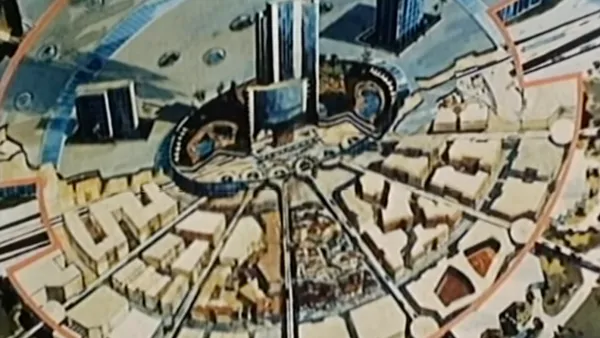
EPCOT: The Original 'Smart City'
What can today’s futurists learn from Disney’s unrealized utopia?
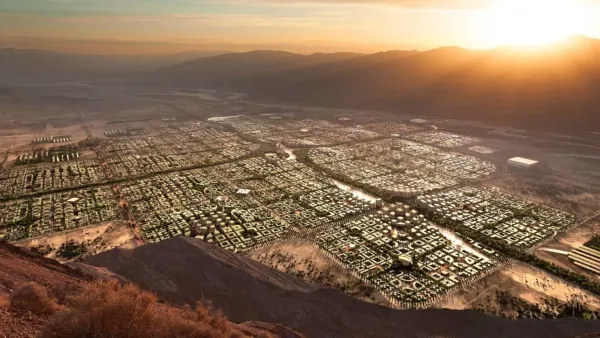
Why Tech-Utopian City Plans Fail
Like others before him, e-commerce billionaire Marc Lore wants to build the ideal city from scratch. Urban experts don't have much faith in his chances.
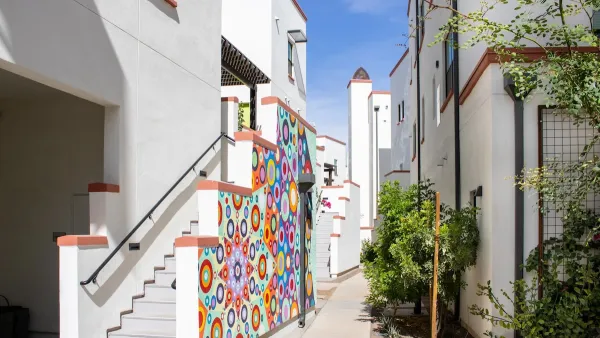
Culdesac Tempe Defies Expectations
Despite initial skepticism about its true potential for sustainable urbanism, the built-from-scratch “car-free neighborhood” is widely popular with its residents.

Planetizen Federal Action Tracker
A weekly monitor of how Trump’s orders and actions are impacting planners and planning in America.

California plans to bury El Niño’s downpour
If the state plays its cards right, it may be able to store a billion acre-feet of El Niño’s water in aquifers.

Desperate measures: Advocates weigh draining Lake Powell to fill Colorado River
Draining the reservoir could reduce evaporation losses by a couple hundred thousand acre-feet.

In Texas, data centers are swallowing promised parkland
Residents who moved to Taylor, Texas for a rural community now have to contend with three data centers in their backyard.

How a Chicago-sized wind farm beat the odds and powered on
The project spanned five presidential administrations and a standoff with a U.S. military base.

MTA gives itself 30 days to transform pit into basketball court
The site has been under construction since 2022; the city originally estimated it would finish the court in 2024.

FREE Course: Walkable City 1: Why Walkability?
After describing his path towards focusing on walkability as the essence of good planning, Jeff Speck marches through his five principal reasons for making more walkable places.
Reinventing Malls: Planning Alchemy—Turning Gray Fields Into Gold
The course focuses on the opportunities and imperatives that shape reinvention of mall sites.

City of Rosemead
Rutgers University, Edward J. Bloustein School of Planning and Public Policy
One Hundred Miles
Hunter College, City University of New York (CUNY)
The Architects Foundation
University of Cincinnati Online
City of Cambridge
Montrose County
The Pocatello Development Authority