No skyline in North America has changed as drastically as Toronto’s in recent decades. A slate of new skyscraper proposals, called a “skyscraper race” by observers, could continue the trend.


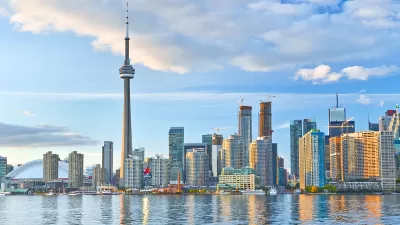
Developer Pinnacle International is proposing two supertall skyscrapers—one at 92 stories and other at 105 stories—potentially rising among the two or three tallest buildings in the city.
Pinnacle is seeking an increase in height for both buildings, already approved at heights 12 and ten stories shorter, respectively, at the current site of the Toronto Star building. If approved at the newly proposed heights, the buildings would jump past the approved development of “The One,” proposed for the corner of Yonge and Bloor.
The taller of Pinnacle’s two buildings, called SkyTower, would reach 346 meters (just over 1,135 feet). SkyTower would be the first building in Canada to exceed 100 stories.
A paywalled article by May Warren, linked below, provides more local commentary on the city’s new skyscraper race. As noted by Warren, the city’s famous CN Tower, which reaches 553 meters (1,815 feet) doesn’t qualify for the discussion, though it is much taller than any of the buildings reported here.
“The CN Tower doesn’t technically count as a building, he added. According to the Council on Tall Buildings and Urban Habitat, to be considered a building at least half of its height must be occupiable. Telecommunications or observation towers don’t make the cut,” writes Warren.
Toronto has long outpaced all other North American cities in the scope of skyscraper construction. Planetizen documented Toronto’s development pace with articles in 2015 and 2012.
FULL STORY: In the race to build Toronto’s first ‘super tall’ skyscraper, a new proposal hits 105 storeys [paywall]


Skyscraper Proposed for Austin Would Be Tallest in Texas
The skylines are starting to catch up to the hype about everything being bigger in Texas.
Skyscraper Watch: Where the Tallest Buildings Are Under Construction
Of the 25 tallest buildings currently under construction around the world, only one is foun in the United States. The vast majority are in China.
World's Tallest Residential Building Nears Completion in Manhattan
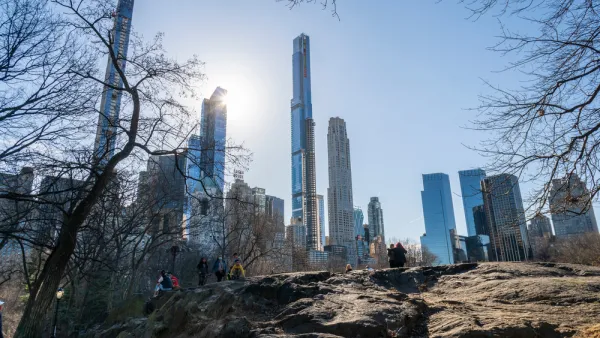
Central Park Tower, coming soon to New York City's "Billionaires' Row" was designed by Adrian Smith + Gordon Gill architecture.

Planetizen Federal Action Tracker
A weekly monitor of how Trump’s orders and actions are impacting planners and planning in America.

The state-sanctioned urbicide of Austin
People don’t kill cities. Freeways do.

US to reduce Colorado River water deliveries to Mexico
A new Colorado Treaty amendment reduces Mexico’s Colorado River water allocation by 250,000 acre feet.

LA Metro’s ultimatum: no extra buses for LA28 if federal funding isn’t imminently secured
If Metro does not provide additional buses, LA28 organizers will have to find a new way to manage Olympic traffic. LA28’s budget does not include a line item for transit.

Colorado’s Largest Data Center Could Rise Next to Homes — Without a Public Hearing
The proposed campus would consume 11 times the power of Denver International Airport; as it has across the country, opposition mounts.

5 New England states march closer to 800 megawatt wind energy project
Securing federal approval for the project may be complicated under the Trump administration, which has historically been hostile towards domestic wind power.

FREE Course: Walkable City 1: Why Walkability?
After describing his path towards focusing on walkability as the essence of good planning, Jeff Speck marches through his five principal reasons for making more walkable places.
Reinventing Malls: Planning Alchemy—Turning Gray Fields Into Gold
The course focuses on the opportunities and imperatives that shape reinvention of mall sites.

Eagle County Government
Harvard University Graduate School of Design
Nashville Planning Department
The Architects Foundation
University of Cincinnati Online
The Pocatello Development Authority
The Urban Renewal Agency of the City of Pocatello
Journal of the American Planning Association