Two new studies shed light on what people experiencing homelessness actually need by using a shocking new tactic: asking them.


It may sound simple, but it’s sadly all too rare: if you want to know what unhoused people need, ask the unhoused people themselves. As Rob Eshman reminds the reader in a piece for Los Angeles-based Zócalo Public Square, “until recently, you’d be hard-pressed to find studies asking the people actually experiencing homelessness what they think should be done about the crisis.”
Eshman highlights two recent surveys that finally address this issue by directly communicating with unsheltered and unhoused people. “The two new studies seek to bridge the gap between the well-intentioned plans and what unhoused people themselves say they actually need,” Eshman writes. Unsurprisingly, the top need people cite in both surveys is simply housing.
That seems like a no-brainer, but in fact is big news that should combat pervasive myths that suggest homeless people prefer to live in encampments, that it’s preferable to wait for more permanent housing, or that even if taxpayers funded shelters, homeless people wouldn’t agree to go there.
A RAND Corporation survey found that 90 percent of respondents wanted to find housing, but faced bureaucratic and logistical obstacles. Another study from the A-Mark Foundation and UCLA’s Luskin School of Public Affairs yielded similar results, with 92 percent of respondents in L.A.’s notorious Skid Row saying shelter was their first priority, even as millions of federal dollars directed at fighting homelessness went unspent by the city.
The surveys also shed light on what type of housing works and doesn’t work. For example, “In two focus groups that were part of the A-Mark Foundation survey, women said they avoided shelters that broke up families,” a common practice in many shelters. “Lack of security at shelters and concern over sexual violence were also named as top concerns. Men said curfews that made shelters feel like prison and prohibitions against dogs kept them away.”
The results illuminate the stark need for more temporary and long-term shelter and housing options that are responsive to the real needs of the people they serve.
Read the full story: What Do Unhoused People Want Most? Ask Them

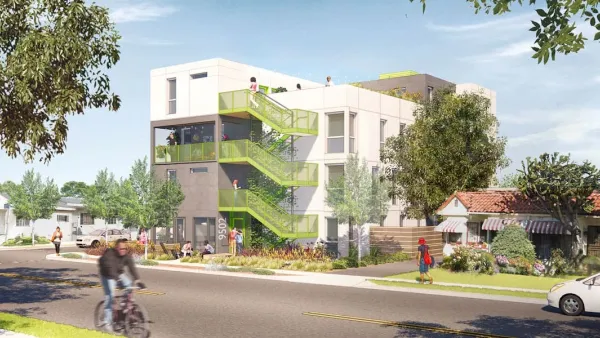
The Promises and Limitations of Modular Housing
Converted shipping containers offer the promise of fast construction and low costs, but face regulatory and accessibility challenges.
California Sues Norwalk Over Shelter Moratorium
The state says the city of Norwalk’s prohibition on new shelters and transitional and supportive housing violates anti-discrimination and fair housing laws.
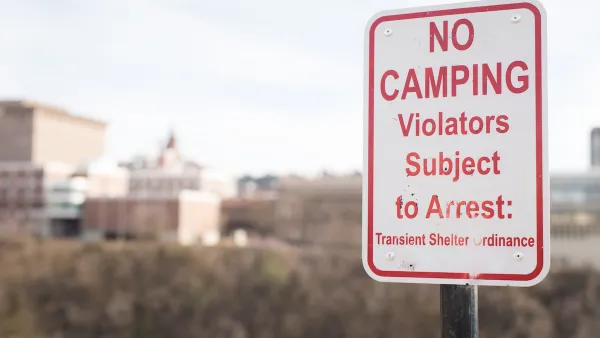
HUD: Homelessness Up by 12 Percent
The agency’s annual point-in-time count identified over 650,000 Americans living without permanent housing.

Planetizen Federal Action Tracker
A weekly monitor of how Trump’s orders and actions are impacting planners and planning in America.

California plans to bury El Niño’s downpour
If the state plays its cards right, it may be able to store a billion acre-feet of El Niño’s water in aquifers.

Desperate measures: Advocates weigh draining Lake Powell to fill Colorado River
Draining the reservoir could reduce evaporation losses by a couple hundred thousand acre-feet.

Chicago Avenue bridge construction delays enrages city leaders
The bridge has been closed since 2025. The city originally aimed to re-open it in December, and now expects to finish construction in 2027.

NYC bus network redesign speeds up Queens buses
Rush routes have seen a 4.6% speed increase after the redesign.

California High-Speed Rail Authority picks trainset manufacturer
The California High-Speed Rail Authority aims to start servicing passengers by 2033.

FREE Course: Walkable City 1: Why Walkability?
After describing his path towards focusing on walkability as the essence of good planning, Jeff Speck marches through his five principal reasons for making more walkable places.
Reinventing Malls: Planning Alchemy—Turning Gray Fields Into Gold
The course focuses on the opportunities and imperatives that shape reinvention of mall sites.

City of Rosemead
Rutgers University, Edward J. Bloustein School of Planning and Public Policy
One Hundred Miles
Hunter College, City University of New York (CUNY)
The Architects Foundation
University of Cincinnati Online
City of Cambridge
Montrose County
The Pocatello Development Authority