The state’s housing shortage is complicated by the growing number of places threatened by wildfires.


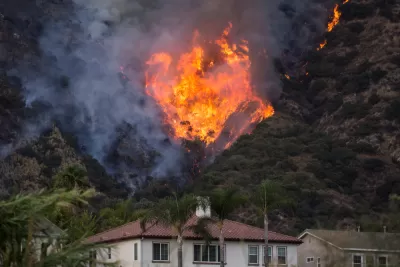
California must carefully balance its dire need for more housing with the risks posed by increasingly destructive wildfires which should discourage communities from building in fire-prone areas, writes Dan Walters for CalMatters.
“The friction between those two imperatives is played out in the political arena, where officialdom makes land use policy.” After Governor Gavin Newsom vetoed a bill that “would have required local governments to make fire safety a major factor in approving housing developments in fire-prone areas by compelling developers to include protective features,” claiming it would have allowed cities to avoid meeting their housing mandates, state Attorney General Rob Bonta has taken a series of steps to prevent further development in the wildland-urban interface.
In a set of guidelines released this week, Bonta writes that it is “imperative that local jurisdictions making decisions to approve new developments carefully consider wildfire impacts as part of the environmental review process, plan where best to place new development, and mitigate wildfire impacts to the extent feasible.”
To Walters, “The issue demands something more definitive than a document from the attorney general. Newsom and the Legislature should, as they ramp up pressure for more housing construction, also delineate where it should — and should not — occur.”
FULL STORY: California faces a housing/wildfire conundrum

Between a Rock and a Hard Place: Housing and Fire Safety in California
A proposed development near the site of the devastating Camp Fire highlights the growing tension between building badly needed housing and protecting communities from heightened wildfire risk.

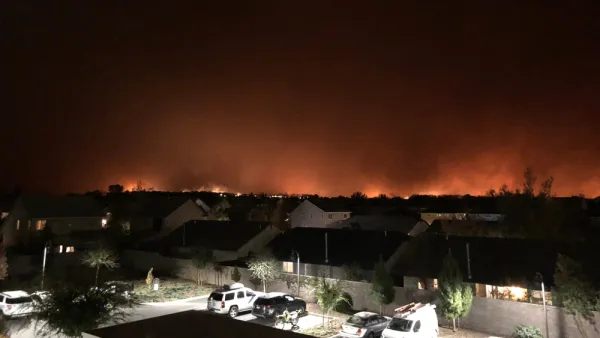
Nearly a third of US housing is in the wildland-urban interface — and at growing risk of wildfire
As suburbs increasingly mingle with undeveloped land, homes face a higher risk from destructive fires.
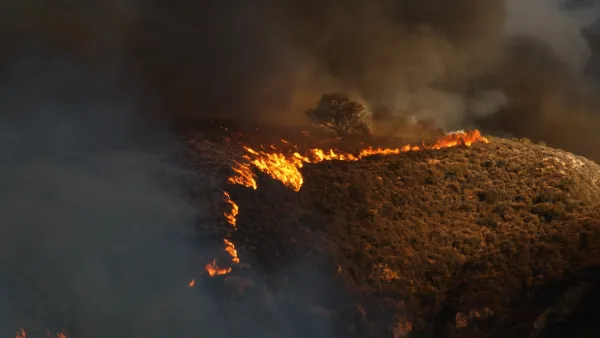
December Wildfires Could Signal Shifting Fire Season
A mix of strong seasonal Santa Ana winds and an unusually dry year is fueling winter wildfires in California.

Planetizen Federal Action Tracker
A weekly monitor of how Trump’s orders and actions are impacting planners and planning in America.

The state-sanctioned urbicide of Austin
People don’t kill cities. Freeways do.

US to reduce Colorado River water deliveries to Mexico
A new Colorado Treaty amendment reduces Mexico’s Colorado River water allocation by 250,000 acre feet.

5 New England states march closer to 800 megawatt wind energy project
Securing federal approval for the project may be complicated under the Trump administration, which has historically been hostile towards domestic wind power.

Baltimore to break ground on $50 million Transit Priority Project
The project will bring faster bus trips, safer streets and better bike connections to Baltimore.

Airbnb launches $250 million 'last-dollar financing' housing accelerator, makes first investment in Austin
The company will put $6.4 million towards affordable housing development in Texas’ capital.

FREE Course: Walkable City 1: Why Walkability?
After describing his path towards focusing on walkability as the essence of good planning, Jeff Speck marches through his five principal reasons for making more walkable places.
Reinventing Malls: Planning Alchemy—Turning Gray Fields Into Gold
The course focuses on the opportunities and imperatives that shape reinvention of mall sites.

Eagle County Government
Harvard University Graduate School of Design
Nashville Planning Department
The Architects Foundation
University of Cincinnati Online
The Pocatello Development Authority
The Urban Renewal Agency of the City of Pocatello
Journal of the American Planning Association