The organizations sell homes to low-income buyers at rates far below market prices, putting homeownership within reach for more families.



An article by Josh Cohen in Next City describes how community land trusts are helping low-income Seattle families become homeowners. Organizations such as the Homestead Community Land Trust and Habitat for Humanity Seattle-King County make homes available at costs much lower than the median home price, which in the Seattle area is currently $855,000.
“Like any other homeowner, land trust homeowners get to live in their home for as long as they want (and as long as they’re able to keep up their mortgage payments). It doesn’t matter if their income increases or the household size changes, the home is theirs.” As a trade-off, if the homeowner does decide to sell, they must do so at a restricted price—meaning that their homes are prevented from appreciating at the same rate as market rate houses.
For many, the tradeoff is worth it, as “community land trust homeowners almost certainly could not become homeowners on the open market in Seattle, so it’s equity they would not have otherwise built as renters.”
The article describes the history of the community land trust model, which was first created in Georgia in 1969 and has roots in anti-displacement activism. Today’s land trusts are evolving the model to mitigate rising land costs, in some cases by building duplexes and other multifamily housing types.
FULL STORY: In Seattle, Community Land Trusts Are Allowing Low-Income Families To Buy A Home

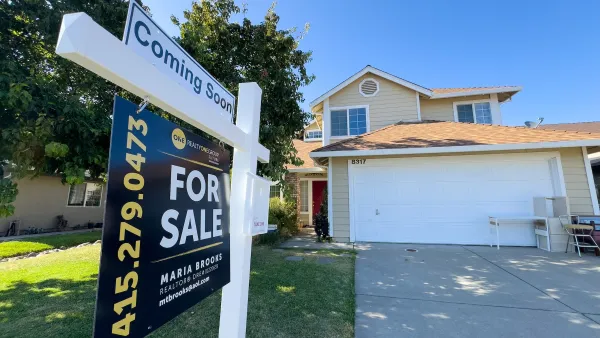
'Starter' homes cost over $1M in 242 US cities
Once concentrated in coastal regions, cities with starter homes valued at over $1 million are now spread across 26 states.
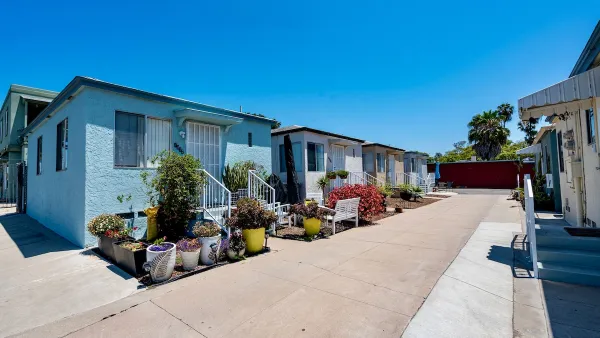
Opinion: How to Rebuild the ‘Starter Home’ Market
Large minimum lot sizes and restrictions on multi-unit housing put an artificial floor under home costs. Is it time to eliminate them?
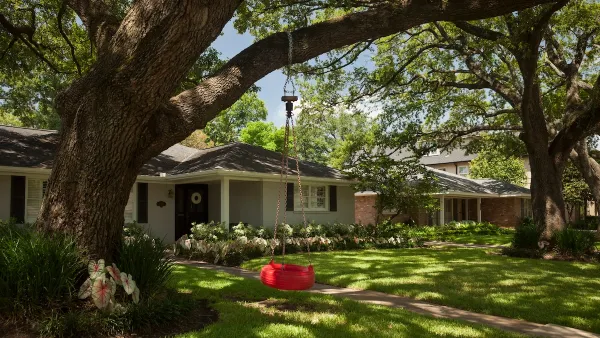
Community Land Trusts Offer Relief From High Housing Costs
The nonprofit model is becoming more popular as communities seek ways to reduce housing costs.

The state-sanctioned urbicide of Austin
People don’t kill cities. Freeways do.

US to reduce Colorado River water deliveries to Mexico
A new Colorado Treaty amendment reduces Mexico’s Colorado River water allocation by 250,000 acre feet.

New Jersey’s second-largest city bans standalone data centers
Jersey City will continue to allow co-location facilities, such as those meant for research institutions that store their own data.

Amtrak not solely to blame for New Jersey commuter rail's unreliability, report finds
A new study from the Garden State Initiative found that NJ Transit’s budget grew 20% across a 4 year period, but reliability declined significantly over the same period.

EPA erases limits on planet-warming pollution from power plants
Under Monday’s plan, power plants would still have some limits on how much mercury, arsenic and other contaminants they can emit.

Phoenix announces new on-demand transit service, more frequent RAPID buses
Both new services will launch in October, and are part of Phoenix's Project Effective Access Solutions for Easing Congestion.

FREE Course: Walkable City 1: Why Walkability?
After describing his path towards focusing on walkability as the essence of good planning, Jeff Speck marches through his five principal reasons for making more walkable places.
Reinventing Malls: Planning Alchemy—Turning Gray Fields Into Gold
The course focuses on the opportunities and imperatives that shape reinvention of mall sites.

Eagle County Government
Harvard University Graduate School of Design
Nashville Planning Department
The Architects Foundation
University of Cincinnati Online
The Pocatello Development Authority
The Urban Renewal Agency of the City of Pocatello
Journal of the American Planning Association