Six years after Prop HHH was passed, the fund appears to be delivering on its housing construction goals in the 10-year timeline. But the measure is being routinely criticized on all sides.



Proposition HHH was drafted by the Los Angeles City Council and put before voters in November 2016. The $1.2 billion housing bond promised to fund up to 10,000 units of new permanent supportive housing and affordable housing over 10 years to help get people from the streets and shelters into stable homes.
The money was to come from a new tax on property owners. It was a big ask: Since it involved taxation, the ballot measure needed a two-thirds majority to pass. Voters approved it with 77 percent of the vote, a sign that Angelenos wanted to see solutions to rising homelessness in the city.
Now, six years later, even though the HHH fund appears to be delivering on its housing construction goals in the 10-year timeline, the measure is being routinely criticized by elected officials, candidates in the 2022 mayoral race, and the city controller for delays, rising costs, and being an inadequate fix to the homelessness crisis in Los Angeles. In the Los Angeles mayoral primary this spring, when homelessness was one of the top issues, some candidates even suggested HHH money be clawed back or diverted to more immediate emergency shelters. What happened?
On Target
According to an HHH tracker from the city’s housing department (a similar tracker on Mayor Eric Garcetti’s website has been broken for months), there are 125 projects in the “HHH pipeline,” for a total of 7,913 units. This includes those in pre-development or development, as well as those completed and opened. Although all 125 projects are expected to be done by the end of the 10-year plan, only roughly 27 are open now; 67 are in construction, 30 in pre-development, and the loan recently closed on one project.
HHH’s benefits can extend beyond the direct funding it provides. It can make getting other financing easier as well...
Read the full story: Did LA’s Supportive Housing Bond Fail?


$150 Million for L.A.’s Unhoused People Go Unspent
The city returned nearly $150 million in federal funding directed to providing shelter and supportive services to the Department of Housing and Urban Development.
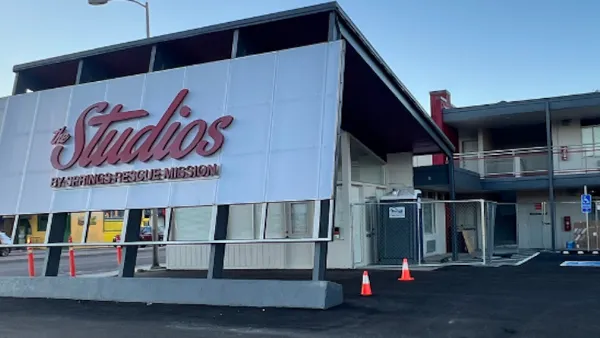
Colorado Springs Motel Converted to Supportive Housing
A vacant motel now offers 12 supportive housing units for formerly homeless women.
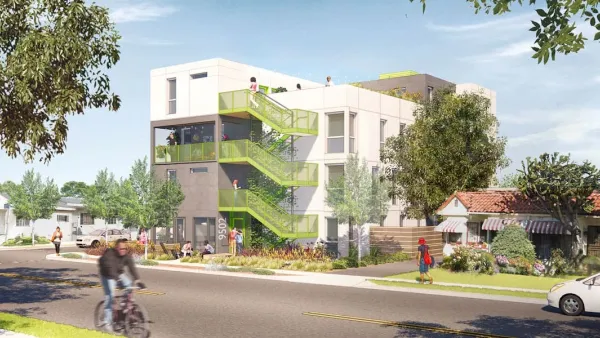
The Promises and Limitations of Modular Housing
Converted shipping containers offer the promise of fast construction and low costs, but face regulatory and accessibility challenges.

Planetizen Federal Action Tracker
A weekly monitor of how Trump’s orders and actions are impacting planners and planning in America.

California plans to bury El Niño’s downpour
If the state plays its cards right, it may be able to store a billion acre-feet of El Niño’s water in aquifers.

Desperate measures: Advocates weigh draining Lake Powell to fill Colorado River
Draining the reservoir could reduce evaporation losses by a couple hundred thousand acre-feet.

Chicago Avenue bridge construction delays enrages city leaders
The bridge has been closed since 2025. The city originally aimed to re-open it in December, and now expects to finish construction in 2027.

NYC bus network redesign speeds up Queens buses
Rush routes have seen a 4.6% speed increase after the redesign.

California High-Speed Rail Authority picks trainset manufacturer
The California High-Speed Rail Authority aims to start servicing passengers by 2033.

FREE Course: Walkable City 1: Why Walkability?
After describing his path towards focusing on walkability as the essence of good planning, Jeff Speck marches through his five principal reasons for making more walkable places.
Reinventing Malls: Planning Alchemy—Turning Gray Fields Into Gold
The course focuses on the opportunities and imperatives that shape reinvention of mall sites.

City of Rosemead
Rutgers University, Edward J. Bloustein School of Planning and Public Policy
One Hundred Miles
Hunter College, City University of New York (CUNY)
The Architects Foundation
University of Cincinnati Online
City of Cambridge
Montrose County
The Pocatello Development Authority