As the city considers loosening regulations on accessory dwelling units, one writer argues that the reforms would boost affordable housing and provide more options for changing household needs.



A San Antonio Report piece by Jim Bailey argues in favor of reforming the city’s regulations governing accessory dwelling units (ADUs) to make it easier for homeowners to build ‘granny flats’ and meet the changing needs of families. As Bailey states, “Currently, our city’s development code allows homeowners to build ADUs, but outdated restrictions make it difficult for owners to build them. Removing these barriers should be part of a larger strategy that looks at how San Antonio can grow responsibly.”
According to Bailey, “San Antonio added more residents than any other city in the country last year, and is projected to add a million more by 2050.” Bailey offers one possible solution. “One simple thing we can do to build resilience in neighborhoods like we used to have is to make it easier to build modest accessory dwelling units.” Bailey highlights the benefits of ADUs: the ability for multigenerational families to live together while maintaining privacy and autonomy, an opportunity for renters to live affordably in neighborhoods previously inaccessible to them, a source of income for homeowners, and an affordable option for seniors who want to “age in place” in their neighborhoods.
In San Antonio, Bailey writes, “Our Removing Barriers to Affordable Housing Development & Preservation Subcommittee, as instructed by our Council-adopted Strategic Housing Implementation Plan, has been working on a series of code changes that make sensitive insertions of modest ADUs into neighborhoods a little easier to achieve.” These include reduced restrictions on ADU occupancy, uniform height limits, and a clear metric for allowable square footage.
While Bailey and housing advocates recognize that boosting ADU construction is by no means a silver bullet for solving the housing crisis, “the proposed amendments help ameliorate growing housing pressures” in a fast-growing city.
Read the full story: Removing barriers to building accessory dwelling units is the right move for San Antonio


Florida Considers Legalizing ADUs
Current state law allows — but doesn’t require — cities to permit accessory dwelling units in single-family residential neighborhoods.

Maine Looks To Legalize ‘Missing Middle Housing’
Maine could become the third state to eliminate single-family-only zoning to encourage light density increases in residential areas and make it easier for homeowners to build accessory dwelling units.
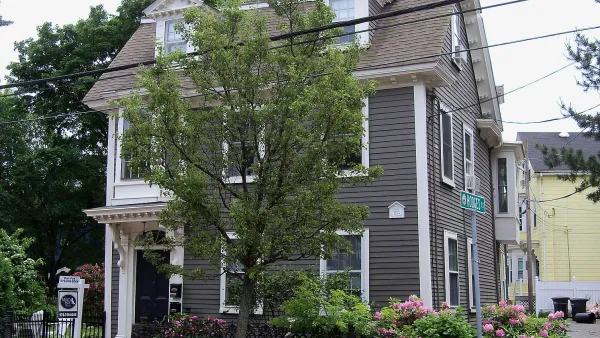
Greater Boston Considers Relaxing ADU Rules as Housing Shortage Deepens
Cities in the region want to increase flexibility for homeowners who want to build 'granny flats' on their property.

Planetizen Federal Action Tracker
A weekly monitor of how Trump’s orders and actions are impacting planners and planning in America.

The state-sanctioned urbicide of Austin
People don’t kill cities. Freeways do.

Colorado’s Largest Data Center Could Rise Next to Homes — Without a Public Hearing
The proposed campus would consume 11 times the power of Denver International Airport; as it has across the country, opposition mounts.

Nation's most wind-powered state turns to coal as data centers increase energy demand
For the first time in decades, Iowa has increased its generation of coal power.

NYC cools commuters with city's first rain garden above a bus stop
New York City officials say the plants in the rain garden can absorb 16 gallons of rainwater during heavy storms.

Brightline West’s future may rely on $6 billion federal loan
The company has until Nov. 2 to make a $400 million equity investment into its proposed high-speed rail line.

FREE Course: Walkable City 1: Why Walkability?
After describing his path towards focusing on walkability as the essence of good planning, Jeff Speck marches through his five principal reasons for making more walkable places.
Reinventing Malls: Planning Alchemy—Turning Gray Fields Into Gold
The course focuses on the opportunities and imperatives that shape reinvention of mall sites.

Greater Baltimore Committee
Eagle County Government
Harvard University Graduate School of Design
The Architects Foundation
University of Cincinnati Online
The Pocatello Development Authority
The Urban Renewal Agency of the City of Pocatello
Journal of the American Planning Association