In the same week that the cryptocurrency’s value took a nosedive, the president of El Salvador unveiled a model for a volcano-powered ‘smart city.’


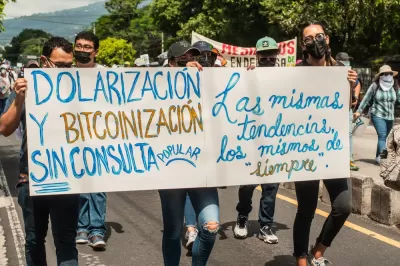
A year after his country started accepting Bitcoin as legal tender, the president of El Salvador, Nayib Bukele, unveiled a plan for a high-tech ‘Bitcoin city.’ Los Angeles Times arts and urban design columnist Carolina A. Miranda reports on the president’s announcement, which came via a series of tweets.
“How the city might be zoned and how its myriad buildings might be used went unexplained by Bukele on Twitter,” Miranda notes, but the model indicates it would be arranged in a radial design. Knowing the radial city plan’s long history, Miranda writes, “it’s rather comical to see Bukele, a populist with a penchant for dictator theatrics (have a look at his TikTok), turn to a design of the past — one that has lost favor for its separation of uses and its attendant sprawl — for his city of the future.”
Miranda points out that the project is unlikely to become a reality. “But, ultimately, what Bukele and Romero were presenting wasn’t so much a city as it was a bit of absurdist theater — one to prop up Bukele’s image as a high-tech innovator in a country plagued by real-world problems related to the drug trade and gangs.”
FULL STORY: The design of Nayib Bukele’s crypto-city of the future is so 19th century

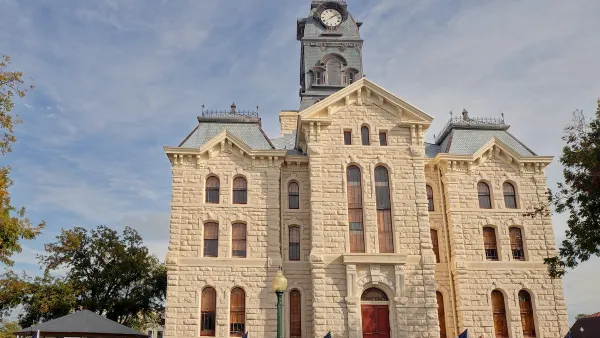
Rural Texans are Forming a City to Fight a Noisy Crypto Facility
In the face of state inaction, residents of an unincorporated community want to take matters into their own hands to limit the noise from a bitcoin mining operation.

New Alaska Bitcoin Mine Would Burn as Much Energy as the State’s Largest Coal Plant
Fueled by “stranded” natural gas, the startup hopes to become the largest in the US, and to make Alaska an industry center.
Cryptocurrency Goes in Search of Cheap Power, Finds it in Small-Town America
Some of the least expensive electricity in the country can be found in Upstate New York, where cryptocurrency miners are starting to set up shop—with or without local approval.

Planetizen Federal Action Tracker
A weekly monitor of how Trump’s orders and actions are impacting planners and planning in America.

The state-sanctioned urbicide of Austin
People don’t kill cities. Freeways do.

US to reduce Colorado River water deliveries to Mexico
A new Colorado Treaty amendment reduces Mexico’s Colorado River water allocation by 250,000 acre feet.

5 New England states march closer to 800 megawatt wind energy project
Securing federal approval for the project may be complicated under the Trump administration, which has historically been hostile towards domestic wind power.

Baltimore to break ground on $50 million Transit Priority Project
The project will bring faster bus trips, safer streets and better bike connections to Baltimore.

Airbnb launches $250 million 'last-dollar financing' housing accelerator, makes first investment in Austin
The company will put $6.4 million towards affordable housing development in Texas’ capital.

FREE Course: Walkable City 1: Why Walkability?
After describing his path towards focusing on walkability as the essence of good planning, Jeff Speck marches through his five principal reasons for making more walkable places.
Reinventing Malls: Planning Alchemy—Turning Gray Fields Into Gold
The course focuses on the opportunities and imperatives that shape reinvention of mall sites.

Eagle County Government
Harvard University Graduate School of Design
Nashville Planning Department
The Architects Foundation
University of Cincinnati Online
The Pocatello Development Authority
The Urban Renewal Agency of the City of Pocatello
Journal of the American Planning Association