The rise of remote work and a need for new talent may be pushing tech companies away from their traditional hubs, but 'superstar' cities continue to lead the way.


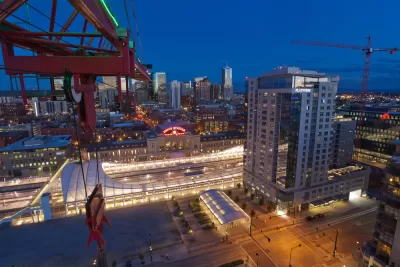
Mark Muro and Yang You summarize an analysis from Brookings that evaluates the potential for a dispersal of tech jobs from a narrow group of employment hubs. "Overall, tech fundamentally remains a 'winner-take-most' employment sector even amid widespread disruption, including the national remote-work explosion," but there are encouraging signs that tech employment is starting to disperse.
"A group of nine increasingly sizable 'rising stars' grew as fast as the superstars in 2020. Mostly in the interior or Sun Belt, rising stars Atlanta, Dallas, Denver, Miami, Orlando, Fla., San Diego, Kansas City, Mo., St. Louis, and Salt Lake City all gained ground through the first year of the pandemic." The article notes that several regional hubs also saw growth in the tech sector, and small towns with high quality of life factors experienced growth as remote workers flocked to better climates, small-town amenities, and affordable housing costs.
"Far from definitive, the new information provides real world, at least temporary evidence for what AOL co-founder and investor Steve Case calls 'the rise of the rest'—the spread of tech activity into the heartland." It remains to be seen whether this shift will become a long-term trend. "If the next few years find these firms targeting new talent in new places by boosting their presence in metro areas far from the usual superstars, that could by itself alter the current narrow geography of tech."
FULL STORY: Tech jobs spread out during the pandemic, but future dispersal isn’t guaranteed

Remote Work is Dying in the Bay Area — and Tech is Leading the Charge
Roughly two-thirds of Bay Area workers are back in the office full-time.

Which Cities Have the Most Remote Workers?
Across the country, a median of 12.5 percent of workers continue to perform their jobs remotely.
Housing Scarcity in Rural America
With the growth of ‘Zoom towns’ and the sharply rising demand for small-town living, rural communities are facing pressure to maintain housing affordability for long-time residents and boost housing production.

Planetizen Federal Action Tracker
A weekly monitor of how Trump’s orders and actions are impacting planners and planning in America.

The state-sanctioned urbicide of Austin
People don’t kill cities. Freeways do.

US to reduce Colorado River water deliveries to Mexico
A new Colorado Treaty amendment reduces Mexico’s Colorado River water allocation by 250,000 acre feet.

Colorado’s Largest Data Center Could Rise Next to Homes — Without a Public Hearing
The proposed campus would consume 11 times the power of Denver International Airport; as it has across the country, opposition mounts.

5 New England states march closer to 800 megawatt wind energy project
Securing federal approval for the project may be complicated under the Trump administration, which has historically been hostile towards domestic wind power.

Baltimore to break ground on $50 million Transit Priority Project
The project will bring faster bus trips, safer streets and better bike connections to Baltimore.

FREE Course: Walkable City 1: Why Walkability?
After describing his path towards focusing on walkability as the essence of good planning, Jeff Speck marches through his five principal reasons for making more walkable places.
Reinventing Malls: Planning Alchemy—Turning Gray Fields Into Gold
The course focuses on the opportunities and imperatives that shape reinvention of mall sites.

Eagle County Government
Harvard University Graduate School of Design
Nashville Planning Department
The Architects Foundation
University of Cincinnati Online
The Pocatello Development Authority
The Urban Renewal Agency of the City of Pocatello
Journal of the American Planning Association