More than violent crime or employment rates, foreclosure has largely driven the exodus of hundreds of thousands of Black residents from the city.


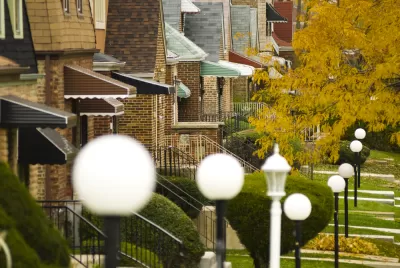
In "the first econometric analysis of the variety of factors that might be pushing Black residents out of the Windy City," researchers "found that foreclosures were the best predictor of Black population loss in Chicago" between 2010 and 2018.
"The authors and Loury are not arguing that violent crime, or other social ills, aren’t a factor in Black flight," writes Jake Blumgart, reporting on the study in Governing. But other factors have long-term effects that can take years to lead to displacement. "A family can live amid gun violence for years, but the effect of foreclosure is immediate." Simply put, writes Blumgart, "You can’t stay in the neighborhood if you don’t have a home."
Journalist Alden Loury "points out that two of the communities that have seen the steepest decline in Black population, Englewood and West Englewood on Chicago’s South Side, were also at the heart of the city’s foreclosure crisis."
"The authors suggest interventions like reducing penalties for overdue residential property taxes and policies like Philadelphia’s Longtime Owner Occupants Program, which cap taxable value on a home for long-term homeowners under 150 percent of area median income." They also suggest robust public awareness campaigns to make residents aware of these programs.
Read the full story: Foreclosure Crisis Driving Black Flight in Chicago: Study

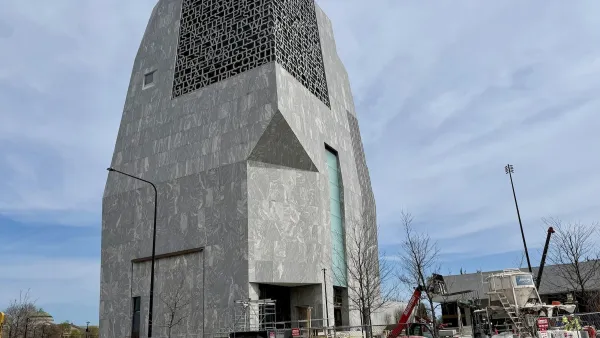
Short-term rental licenses grew by 46% near Obama Center as affordable homes disappear
The Chicago ward where the Obama library is located is one of the only parts of the city to see an increase in STR licenses.
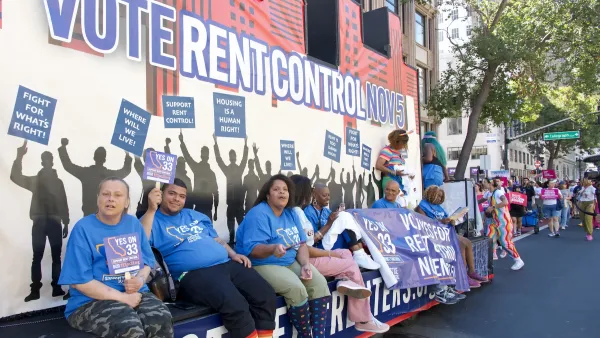
Oakland residents fear AI-fueled gentrification
The new tech boom that's driving up rents in San Francisco could have rippling impacts on East Bay communities.
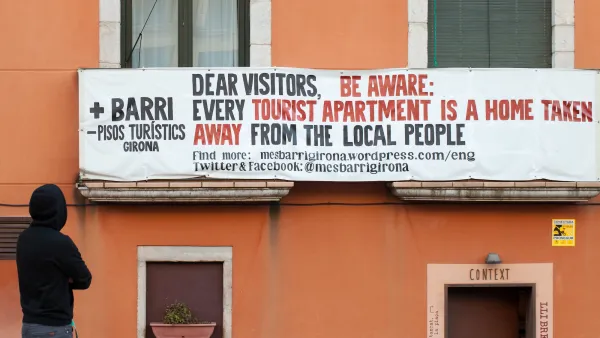
Spain Fines Airbnb $75 Million After Crackdown on Unlicensed Rentals
The government took action after residents in tourist centers protested, blaming tourist rentals for a growing housing crisis.

Planetizen Federal Action Tracker
A weekly monitor of how Trump’s orders and actions are impacting planners and planning in America.

Amtrak, CN end decades-long dispute with eight-year agreement
The new operating agreement establishes an updated framework for the companies to work together, including processes to resolve disputes.

Judges permit Denver to divert 77,000 acre feet from the Colorado River for reservoir expansion
Overuse and climate change have caused the Colorado River’s water levels to plummet.

Alabama scores up to $2.5 billion federal loan for largest infrastructure project in state’s history
The Mobile River Bridge and Bayway Project aims to ease congestion at Alabama’s worst bottleneck.

Trump is considering data centers on 6 states' public land — some state officials say they had no idea
If the administration approves the proposed projects, data center and data center-related developments will cover 17,600 acres of public land.

Despite court ruling, Trump is keeping nearly all wind projects in the US on hold
At least 110 wind energy projects have not heard from the government since a federal judge ruled that the Trump administration's freeze on wind turbine clearances was likely illegal.

FREE Course: Walkable City 1: Why Walkability?
After describing his path towards focusing on walkability as the essence of good planning, Jeff Speck marches through his five principal reasons for making more walkable places.
Reinventing Malls: Planning Alchemy—Turning Gray Fields Into Gold
The course focuses on the opportunities and imperatives that shape reinvention of mall sites.

KFH Group Inc.
Greater Baltimore Committee
Eagle County Government
The Architects Foundation
University of Cincinnati Online
The Pocatello Development Authority
The Urban Renewal Agency of the City of Pocatello