The pandemic will end and SARS-CoV-2 may evolve to become a mild, endemic cold coronavirus, warns Aris Katzourakis, a professor of viral evolution and genomics in an opinion for Nature. Examples of other endemic diseases are malaria and tuberculosis.


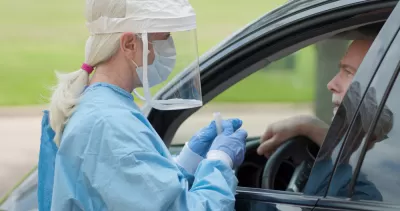
"As cases decline in some parts of the country, many have begun to hope that this surge is the last big battle with the virus — that because of its unique characteristics, the Omicron variant will usher Americans out of the pandemic," writes global health reporter Apoorva Mandavilli for The New York Times on January 27.
She warns that "it is not likely that the coronavirus will ever completely disappear, many scientists said, and herd immunity is now just a dream. The population’s immunity against the virus will be imperfect, for a variety of reasons."
Instead, the coronavirus seems likely to become endemic — a permanent part of American lives, a milder illness, like the flu, that people must learn to live with and manage.
What is endemic?
"The word 'endemic' is one of the most misused of the pandemic," writes Aris Katzourakis, a professor of evolution and genomics at St. Hilda's College in the University of Oxford in the U.K. in an opinion published on Jan. 24 in Nature, a weekly international journal publishing peer-reviewed research. He warns of a "misplaced complacency" resulting from a misunderstanding of the word.
Yes, common colds are endemic. So are Lassa fever, malaria and polio. So was smallpox, until vaccines stamped it out.
In other words, a disease can be endemic and both widespread and deadly. Malaria killed more than 600,000 people in 2020. Ten million fell ill with tuberculosis that same year and 1.5 million died. Endemic certainly does not mean that evolution has somehow tamed a pathogen so that life simply returns to 'normal.'
"The CDC defines a pandemic as 'an event in which a disease spreads across several countries and affects a large number of people,'" write Mackenzie Bean and Gabrielle Masson in a concise, 7-paragraph summary of Katzourakis's essay. Another important distinction is that a pandemic is declared by the World Health Organization.
In contrast, an endemic is the "constant presence and/or usual prevalence of a disease or infectious agent within a geographic area."
Should we even be discussing endemicity now?
COVID cases during the Omicron wave in the U.S. peaked on January 14 at a 7-day average of nearly 807,000 cases, according to The New York Times coronavirus tracker, over three times higher than the prior peak that occurred during last winter's surge of just over 251,000 cases on January 11, 2021.
Three months ago, a week before the Omicron variant was first identified by South African scientists, when the nation was averaging over 83,000 daily new cases, the nation's top infectious disease expert suggested a metric to reach which would be an appropriate time to consider getting back to normal, as reported by CNBC on Nov. 16, 2021:
"I think if we can get well below 10,000, I think that would be a level that I think would be acceptable to us to get back to a degree of normality," said White House chief medical advisor Dr. Anthony Fauci. "But again, I have to warn the listeners, these are not definitive statements — these are just estimates."
In fact, after March 27, 2020, just over two weeks after the start of the pandemic, the U.S. has never gone below the 11,180 average daily new cases reached on June 21, 2021, after the fall 2020/winter 2021 surge, according to the "new reported cases" graph on the Times tracker. Daily average deaths had peaked just over 5 months earlier on Jan. 13 at over 3,300.
Current COVID metrics
Daily average new cases have declined by over 20% in the past two weeks to >618,000 on Jan 26, according to the Times tracker. Hospitalizations have plateaued at around 153,000. Deaths, the main lagging indicator, increased by 34% to nearly 2,500. On a global level, over 28% of all COVID deaths are Americans, about seven times the global percentage of the U.S. population.
The path ahead
"The path to normalcy may be short and direct, the goal just weeks away, and horrific surges may become a thing of the past," adds Mondavilli of the Times. It "also depends on a wild card: new variants."
Omicron surfaced only at the end of November. Most researchers believe other variants are coming, because too little of the world is vaccinated. Eventually some may be both highly contagious and have a knack for short-circuiting the body’s immune defenses, lengthening the misery for everyone.
"Tedros Adhanom Ghebreyesus, the head of the World Health Organization, said on Monday that the emergency phase of the pandemic was still very much here," reported The New York Times on Jan. 26.
“It’s dangerous to assume that Omicron will be the last variant or that we are in the endgame,” Dr. Tedros said at an executive board meeting of the organization. “On the contrary, globally, the conditions are ideal for more variants to emerge.”
Katzourakis, who researches viral and genome evolution, warned in his opinion (source article) what two experts expressed in the recent post, "After Omicron."
There is a widespread, rosy misconception that viruses evolve over time to become more benign. This is not the case: there is no predestined evolutionary outcome for a virus to become more benign, especially ones, such as SARS-CoV-2, in which most transmission happens before the virus causes severe disease. Consider that Alpha and Delta are more virulent than the strain first found in Wuhan, China. The second wave of the 1918 influenza pandemic was far more deadly than the first.
He ends his piece with a warning about how this post began, the hope that "the Omicron variant will usher Americans out of the pandemic" after the tidal wave has receded.
Thinking that endemicity is both mild and inevitable is more than wrong, it is dangerous: it sets humanity up for many more years of disease, including unpredictable waves of outbreaks. It is more productive to consider how bad things could get if we keep giving the virus opportunities to outwit us. Then we might do more to ensure that this does not happen.
Correspondent's note: Becker Healthcare's summary, "Don't let the term fool you — 'Endemic' can be dangerous," is recommended for those short on time.
Related in Planetizen:
- After Omicron, January 24, 2022
Read the full story: COVID-19: endemic doesn’t mean harmless

Pandemic Endgame: Danish Epidemiologist's Prediction
Based on the results of a new study on the transmission of the Omicron variant in Denmark released by the Statens Serum Institut, Tyra Grove Krause, the institute's chief epidemiologist, said, "We will have our normal lives back in two months."
The Pandemic Era
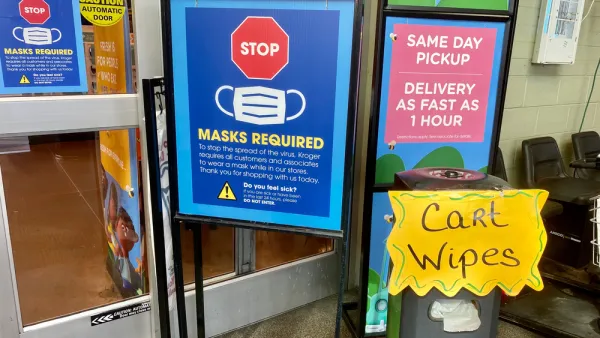
"We are living in the Covid-19 era, not the Covid-19 crisis," Allan Brandt, a historian of science and medicine at Harvard University, told Gina Kolata of the New York Times last October in a review of past pandemics and what we can learn from them.
After Omicron
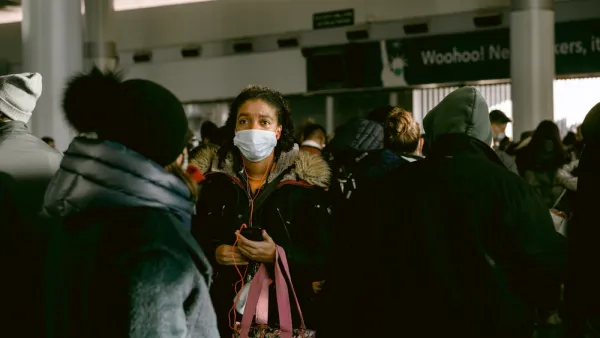
Don't count on Omicron ending the pandemic, cautioned America's top infectious disease expert on Jan. 17. "Get ready to learn new Greek letters," warned the Associated Press as daily COVID deaths topped the peak set in the Delta wave.

Planetizen Federal Action Tracker
A weekly monitor of how Trump’s orders and actions are impacting planners and planning in America.

Amtrak, CN end decades-long dispute with eight-year agreement
The new operating agreement establishes an updated framework for the companies to work together, including processes to resolve disputes.

Judges permit Denver to divert 77,000 acre feet from the Colorado River for reservoir expansion
Overuse and climate change have caused the Colorado River’s water levels to plummet.

NYC DOT wants faster, more permanent street upgrades
The city is examining ways to build more concrete infrastructure without getting entangled in 'decades-long' projects.

'Something we’ve never seen before:' rising utility rates could strain city finances nationwide
Data centers, climate change and other factors have caused utility rates in the United States to increase by 38% since 2020.

Trump to overrule local leaders, lease millions of acres of America’s Pacific Island territories’ seafloors to mining companies
International law says that the Indigenous people of America’s territories have a right to prior and informed consent regarding projects that impact their countries.

FREE Course: Walkable City 1: Why Walkability?
After describing his path towards focusing on walkability as the essence of good planning, Jeff Speck marches through his five principal reasons for making more walkable places.
Reinventing Malls: Planning Alchemy—Turning Gray Fields Into Gold
The course focuses on the opportunities and imperatives that shape reinvention of mall sites.

Harvard University Graduate School of Design
KFH Group Inc.
Greater Baltimore Committee
The Architects Foundation
University of Cincinnati Online
The Pocatello Development Authority
The Urban Renewal Agency of the City of Pocatello