Dallas relies on a formula introduced in 1965 to determine parking requirements for new developments, but city planners are studying how to update the city's development code for the future.


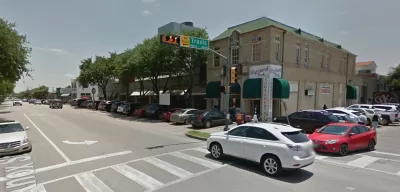
In an article for D magazine, Matt Goodman provides background and details on an ongoing effort to update parking requirements in the city of Dallas, Texas—an auto-oriented built environment if ever there were one. The city's current parking requirements depend on a section of the development code created in 1965 and called 51A, according to Goodman.
The city has been studying an update to the city's parking requirements for two years—ever since a high profile incident detailed at the time by the Dallas Morning News. The local chapter of the American Institute of Architects is paying attention—recently bringing in a star witness to make the case for reforms—namely, Donald Shoup, author of the definitive book on parking reforms, The High Cost of Free Parking. Shoup told the group that Dallas has some of the more ridiculous parking requirements he's ever seen.
The question of how far the city of Dallas will go in implementing parking requirement reform is still an open question—but the source article linked below provides tons of background, examples, and options to inform the city's decision. Dallas will be a parking requirement reform model to watch—for better or worse—soon.
The city paused its study in August 2021, due to turnover at the city, but is expecting to write its staff recommendation in 2022.
FULL STORY: The City of Dallas Is Putting Parking Spots in Its Crosshairs

Development Code, Future Land Use Map Updates Coming to Dallas
The ForwardDallas initiative is attempting for the Holy Grail of planning: development certainty.
Updated: Proposed Parking Reforms Spark Controversy in Dallas
An ordinance under consideration by the Dallas City Council would change the parking requirements in the zoning code to allow for more density in exchange for affordable housing.
Phoenix Could Ease Parking Requirements to Support Transit, Affordable Housing
In addition to lower citywide parking requirements on residential properties, a proposed law in Phoenix would lower minimum parking requirements even further for affordable housing developments near the city’s light rail system.

The state-sanctioned urbicide of Austin
People don’t kill cities. Freeways do.

US to reduce Colorado River water deliveries to Mexico
A new Colorado Treaty amendment reduces Mexico’s Colorado River water allocation by 250,000 acre feet.

New Jersey’s second-largest city bans standalone data centers
Jersey City will continue to allow co-location facilities, such as those meant for research institutions that store their own data.

Amtrak not solely to blame for New Jersey commuter rail's unreliability, report finds
A new study from the Garden State Initiative found that NJ Transit’s budget grew 20% across a 4 year period, but reliability declined significantly over the same period.

EPA erases limits on planet-warming pollution from power plants
Under Monday’s plan, power plants would still have some limits on how much mercury, arsenic and other contaminants they can emit.

Phoenix announces new on-demand transit service, more frequent RAPID buses
Both new services will launch in October, and are part of Phoenix's Project Effective Access Solutions for Easing Congestion.

FREE Course: Walkable City 1: Why Walkability?
After describing his path towards focusing on walkability as the essence of good planning, Jeff Speck marches through his five principal reasons for making more walkable places.
Reinventing Malls: Planning Alchemy—Turning Gray Fields Into Gold
The course focuses on the opportunities and imperatives that shape reinvention of mall sites.

Eagle County Government
Harvard University Graduate School of Design
Nashville Planning Department
The Architects Foundation
University of Cincinnati Online
The Pocatello Development Authority
The Urban Renewal Agency of the City of Pocatello
Journal of the American Planning Association