As demand for real estate grows, residents in the city's historic neighborhoods face rising costs and the threat of displacement.


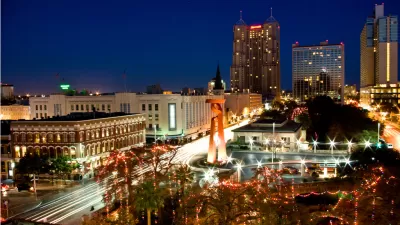
San Antonio, Texas is experiencing new growth and development in its historic core. But, as Patrick Sisson reports, "community advocates are pushing back against some of this growth, saying the new office and apartment towers are encroaching on the city’s historic neighborhoods that have formed a cultural core of Mexican American heritage."
As one of America's fastest growing–and also "one of the most segregated and poor"–cities, San Antonio is seeing rapid population growth, which requires new development. "A number of large-scale projects will bolster recent growth downtown. The $700 million Lone Star District should break ground this year; Essex Modern City, a $150 million multiuse district, finally cleared funding and regulatory hurdles; and the second phase of redevelopment within Hemisfair will break ground this fall."
But the availability of real estate in the city's "relatively small, walkable downtown" does not match the growing demand. "That demand, and the need for new housing, has worried advocates and community members in the Westside, a neighborhood of small stores, or tienditas, and tightly knit single-family homes that is a wellspring of affordable homeownership for low- to medium-income residents, with homes often passed down through generations." Levar Martin, chief program officer of the National Association for Latino Community Asset Builders, says "[i]t’s not just about preserving the housing stock. It’s about people’s culture and life."
Advocates are calling for more investment in affordable housing and "recognition of historic architecture" that will protect communities. Advocates like Martin say "[n]ow is the time to figure out the right formula for preserving the city’s heritage and maintaining affordable housing."
"City and housing officials are grappling with what comes next, especially when it comes to access and affordability" for all income levels. "Mayor Ron Nirenberg and his administration have created means to invest in housing, including setting aside funding for affordable housing and establishing a $1 million risk mitigation fund in 2019 to help residents displaced by development, which will receive $4 million in additional funds this year." The city is also working on a new strategic housing plan that seeks to create 28,000 new units over the next decade.
FULL STORY: San Antonio’s Challenge: Balancing Growth With Heritage

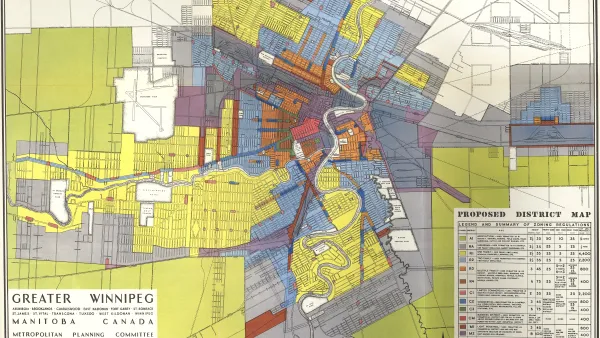
Opinion: Outdated Zoning Codes Stifle Growth and Development
Strict separation of uses may be an inefficient way to zone dynamic modern cities.
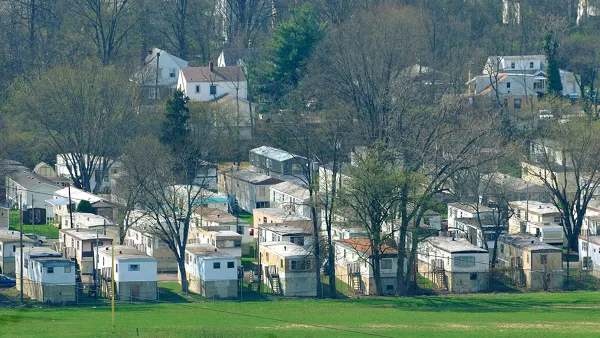
How Mobile Homes Fill a 'Critical Gap' in Affordable Housing
Cities across America have a housing crisis on their hands—should they be talking more about trailer parks?

Historic Newark building to become affordable housing
The century-old building will be converted into nearly 200 homes with ground-floor retail.

Planetizen Federal Action Tracker
A weekly monitor of how Trump’s orders and actions are impacting planners and planning in America.

The state-sanctioned urbicide of Austin
People don’t kill cities. Freeways do.

US to reduce Colorado River water deliveries to Mexico
A new Colorado Treaty amendment reduces Mexico’s Colorado River water allocation by 250,000 acre feet.

5 New England states march closer to 800 megawatt wind energy project
Securing federal approval for the project may be complicated under the Trump administration, which has historically been hostile towards domestic wind power.

Baltimore to break ground on $50 million Transit Priority Project
The project will bring faster bus trips, safer streets and better bike connections to Baltimore.

Airbnb launches $250 million 'last-dollar financing' housing accelerator, makes first investment in Austin
The company will put $6.4 million towards affordable housing development in Texas’ capital.

FREE Course: Walkable City 1: Why Walkability?
After describing his path towards focusing on walkability as the essence of good planning, Jeff Speck marches through his five principal reasons for making more walkable places.
Reinventing Malls: Planning Alchemy—Turning Gray Fields Into Gold
The course focuses on the opportunities and imperatives that shape reinvention of mall sites.

Eagle County Government
Harvard University Graduate School of Design
Nashville Planning Department
The Architects Foundation
University of Cincinnati Online
The Pocatello Development Authority
The Urban Renewal Agency of the City of Pocatello
Journal of the American Planning Association