An ordinance proposed by an Atlanta City Councilmember would establish the "Building the Beloved Community Affordable Housing Trust Fund"—with a commitment to spend 2 percent of the city's general fund annually.


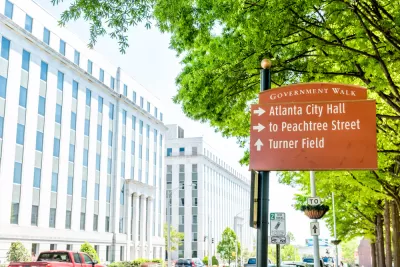
An ordinance proposed this week in Atlanta City Council would launch a trust fund dedicated to building and preserving affordable housing—spending 2 percent of the city's general fund annually to address the highest income inequality and lowest economic mobility rates in the United States.
Sean Keenan reports on the new ordinance, authored by councilmembers Matt Westmoreland with the backing of eight other city leaders, including two mayoral candidates.
"To put this all in perspective, if this measure were effective today, it would pull some $14 million of the city’s roughly $710 million budget for housing affordability initiatives, such as erecting new units and renovating existing ones," writes Keenan. The spending will be phased in, ramping up to the 2 percent total by 2025.
"The idea of an affordable housing trust fund isn’t new, as Councilman [Antonio] Brown pointed out to Atlanta Civic Circle in an interview. It’s been discussed for years, recommended by advocacy group HouseATL in 2018 and incorporated into Mayor Keisha Lance Bottoms’s One Atlanta: Housing Affordability Action Plan in 2019."
FULL STORY: Atlanta officials consider devoting 2 percent of municipal budget to affordable housing trust fund

How Atlanta Plans to Overhaul Zoning for Housing Affordability
The "Atlanta City Design: Housing" initiative is one of the most ambitious planning reform efforts of any large U.S. city, but it's just getting started.
First Wave of Affordable Housing Bonds Ratified in Atlanta
A down payment on a $100 million investment in affordable housing is moving forward in Atlanta.
Atlanta Launching Affordable Housing Development Program for City-Owned Land
The Atlanta Department of City Planning has identified 877 acres of land on 490 parcels for potential affordable housing development.

Planetizen Federal Action Tracker
A weekly monitor of how Trump’s orders and actions are impacting planners and planning in America.

The state-sanctioned urbicide of Austin
People don’t kill cities. Freeways do.

US to reduce Colorado River water deliveries to Mexico
A new Colorado Treaty amendment reduces Mexico’s Colorado River water allocation by 250,000 acre feet.

5 New England states march closer to 800 megawatt wind energy project
Securing federal approval for the project may be complicated under the Trump administration, which has historically been hostile towards domestic wind power.

Baltimore to break ground on $50 million Transit Priority Project
The project will bring faster bus trips, safer streets and better bike connections to Baltimore.

Airbnb launches $250 million 'last-dollar financing' housing accelerator, makes first investment in Austin
The company will put $6.4 million towards affordable housing development in Texas’ capital.

FREE Course: Walkable City 1: Why Walkability?
After describing his path towards focusing on walkability as the essence of good planning, Jeff Speck marches through his five principal reasons for making more walkable places.
Reinventing Malls: Planning Alchemy—Turning Gray Fields Into Gold
The course focuses on the opportunities and imperatives that shape reinvention of mall sites.

Eagle County Government
Harvard University Graduate School of Design
Nashville Planning Department
The Architects Foundation
University of Cincinnati Online
The Pocatello Development Authority
The Urban Renewal Agency of the City of Pocatello
Journal of the American Planning Association