A real estate co-op in Oakland is making waves with its first commercial acquisition.


In its heyday, Esther’s Orbit Room hosted Billie Holiday, Charlie Parker and John Coltrane, among other greats. The Oakland club — the cornerstone of a commercial corridor known as the “Harlem of the West” was owned and run by Texas native Esther Mabry, who had saved up her tips from waitressing to open, in 1950, the bar that would become the legendary jazz club.
If Mabry’s club was legendary, so was Mabry herself: 3rd-generation West Oaklander Noni Session remembers her for the annual scholarship she gave out to a C-grade student — indicative of caring for those that the system left behind.
Esther’s Orbit Room closed in 2010, and not long after, Mabry herself passed away. The building has been vacant ever since. But now Session is shepherding a new effort to revitalize the property as an anchor for the revitalization of the entire 7th Street commercial corridor. The plan is to re-open the space as an arts and culture hub, including a gallery space and a performance space, as well as space for incubating food businesses, with three apartment units above. In late March, as executive director of the East Bay Permanent Real Estate Cooperative, she reached an agreement to acquire the property for $1.45 million from the current private owners.
It will be the third property and first commercial property for East Bay Permanent Real Estate Cooperative, a unique real estate development entity with an ownership and governance structure that includes co-op residents, members of the surrounding community, staff of the co-op, and investors — with residents, community members and staff having priority over investors in making major decisions and setting policies.
And East Bay Permanent Real Estate Cooperative is now looking for new investor-owners to join its cause. It’s looking to raise $50 million in shares through what’s known as a direct public offering. At a price of $1,000 a share, investor-owners are entitled to an annual dividend of 1.5 percent. Unlike buying a share on the stock market, investors can’t sell their shares to others, only back to the co-op. And they have to leave their investment in the co-op for at least five years. Most importantly, no matter how many shares an investor purchases, each investor gets only one vote in the elections for board president and board treasurer.
The co-op has already secured the funding to acquire Esther’s Orbit Room, but the first $1.25 million from the offering will go to help renovate the building and bring it up to code. The co-op hopes the project will also provide a narrative to draw in investors to raise the remaining $48 million, and their investments will help finance projects that are already coming into the co-op’s pipeline. The co-op reviewed more than 35 potential projects in 2020.
FULL STORY: This Real Estate Co-Op is Looking for Investors Who Want to Put Community First


Bay Area Pop-Ups Aim To Activate Vacant Storefronts
As commercial storefronts experience high vacancy rates, cities like Oakland and San Francisco are making concerted efforts to support temporary tenants, public art installations, and small entrepreneurs that can revitalize abandoned spaces.
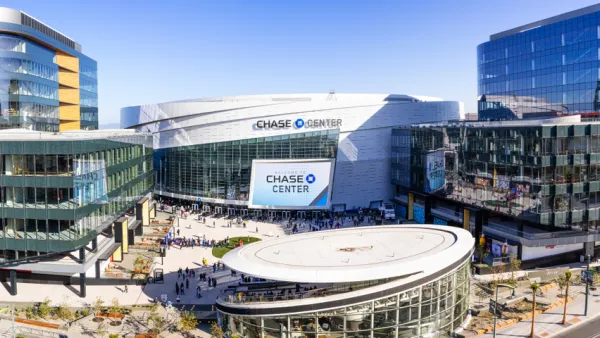
San Francisco Gets Lavish Urban Amenity—For Free
The new, privately financed Chase Center arena was designed with San Francisco's tech wealth in mind. It's a handsome addition to the Mission Bay neighborhood but pulls the Bay Area further away from its blue collar roots.

California Proposal to Shelter Homeless on Cruise Ship
Oakland is looking at the possibility of housing homeless people in unconventional quarters.

Planetizen Federal Action Tracker
A weekly monitor of how Trump’s orders and actions are impacting planners and planning in America.

The state-sanctioned urbicide of Austin
People don’t kill cities. Freeways do.

US to reduce Colorado River water deliveries to Mexico
A new Colorado Treaty amendment reduces Mexico’s Colorado River water allocation by 250,000 acre feet.

Mamdani overhauls NYC's Vision Zero plan with 100 new policy goals
The overhaul aims to reduce traffic deaths and make streets safer for pedestrians, cyclists and drivers through lower speed limits, new safety infrastructure and more.

Amtrak not solely to blame for New Jersey commuter rail's unreliability, report finds
A new study from the Garden State Initiative found that NJ Transit’s budget grew 20% across a 4 year period, but reliability declined significantly over the same period.

EPA erases limits on planet-warming pollution from power plants
Under Monday’s plan, power plants would still have some limits on how much mercury, arsenic and other contaminants they can emit.

FREE Course: Walkable City 1: Why Walkability?
After describing his path towards focusing on walkability as the essence of good planning, Jeff Speck marches through his five principal reasons for making more walkable places.
Reinventing Malls: Planning Alchemy—Turning Gray Fields Into Gold
The course focuses on the opportunities and imperatives that shape reinvention of mall sites.

Eagle County Government
Harvard University Graduate School of Design
Nashville Planning Department
The Architects Foundation
University of Cincinnati Online
The Pocatello Development Authority
The Urban Renewal Agency of the City of Pocatello
Journal of the American Planning Association