A study of real estate values in Seattle found that townhomes have helped diversify neighborhoods and increase affordability.


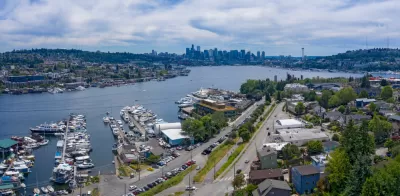
Despite its rising housing costs, a new study from real estate website Redfin finds that Seattle is the nation's most "economically integrated" city, citing townhomes as a major factor in achieving housing affordability. Joshua McNichols explains that townhomes provide a reasonably affordable option for many Seattle households, helping them move into previously inaccessible neighborhoods.
Without the luxury of endless expanses of sprawl-ready land surrounding it, Seattle (unlike, say, Houston), has to contend with limited real estate. According to Taylor Marr, chief economist for Redfin, "in 2016, neighborhoods like Ballard were affordable only to a few. But as townhomes have replaced single family homes, these once exclusive neighborhoods have now flipped, and are now considered economically integrated."
The study, however, reviewed all homes rather than just those on the market, including a large number of homes that won't come up for sale anytime soon. While urban townhomes can provide acceptable housing for couples or small families, larger families might find the one- and two-bedroom units "unsuitable" and will continue to have to turn to the suburbs for affordable housing.
FULL STORY: New study finds that townhomes are making Seattle more affordable


Seattle Works To Revise Comprehensive Plan
The city has developed five concepts for updating its comprehensive plan to increase density and reverse the legacy of exclusionary zoning.

Survey: Seattle-Area Residents Support Upzoning
To fight the growing housing crisis, most King County residents support an end to single-family zoning and accelerated housing development, according to a new poll.

A Battle Brews Over Housing Density In Seattle
The newly elected Seattle City Council will take up the debate over single-family zoning in the city.

Planetizen Federal Action Tracker
A weekly monitor of how Trump’s orders and actions are impacting planners and planning in America.

The state-sanctioned urbicide of Austin
People don’t kill cities. Freeways do.

US to reduce Colorado River water deliveries to Mexico
A new Colorado Treaty amendment reduces Mexico’s Colorado River water allocation by 250,000 acre feet.

5 New England states march closer to 800 megawatt wind energy project
Securing federal approval for the project may be complicated under the Trump administration, which has historically been hostile towards domestic wind power.

Baltimore to break ground on $50 million Transit Priority Project
The project will bring faster bus trips, safer streets and better bike connections to Baltimore.

Airbnb launches $250 million 'last-dollar financing' housing accelerator, makes first investment in Austin
The company will put $6.4 million towards affordable housing development in Texas’ capital.

FREE Course: Walkable City 1: Why Walkability?
After describing his path towards focusing on walkability as the essence of good planning, Jeff Speck marches through his five principal reasons for making more walkable places.
Reinventing Malls: Planning Alchemy—Turning Gray Fields Into Gold
The course focuses on the opportunities and imperatives that shape reinvention of mall sites.

Eagle County Government
Harvard University Graduate School of Design
Nashville Planning Department
The Architects Foundation
University of Cincinnati Online
The Pocatello Development Authority
The Urban Renewal Agency of the City of Pocatello
Journal of the American Planning Association