To many employees are sick with COVID for Massachusetts Bay Transportation Authority commuter rail to operate on its normal schedule.


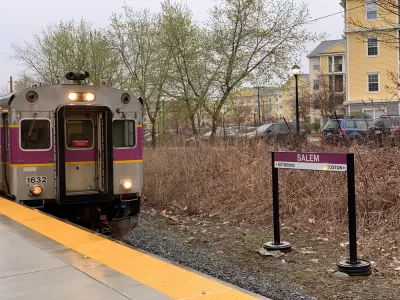
"Keolis Commuter Services, the company that operates [Massachusetts Bay Transportation Authority] commuter rail, is temporarily reducing service by more than half due to low employee availability because of COVID-19 absences," reports Amanda Kaufman.
The MBTA Commuter Rail system will start its altered schedule on Monday.
The news of the system's system reductions are a tragic departure from the typical pandemic-related service reduction—either due to declining ridership or declining revenue, but transit operators were particularly prone to infection during the early days of the pandemic, in New York City in particular. Sound Transit in Seattle also announced service reductions earlier this month due to high numbers of ill employees.
FULL STORY: Keolis to temporarily reduce commuter rail service, citing employee COVID-19 absences

Transit Plans Change as the Pandemic Lingers
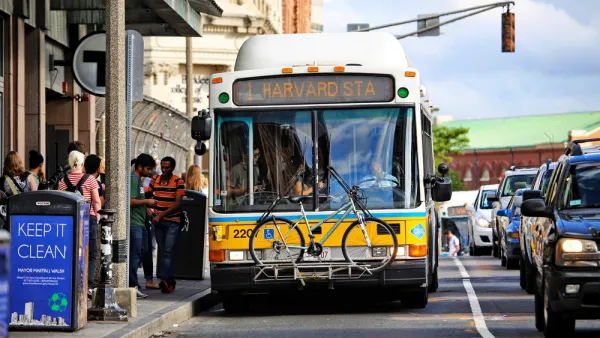
The Massachusetts Bay Transportation Authority (MBTA) this week proposed cuts to public transit service. In a decision that will likely repeat as more transit agencies undertake similar processes, the MBTA decided to prioritize buses over trains.

Bike Share Lessons From the Pandemic
Bike share data from six U.S. cities offer insight into how Americans have changed travel patterns during the pandemic.
Transit Agencies Begin Service Changes for Coronavirus Response
Public transit agencies are responding to declining ridership during the Coronavirus outbreak by reducing service. But the right balance between safe, reliable, and sustainable will be hard to calibrate in these difficult times.

The state-sanctioned urbicide of Austin
People don’t kill cities. Freeways do.

US to reduce Colorado River water deliveries to Mexico
A new Colorado Treaty amendment reduces Mexico’s Colorado River water allocation by 250,000 acre feet.

New Jersey’s second-largest city bans standalone data centers
Jersey City will continue to allow co-location facilities, such as those meant for research institutions that store their own data.

Amtrak not solely to blame for New Jersey commuter rail's unreliability, report finds
A new study from the Garden State Initiative found that NJ Transit’s budget grew 20% across a 4 year period, but reliability declined significantly over the same period.

EPA erases limits on planet-warming pollution from power plants
Under Monday’s plan, power plants would still have some limits on how much mercury, arsenic and other contaminants they can emit.

Phoenix announces new on-demand transit service, more frequent RAPID buses
Both new services will launch in October, and are part of Phoenix's Project Effective Access Solutions for Easing Congestion.

FREE Course: Walkable City 1: Why Walkability?
After describing his path towards focusing on walkability as the essence of good planning, Jeff Speck marches through his five principal reasons for making more walkable places.
Reinventing Malls: Planning Alchemy—Turning Gray Fields Into Gold
The course focuses on the opportunities and imperatives that shape reinvention of mall sites.

Eagle County Government
Harvard University Graduate School of Design
Nashville Planning Department
The Architects Foundation
University of Cincinnati Online
The Pocatello Development Authority
The Urban Renewal Agency of the City of Pocatello
Journal of the American Planning Association