After releasing new five-year estimates this week, the American Community Survey now offers three sets of five-year data that don't overlap, providing even more data for the analysis of local trends.



The U.S. Census Bureau released its 2015-2019 American Community Survey (ACS) five-year estimates on December 10, making a major milestone for the program as the third set of five-year estimates created by the ACS.
"This is another step in fulfilling the vision for the ACS to provide government, businesses and the general public with more frequent data than the once-a-decade decennial census," according to an article for the Census Bureau written by Nicole Scanniello.
"The ACS data cover social, economic, housing and demographic characteristics. They allow federal and state government, businesses, researchers, communities and others to understand changes in specific geographies and population groups," according to Scanniello.
With the new historical scope possible with this latest batch of five-year data, Scanniello offers guidance on how and why to use the data.
Read the full story: New American Community Survey 5-Year Estimates for the First Time Provide Data on Three Time Periods That Don’t Overlap

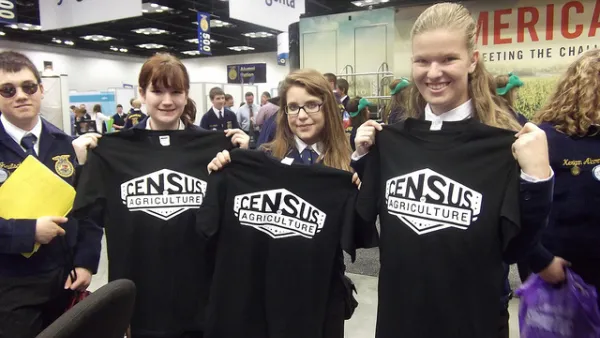
Trump Administration's Draft Budget Raises New Concerns About Data Collection
President Trump has made no secret of his disdain for many of the traditional data points used to represent the health and prosperity of the country. The budgetary process offers an opportunity to match words with action.
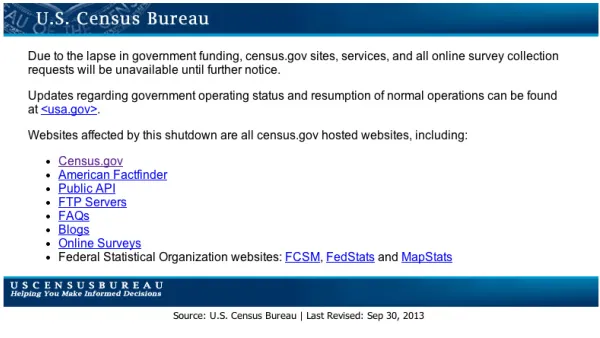
Where to Find Federal Data During the Shutdown
When the federal government shut down last week it took many agency websites along with it, depriving planners around the U.S. of resources they use daily. The blog Data Insights has put together a list of alternative sources for federal data.
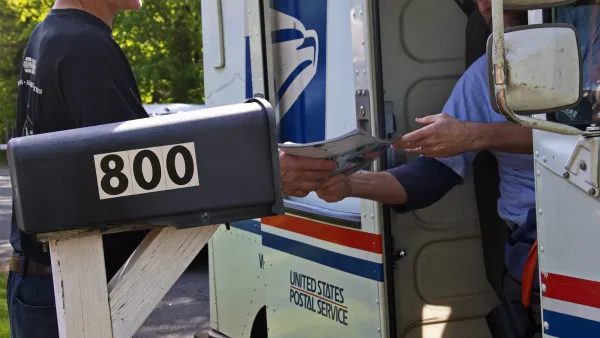
US Census Starts Using Postal Workers as Census Takers
A test program is using postal carriers to administer Census questionnaires.

Planetizen Federal Action Tracker
A weekly monitor of how Trump’s orders and actions are impacting planners and planning in America.

California plans to bury El Niño’s downpour
If the state plays its cards right, it may be able to store a billion acre-feet of El Niño’s water in aquifers.

Chicago breaks ground on $3 billion megadevelopment
The new neighborhood, titled Foundry Park, will one day host 3,700 residences.

Satanic place names
From streams and lakes to valleys and canyons, I mapped more than 1,000 places named after the Devil.

California High-Speed Rail Authority CEO resigns after $600,000 scandal
Under Ian Choudri, the authority used taxpayer dollars to fund first class flights and trips to nightclubs.

Want to study the Missouri River? Soon, you may need unanimous approval from 10 states
Legislation would require 10 governors’ permission to study or build projects moving water outside the basin.

FREE Course: Walkable City 1: Why Walkability?
After describing his path towards focusing on walkability as the essence of good planning, Jeff Speck marches through his five principal reasons for making more walkable places.
Reinventing Malls: Planning Alchemy—Turning Gray Fields Into Gold
The course focuses on the opportunities and imperatives that shape reinvention of mall sites.

City of Rosemead
Rutgers University, Edward J. Bloustein School of Planning and Public Policy
One Hundred Miles
Hunter College, City University of New York (CUNY)
The Architects Foundation
University of Cincinnati Online
City of Cambridge
Montrose County
The Pocatello Development Authority