The cost of parking won't be passed down to residents at a newly approved multi-family residential development in Charlotte.


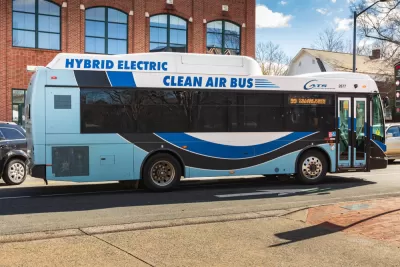
The Charlotte City Council recently approved a rezoning that will allow the development of a parking-free residential development, in an effort to create affordable housing in the city, according to an article by Danielle Chemtob.
"The proposal, from developer Grubb Properties, calls for up to 104 multifamily units, and a total of six parking spaces," reports Chemtob. Clay Grubb, CEO of Grubb Properties told city officials in a June hearing that the development would have paid $30,000 per parking spot, and will pass the $250 in monthly savings to the future renters of the units.
"Under the rezoning plan, half of the units would be priced for those earning up to 80% of the area median income, which is $66,800 for a family of of [sic] four," explains Chemtob.
The Charlotte Area Transit System is finalizing a bus route past the development, and the plan for the development includes a bus stop. The development will also include one bike rack for every bedroom in the new development, and a bicycle maintenance plan for residents.
Read the full story: Charlotte OKs car-free residential development in effort to reduce housing prices

Philadelphia Law Would Raise Parking Minimums
Swaths of the city of Philadelphia could see increased parking minimums if a new version of a bill that failed in 2016 makes its way through City Council.
Chicago eliminates parking requirements near transit
In 2025, Illinois barred cities from mandating parking near train and bus stations.
Baltimore Seeks to Stem Population Loss by Eliminating Parking Requirements, Legalizing Single-Stair Buildings
A package of zoning reforms is aimed at making it easier to build and redevelop housing to draw people back to the city, which has been losing population steadily.

Planetizen Federal Action Tracker
A weekly monitor of how Trump’s orders and actions are impacting planners and planning in America.

The state-sanctioned urbicide of Austin
People don’t kill cities. Freeways do.

US to reduce Colorado River water deliveries to Mexico
A new Colorado Treaty amendment reduces Mexico’s Colorado River water allocation by 250,000 acre feet.

Nation's most wind-powered state turns to coal as data centers increase energy demand
For the first time in decades, Iowa has increased its generation of coal power.

NYC cools commuters with city's first rain garden above a bus stop
New York City officials say the plants in the rain garden can absorb 16 gallons of rainwater during heavy storms.

Brightline West’s future may rely on $6 billion federal loan
The company has until Nov. 2 to make a $400 million equity investment into its proposed high-speed rail line.

FREE Course: Walkable City 1: Why Walkability?
After describing his path towards focusing on walkability as the essence of good planning, Jeff Speck marches through his five principal reasons for making more walkable places.
Reinventing Malls: Planning Alchemy—Turning Gray Fields Into Gold
The course focuses on the opportunities and imperatives that shape reinvention of mall sites.

Greater Baltimore Committee
Eagle County Government
Harvard University Graduate School of Design
The Architects Foundation
University of Cincinnati Online
The Pocatello Development Authority
The Urban Renewal Agency of the City of Pocatello
Journal of the American Planning Association