As tons of local produce runs the risk of over-ripening and perishing in Phoenix, Local First Arizona Foundation develops an organization structure to collect, prepare, and distribute local food.


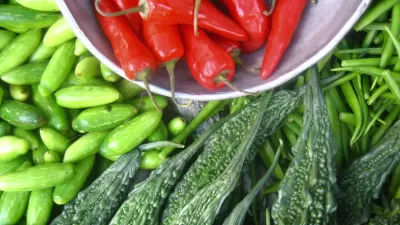
Local First Arizona Foundation is reshaping the local food distribution system in Phoenix. "Using federal funding from the CARES Act, the city will distribute healthy meals for pandemic response efforts produced by local growers, local restaurants and local caterers. While it was no heavy lift to find local growers and others to move produce, prepare and deliver meals, it required some extra work inside city hall to minimize the red tape typically associated with federal dollars," reports Oscar Perry Abello.
Granted $500,000 in CARES Act funding to collects food from local farmers, works with local restaurants to prepare meals, and hire delivery drivers, Local First Arizona Foundation has created a system for supplying healthy meals to those in crisis while saving harvests of local farmers from perishing.
The coverage from Abello discusses the lack of federal funding in updating broken systems of local food distribution. According to Abello, "efforts like this one to meet emergency food needs through local economies are happening organically in many cities, but they’re largely funded locally, if at all."
Read the full story: Phoenix Weaving Together New Local Food System Amid a Pandemic
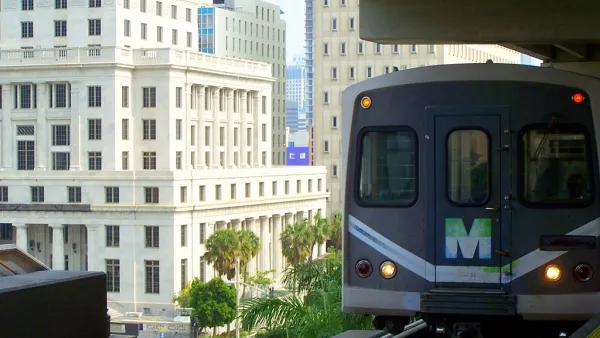
How $30 Billion in Stimulus Funding Would Change the Equation for Transit Agencies
The funding in the draft stimulus funding package making its way through Congress falls short of the total requested by the American Public Transportation Association, but would go a long way to helping transit agencies weather the pandemic.
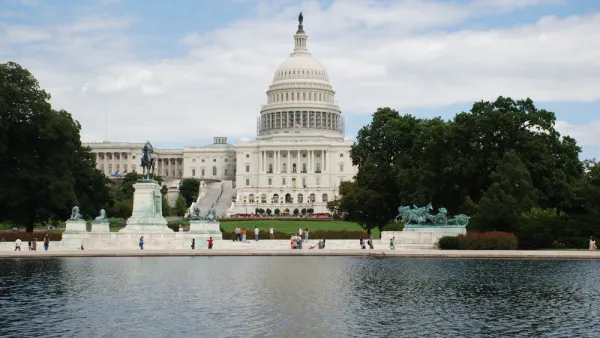
Proposed $1.9 Trillion Stimulus Includes $30 Billion Each for Transit and Rent Relief
Democrats in Congress are moving forward with a massive COVID stimulus package—with or without Republicans.
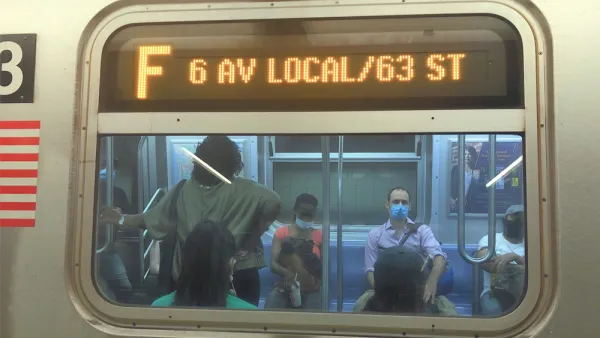
What's in the New Economic Stimulus Package for U.S. Transit Agencies
A new economic stimulus package that appears headed for approval as of this writing will give $15 billion to public transit, far less than transit advocates had hoped, but far better than nothing.

Planetizen Federal Action Tracker
A weekly monitor of how Trump’s orders and actions are impacting planners and planning in America.

California plans to bury El Niño’s downpour
If the state plays its cards right, it may be able to store a billion acre-feet of El Niño’s water in aquifers.

Desperate measures: Advocates weigh draining Lake Powell to fill Colorado River
Draining the reservoir could reduce evaporation losses by a couple hundred thousand acre-feet.

Mamdani’s pied-à-terre tax survives legal challenge
A panel of judges found that the plaintiffs failed to demonstrate injury as a result of New York City's implementation of the tax.

Eastern Nebraska is running out of electricity
Data centers and electrification are straining eastern Nebraska’s grid, throttling economic development.

Seattle passes record-breaking transit services expansion
Proposition 1 will double the city’s transit tax to add 95,000 more bus trips and preserve 180,000 bus trips annually.

FREE Course: Walkable City 1: Why Walkability?
After describing his path towards focusing on walkability as the essence of good planning, Jeff Speck marches through his five principal reasons for making more walkable places.
Reinventing Malls: Planning Alchemy—Turning Gray Fields Into Gold
The course focuses on the opportunities and imperatives that shape reinvention of mall sites.

City of Rosemead
Rutgers University, Edward J. Bloustein School of Planning and Public Policy
One Hundred Miles
University of Michigan School for Environment and Sustainability (SEAS)
Hunter College, City University of New York (CUNY)
The Architects Foundation
City of Cambridge
Montrose County
The Pocatello Development Authority