By signing this new law into effect, President Trump seems ot have departed from his administration's previous actions on public lands.


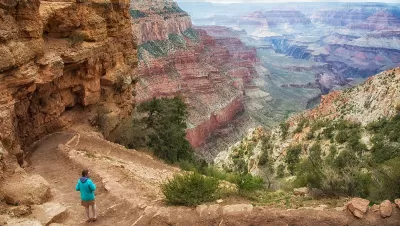
"After spending his presidency denying climate change, placing coal and oil industry officials in top environmental jobs, and weakening dozens of public health and wildlife rules, President Donald Trump on Tuesday reversed course and signed a historic law to pump billions of dollars into long-neglected repairs and upgrades at America’s national parks," reports Paul Rogers.
"The measure, known as the 'Great American Outdoors Act,' is the most significant new federal conservation law in 40 years, since President Jimmy Carter doubled the size of the national park system by establishing 157 million acres of new parks, wildlife refuges, scenic rivers and other wilderness areas in Alaska during his final weeks in office in 1980."
The two major changes included in the Great American Outdoors Act include $9.5 billion in funding to be spent over the next five years to repair roads, restrooms, trails, and campgrounds at America’s 419 national parks, as well as guaranteeing $900 million a year to the Land and Water Conservation Fund in perpetuity.
Justin Wingerter provides additional news coverage of the law, covering the story with the additional angle of the benefits the act delivers to the state of Colorado.
"The Senate version of the bill was sponsored by Sen. Cory Gardner, R-Yuma, and co-sponsored by Sen. Michael Bennet, D-Denver. It was Gardner who convinced a reluctant Trump in March to back the bill, clearing it for passage through Congress," according to Wingerter.
Up until signing the new law, President Trump had championed several efforts to decrease the size and weaken protections of public lands.
An article by Carl Segerstrom responds with a skepticism earned by the Trump administration's track record, arguing that the Great American Outdoors Act's victory for conservation comes at the expense of the climate:
To pay the bill’s hefty price tag, Congress is tapping revenue from the fossil fuel industry. Though the new law has been cheered by conservation groups, it fails to address either the modern crisis of climate change or the impacts of the West’s growing recreation and tourism economy on wildlife. In this way, the Outdoors Act exposes the gaps between conservation and climate activism, while providing a grim reminder of the complicated entanglements of energy, economics, climate — and now, a pandemic.
FULL STORY: Billions for national parks as historic bill becomes law

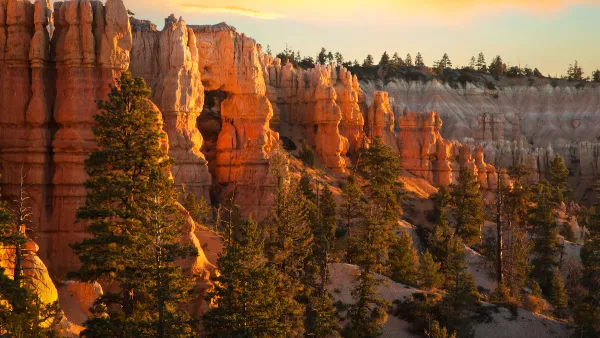
How the Great American Outdoors Act Improved Public Lands
The 2020 federal law has helped fund park maintenance projects and improve access to public lands.
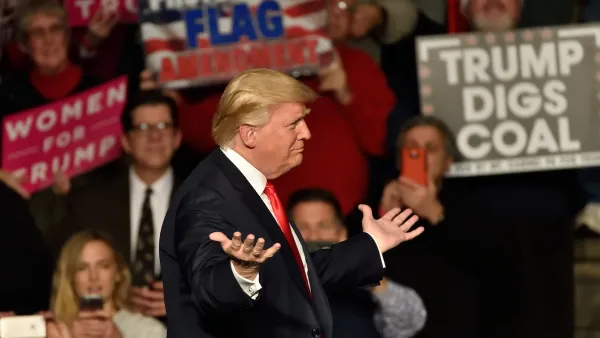
Trump Administration Wants to Remove Conservation From Approved 'Uses' of Public Land
The Department of the Interior moved to officially rescind the Public Lands Rule passed in 2024, which elevates the conservation of public lands to the same level of protection as other uses.
Public Lands Can Help Us Tackle the Housing Crisis in the West
The U.S. owns more than 650 million acres of public lands, and it has the power to sell or lease limited parcels for affordable housing. But mass disposal of public lands, as some legislators have proposed, is not the answer.

Planetizen Federal Action Tracker
A weekly monitor of how Trump’s orders and actions are impacting planners and planning in America.

The state-sanctioned urbicide of Austin
People don’t kill cities. Freeways do.

US to reduce Colorado River water deliveries to Mexico
A new Colorado Treaty amendment reduces Mexico’s Colorado River water allocation by 250,000 acre feet.

Mamdani overhauls NYC's Vision Zero plan with 100 new policy goals
The overhaul aims to reduce traffic deaths and make streets safer for pedestrians, cyclists and drivers through lower speed limits, new safety infrastructure and more.

Amtrak not solely to blame for New Jersey commuter rail's unreliability, report finds
A new study from the Garden State Initiative found that NJ Transit’s budget grew 20% across a 4 year period, but reliability declined significantly over the same period.

EPA erases limits on planet-warming pollution from power plants
Under Monday’s plan, power plants would still have some limits on how much mercury, arsenic and other contaminants they can emit.

FREE Course: Walkable City 1: Why Walkability?
After describing his path towards focusing on walkability as the essence of good planning, Jeff Speck marches through his five principal reasons for making more walkable places.
Reinventing Malls: Planning Alchemy—Turning Gray Fields Into Gold
The course focuses on the opportunities and imperatives that shape reinvention of mall sites.

Eagle County Government
Harvard University Graduate School of Design
Nashville Planning Department
The Architects Foundation
University of Cincinnati Online
The Pocatello Development Authority
The Urban Renewal Agency of the City of Pocatello
Journal of the American Planning Association