What would it actually mean to cancel rent?


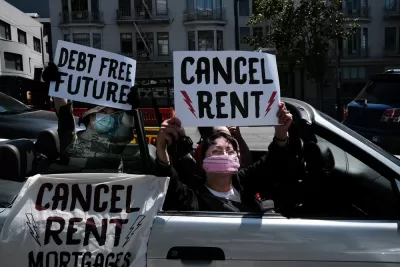
If you live in a state capital or large city, it’s likely that sometime last week you saw a caravan of honking cars pass by covered with signs calling for public officials to cancel rent. Or maybe you saw one of many banner drops from balconies or highways, or a rent strike poster pasted on a lamp post. As a new month has arrived and rent is due, the cancel-rent movement is getting louder.
Tens of millions of people have lost their jobs due to the pandemic in the last month. Even those who are covered by an eviction moratorium are now worried about accumulating back rent and ending up on the streets once the moratorium lifts.
A hotline to help people connect with assistance during the pandemic in Santa Clara County, California, gets hundreds of calls every day. And the top concern is rent, says Jeffrey Buchanan, public policy director of Working Partnerships USA, which helped to found Silicon Valley Rising, a community and labor group that staffs the hotline. “Most tenant households don’t have $400 in savings, and the average rent here is $2,700 per month. It’s heartbreaking to hear the stories of families who have no idea how they are going to make May rent.”
While nonprofit housing providers and many individual landlords are assisting their tenants who can’t pay, many others are insisting that the rent is due, and even violating eviction moratoriums; examples of that reported by ProPublica and Shelterforce are likely only the tip of the iceberg, given the lack of standardized data collection and enforcement regarding evictions. Other landlords have continued to raise rent during the shutdown, or proposed things like having people who can’t pay move into smaller apartments in the middle of shelter-in-place requirements.
“Some private landlords are saying once the moratorium is over they’ll pursue legal action,” says Arianna Feldman, communications organizer for Inquilinxs Unidxs Por Justicia (United Renters For Justice) in Minneapolis. “There’s been some retaliation. One member has had their landlord calling every day in April to say ‘When you are going to pay?’”
In response, a wide range of tenant and worker organizations are organizing around the idea of canceling rent and mortgage payments during the crisis.
“The pandemic crisis is an economic crisis that then becomes an eviction crisis,” says Davin Cardenas, national field organizer for the Right to the City Alliance. “We didn’t create this crisis; we shouldn’t suffer the effects.”
What Does Cancel Rent Actually Mean?
Organizers are still coalescing around specifics. The baseline for all proposals is that rent payments would be waived completely some period of time, not to be owed later, and without any late fees or punitive action allowed against tenants. The time frames proposed have included three months, the rest of the year, and until the national emergency is lifted.
Most supporters are also calling for a simultaneous cancellation of mortgage payments to support not only struggling homeowners, but also smaller landlords.
The question of if and how to reimburse property owners, and which ones, is more contentious.
....
FULL STORY: What Would It Mean to Cancel Rent?


Spiking Rents Putting More People at Risk of Eviction
Housing costs across the country are becoming more and more unaffordable for low- and moderate-income households, a trend that began even before the COVID-19 pandemic.
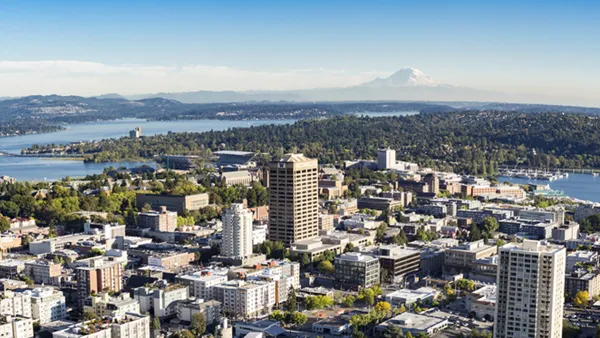
One Quarter of Washington State Renters Fear Eviction
State data show more tenants expect eviction in the coming months even as the state struggles to disburse rental assistance funds.
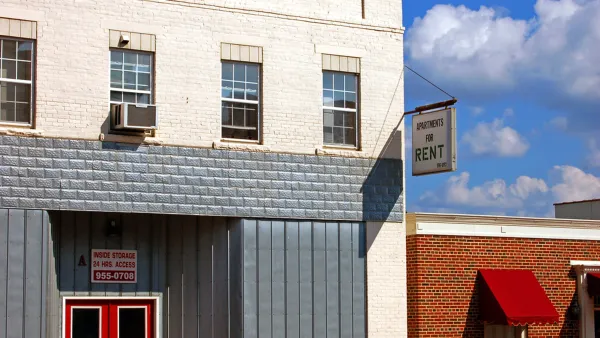
Cincinnati Tenants Can Still Access Rental Assistance Funds
Organizations in the city are working to distribute remaining rental assistance to tenants and landlords.

Planetizen Federal Action Tracker
A weekly monitor of how Trump’s orders and actions are impacting planners and planning in America.

The state-sanctioned urbicide of Austin
People don’t kill cities. Freeways do.

US to reduce Colorado River water deliveries to Mexico
A new Colorado Treaty amendment reduces Mexico’s Colorado River water allocation by 250,000 acre feet.

Brightline West’s future may rely on $6 billion federal loan
The company has until Nov. 2 to make a $400 million equity investment into its proposed high-speed rail line.

LA Metro’s ultimatum: no extra buses for LA28 if federal funding isn’t imminently secured
If Metro does not provide additional buses, LA28 organizers will have to find a new way to manage Olympic traffic. LA28’s budget does not include a line item for transit.

Colorado’s Largest Data Center Could Rise Next to Homes — Without a Public Hearing
The proposed campus would consume 11 times the power of Denver International Airport; as it has across the country, opposition mounts.

FREE Course: Walkable City 1: Why Walkability?
After describing his path towards focusing on walkability as the essence of good planning, Jeff Speck marches through his five principal reasons for making more walkable places.
Reinventing Malls: Planning Alchemy—Turning Gray Fields Into Gold
The course focuses on the opportunities and imperatives that shape reinvention of mall sites.

Eagle County Government
Harvard University Graduate School of Design
Nashville Planning Department
The Architects Foundation
University of Cincinnati Online
The Pocatello Development Authority
The Urban Renewal Agency of the City of Pocatello
Journal of the American Planning Association