In an effort to elevate a standard of care for livestock, an ordinance sponsored by Ald. Anthony Napolitano seeks to regulate fowl and livestock animal ownership within city limits.


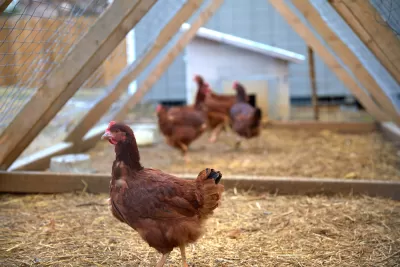
In Chicago, a proposed ordinance to amend municipal code seeks to regulate standards of care related to livestock ownership. The ordinance, sponsored by Ald. Anthony Napolitano, would require livestock owners to notify neighbors 500 feet from the residence of their animals, establish a license fee, and ban rooster ownership in the city.
"In a city easily charmed by animal tales, including last year’s Humboldt Park alligator, there are no distinct regulations about who can own livestock and where animals can be kept. In the city of Chicago, people can legally house horses, goats, pigs, donkeys, cows and sheep. But, after allegations of animal abuse arose when a dead horse was found at an Englewood home recently, officials are making a push for tighter restrictions," reports Jessica Villagomez.
At present, only dogs, horses, and beehives require registration. The ordinance would limit the types of livestock allowed on private residential properties to six fowl and two livestock animals. Owners would be required to maintain a minimum of 4 square feet per fowl and 15 square feet per livestock animal.
Some livestock owners take issue with the 500-foot notification policy, considering the ordinance to be unnecessarily bureaucratic.
Read the full story: It’s not often you see chicken, ducks and goats in Chicago. Under a proposed ordinance, you may lose your chance.

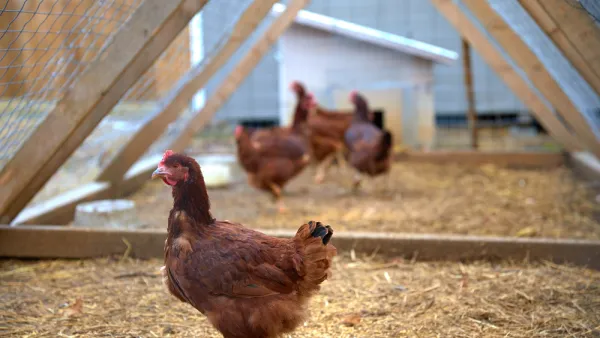
Ordinance Would Limit Chickens, Livestock in Chicago Residential Neighborhoods
Noise and smeall are the common complaints as more residents of urban areas bring animals to their home to live more sustainably.
Welcome to the 'Age of Animals as Infrastructure'
Animals are more than just guests or co-habitants in our cities, according to an article in New Scientist—they're a critical component of the infrastructure that keeps cities running.
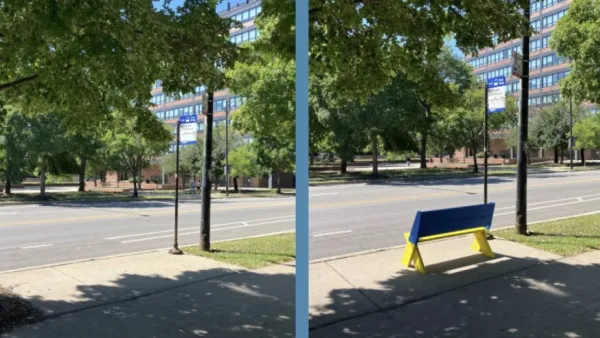
Guerilla urbanists are building DIY bus stop benches in Chicago
The new benches are not officially sanctioned or permitted, but the residents who placed them hope they will be the start of a network of DIY benches across the city.

Planetizen Federal Action Tracker
A weekly monitor of how Trump’s orders and actions are impacting planners and planning in America.

The state-sanctioned urbicide of Austin
People don’t kill cities. Freeways do.

US to reduce Colorado River water deliveries to Mexico
A new Colorado Treaty amendment reduces Mexico’s Colorado River water allocation by 250,000 acre feet.

Brightline West’s future may rely on $6 billion federal loan
The company has until Nov. 2 to make a $400 million equity investment into its proposed high-speed rail line.

LA Metro’s ultimatum: no extra buses for LA28 if federal funding isn’t imminently secured
If Metro does not provide additional buses, LA28 organizers will have to find a new way to manage Olympic traffic. LA28’s budget does not include a line item for transit.

Colorado’s Largest Data Center Could Rise Next to Homes — Without a Public Hearing
The proposed campus would consume 11 times the power of Denver International Airport; as it has across the country, opposition mounts.

FREE Course: Walkable City 1: Why Walkability?
After describing his path towards focusing on walkability as the essence of good planning, Jeff Speck marches through his five principal reasons for making more walkable places.
Reinventing Malls: Planning Alchemy—Turning Gray Fields Into Gold
The course focuses on the opportunities and imperatives that shape reinvention of mall sites.

Eagle County Government
Harvard University Graduate School of Design
Nashville Planning Department
The Architects Foundation
University of Cincinnati Online
The Pocatello Development Authority
The Urban Renewal Agency of the City of Pocatello
Journal of the American Planning Association