A tourist visit through the oldest, densest part of Delhi, India, reveals the chaos and beauty of hyperdensity.


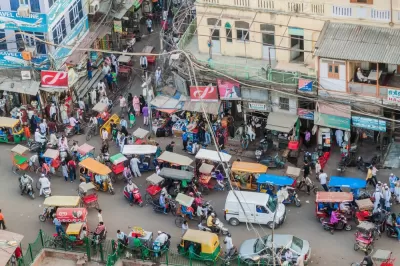
"The amount of activity going on beyond the tea-maker, in the small plaza where three of Old Delhi’s major streets converge ("major" meaning a street that can accommodate two cars heading in opposite directions), renders his pyrotechnics nearly unnoticeable. They pale in comparison with the multidimensional chaos of bicycles, scooters, tuk-tuks, pedicabs, hand carts, and foot traffic—and, yes, the occasional cow—that makes Old Delhi what it is."
"So consuming is Old Delhi, I suspect that many of its residents spend their entire lives there without leaving even once. Many of them probably don’t have the means to leave. Most of them may have no motivation. Everyone they know, and everyone they have ever known, lives there. I’d have been instantly lost without my tourist guide, forced to navigate a million blind corners and not get swept up in the crowd."
"Perhaps no urban environment accentuates the human body—the sheer physicality of everyday existence—so much as Old Delhi does. Traveling even a block requires contortions, dodges, near-misses, collisions, stutter-steps, and more contortions."
Read the full story: On Tea and Density in Old Delhi

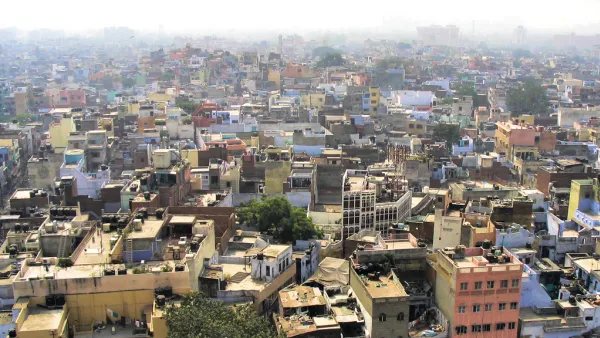
Confronting India's Urban Disaster
Contrary to popular belief, Beijing's air pollution is not nearly the worst in the world. The air of Delhi, India, is twice as polluted. For expats, this disaster raises important questions: is it ethical to live, and raise children, in India?
Can Transit Oriented Development be Effective in India?
TOD as a planning tool is new to Indian cities, where the idea is being championed as a solution to congestion, environment quality and housing equity. Can this concept, developed for the North American city, be successful in Indian cities?
Ambitious Effort to Urbanize India
The Indian government is betting big with simultaneously building a massive high speed freight corridor between Delhi & Mumbai as well the physical infrastructure for 24 new cities that will become an industrial corridor.

Amtrak, CN end decades-long dispute with eight-year agreement
The new operating agreement establishes an updated framework for the companies to work together, including processes to resolve disputes.

Judges permit Denver to divert 77,000 acre feet from the Colorado River for reservoir expansion
Overuse and climate change have caused the Colorado River’s water levels to plummet.
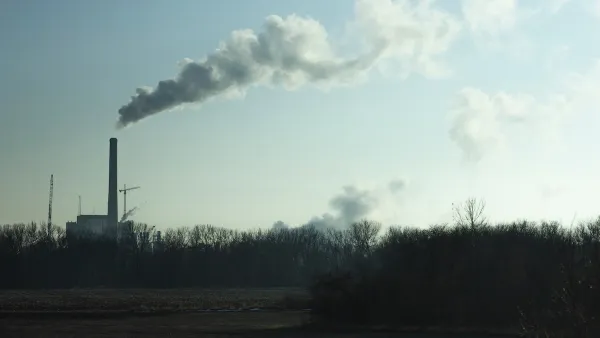
Nation's most wind-powered state turns to coal as data centers increase energy demand
For the first time in decades, Iowa has increased its generation of coal power.

Boston has spent millions making the Green Line more accessible — and there’s no end in sight
While the city has invested millions into expanding and adding platforms to the Green Line to make it more accessible, new train cars set to arrive next year will be too tall for disabled passengers to board without raising the current platforms.

Idaho may see an 18% drop in federal surface transit funding — the largest estimated cut in the US
Transit systems in rural communities are much more reliant on federal funding to provide their services.

How ‘post-disaster gentrification’ alters neighborhoods after natural calamities
After hurricanes, fires or other calamities, the original residents of a community are often replaced by younger, wealthier residents.

FREE Course: Walkable City 1: Why Walkability?
After describing his path towards focusing on walkability as the essence of good planning, Jeff Speck marches through his five principal reasons for making more walkable places.
Reinventing Malls: Planning Alchemy—Turning Gray Fields Into Gold
The course focuses on the opportunities and imperatives that shape reinvention of mall sites.

City of Wisconsin Rapids
Harvard University Graduate School of Design
KFH Group Inc.
The Architects Foundation
University of Cincinnati Online
The Pocatello Development Authority
The Urban Renewal Agency of the City of Pocatello