Guardian Cities is closing shop after six years as a valued resource on the planning and urbanism Internet.


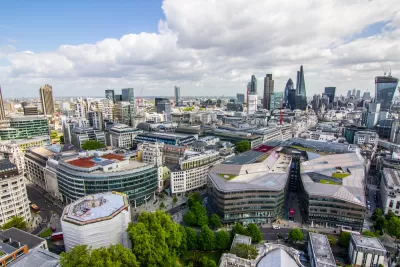
Chris Michael, editor of Guardian Cities, writes today to announce another sad development for the urbanism and planning Internet:
After many years of renewed generosity from the Rockefeller Foundation, whose arms-length support meant that we retained full editorial independence in every way, Cities is closing its doors.
The news of the site's closure is located toward the end of the story, after a well-deserved victory lap, or sorts, touting the site's many successes of journalism. Michael also makes a promise that the final days of Guardian Cities will be devoted to making a more forceful argument for five big, ambitious interventions to improve cities. Also, urbanism will still be a subject of The Guardian's journalistic energy:
The Guardian, of course, will continue to focus on urban journalism – in our terrific international news coverage, our Environment, Science, Health, Technology, Education, Society and Culture desks, the Global Development site, our groundbreaking project The Upside, and elsewhere. I strongly encourage you to follow those sites by signing up to some newsletters and social media accounts. You can also follow me on Twitter or Instagram where I’ll continue to aggregate the best of the Guardian’s urban content.
The demise of Guardian Cities is the latest in a string of media-landscape-altering changes, after Curbed cut back on its local sites and Bloomberg bought CityLab. The Rockefeller Foundation has also been central to changes to the institutional centers of planning in recent years, namely by pulling funding for the 100 Resilient Cities program.
Read the full story: Guardian Cities: farewell from the editor


Chicago's Esteemed Architecture Critic, Blair Kamin, Moves On
One of two architecture critics working at major daily newspapers to receive the Pulitzer Prize for Criticism, Blair Kamin announced his retirement last week via Twitter.
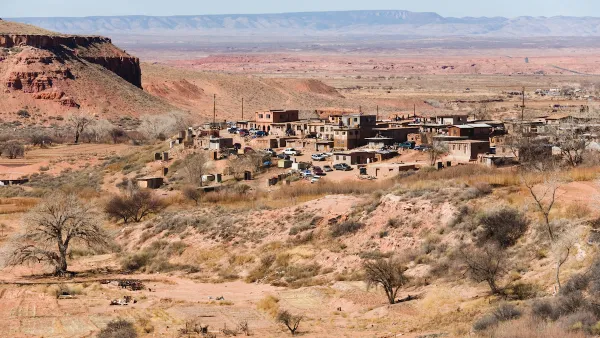
Tribal Communities Create Own Broadband Networks
Access to quality internet connectivity in many tribal and rural communities lags far behind other regions.

Virginia Coalition Calls for Increased Data Center Industry Oversight
Environmental groups voice concern that the states large, and growing, number of data centers is putting unsustainable pressure on natural resources and utility infrastructure.

Planetizen Federal Action Tracker
A weekly monitor of how Trump’s orders and actions are impacting planners and planning in America.

California plans to bury El Niño’s downpour
If the state plays its cards right, it may be able to store a billion acre-feet of El Niño’s water in aquifers.

Desperate measures: Advocates weigh draining Lake Powell to fill Colorado River
Draining the reservoir could reduce evaporation losses by a couple hundred thousand acre-feet.

In Texas, data centers are swallowing promised parkland
Residents who moved to Taylor, Texas for a rural community now have to contend with three data centers in their backyard.

How a Chicago-sized wind farm beat the odds and powered on
The project spanned five presidential administrations and a standoff with a U.S. military base.

MTA gives itself 30 days to transform pit into basketball court
The site has been under construction since 2022; the city originally estimated it would finish the court in 2024.

FREE Course: Walkable City 1: Why Walkability?
After describing his path towards focusing on walkability as the essence of good planning, Jeff Speck marches through his five principal reasons for making more walkable places.
Reinventing Malls: Planning Alchemy—Turning Gray Fields Into Gold
The course focuses on the opportunities and imperatives that shape reinvention of mall sites.

City of Rosemead
Rutgers University, Edward J. Bloustein School of Planning and Public Policy
One Hundred Miles
Hunter College, City University of New York (CUNY)
The Architects Foundation
University of Cincinnati Online
City of Cambridge
Montrose County
The Pocatello Development Authority