Suburban malls around the country are shutting down, and the huge spaces offer a variety of opportunities for creative reuse.


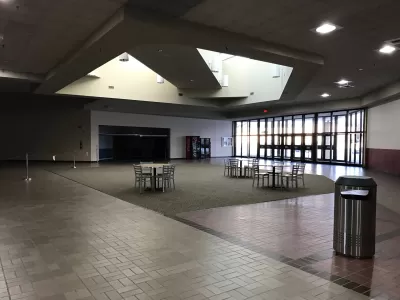
"Dozens [of malls] nationwide have shuttered in the past decade, and a quarter of the estimated 1,100 that remain are projected to follow by 2022, opening large swaths of empty space," writes Abha Bhattarai. The empty structures mean that millions of square feet of retail space and parking lots have been left behind.
But developers and municipalities are also seeing the potential to repurpose these spaces in a number of very different ways. For example, in Nashville, Vanderbilt University took over a mall property and spent $99 million to renovate the facilities for specialty clinics, says Bhattarai. "Medical clinic leases at shopping malls have grown nearly 60 percent since 2017, while leases for clothing stores have fallen about 10 percent, according to data from CoStar Group."
Bhattarai describes other examples of abandoned malls transformed for new uses: megachurches, homeless shelters, fitness centers, and video gaming hubs. Some tenants are using spaces temporarily, while others are making large-scale renovation investments. In addition, some of these former malls still house retail establishments, an arrangement that developers see as a win-win since visitors to a gym, for example, are also potential shoppers at stores at the same location.
FULL STORY: Abandoned malls are sputtering back to life with megachurches, rooftop pools and homeless shelters

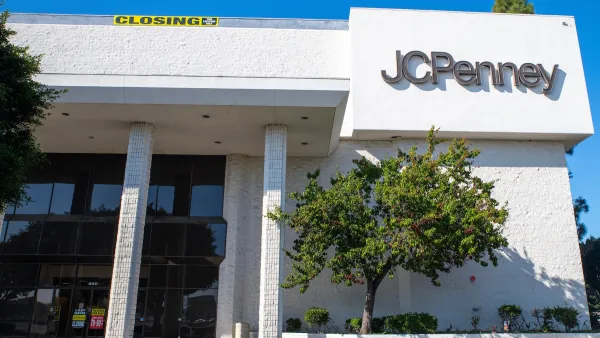
Thousands of new homes are replacing Orange County's dead malls
Southern California cities are adjusting their zoning codes to support mixed-use and residential developments that are replacing dying shopping malls.
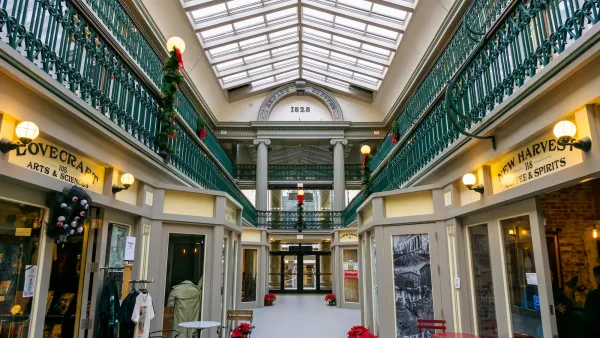
You Can Live Inside America’s Oldest Indoor Shopping Mall
The Arcade in Providence, Rhode Island, first built in 1828, was redeveloped into 48 micro-housing units.
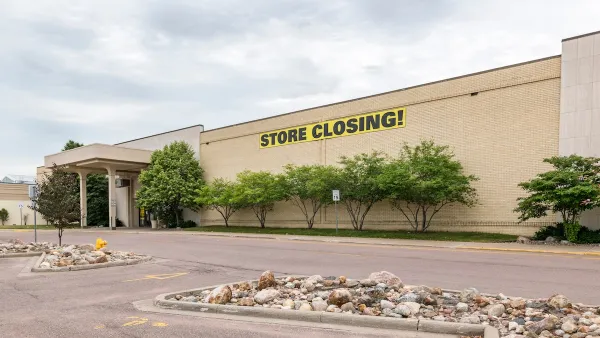
Shifts in Shopping: Transforming Malls Into Parks
Maybe zombie malls still have a second life — one with a little greenery.

Planetizen Federal Action Tracker
A weekly monitor of how Trump’s orders and actions are impacting planners and planning in America.

The state-sanctioned urbicide of Austin
People don’t kill cities. Freeways do.

US to reduce Colorado River water deliveries to Mexico
A new Colorado Treaty amendment reduces Mexico’s Colorado River water allocation by 250,000 acre feet.

5 New England states march closer to 800 megawatt wind energy project
Securing federal approval for the project may be complicated under the Trump administration, which has historically been hostile towards domestic wind power.

Baltimore to break ground on $50 million Transit Priority Project
The project will bring faster bus trips, safer streets and better bike connections to Baltimore.

Airbnb launches $250 million 'last-dollar financing' housing accelerator, makes first investment in Austin
The company will put $6.4 million towards affordable housing development in Texas’ capital.

FREE Course: Walkable City 1: Why Walkability?
After describing his path towards focusing on walkability as the essence of good planning, Jeff Speck marches through his five principal reasons for making more walkable places.
Reinventing Malls: Planning Alchemy—Turning Gray Fields Into Gold
The course focuses on the opportunities and imperatives that shape reinvention of mall sites.

Eagle County Government
Harvard University Graduate School of Design
Nashville Planning Department
The Architects Foundation
University of Cincinnati Online
The Pocatello Development Authority
The Urban Renewal Agency of the City of Pocatello
Journal of the American Planning Association