Gentrification "mutates particular neighborhoods" while scarce housing "squeezes entire regions," Devin Michelle Bunten writes. Conflating the two can lead to inaccuracies in understanding.


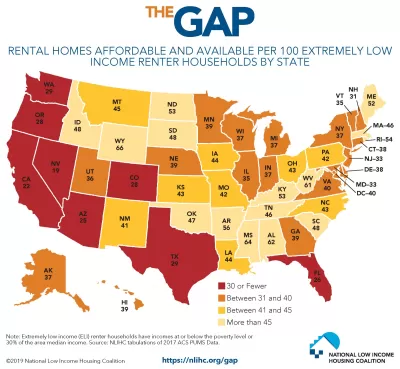
Gentrification and the housing shortage are "related but different," Devin Michelle Bunten begins. "Both crises raise prices, strain families, and reallocate wealth to the already privileged. But the problems are distinct. Solving both crises at once requires us to get the details right."
Bunten goes on to discuss the causal distinctions between the two problems. "Occasionally, physically attractive locations come to be occupied by low-income communities, immigrant communities, black communities. Neighborhoods like these are ripe for gentrification." Meanwhile, the housing shortage "is a region-wide round of musical chairs, in which the winners sat down before the music even stopped."
While Bunten gestures toward the need for distinct strategies to tackle gentrification and scarce housing, she does point to how eliminating "wealth sieve" land use policies like minimum lot sizes could galvanize progress on both. "Housing policies are designed to ensure that new neighborhood entrants are as rich or richer than those who arrived before them," she writes.
In the end, "policies introduced to fight gentrification—rent control and tenant protections—may ameliorate the effects of neighborhood change, but they won't build new homes."
FULL STORY: Untangling the Housing Shortage and Gentrification


San Francisco Mayor’s ‘Family Zoning’ Plan Faces Pushback, Displacement Concerns
Newly proposed legislation aims to protect long-term tenants from displacement caused by Mayor Lurie’s proposed zoning reform plan, which would allow for more housing construction in parts of the city.

Louisville Launches ‘Anti-Displacement Tool’
After a years-long, tenant-led effort, Louisville will use a new tool to analyze whether a proposed housing development can meet a neighborhood’s housing needs and income levels. If it doesn’t, the city won’t subsidize it.

Pittsburgh Mayor Proposes Zoning Changes to Curb Housing Shortage
The mayor’s plan includes legalizing ADUs in single-family neighborhoods, eliminating parking requirements, and adding new affordability requirements to buildings with over 20 units.

The state-sanctioned urbicide of Austin
People don’t kill cities. Freeways do.

US to reduce Colorado River water deliveries to Mexico
A new Colorado Treaty amendment reduces Mexico’s Colorado River water allocation by 250,000 acre feet.

New Jersey’s second-largest city bans standalone data centers
Jersey City will continue to allow co-location facilities, such as those meant for research institutions that store their own data.

Amtrak not solely to blame for New Jersey commuter rail's unreliability, report finds
A new study from the Garden State Initiative found that NJ Transit’s budget grew 20% across a 4 year period, but reliability declined significantly over the same period.

EPA erases limits on planet-warming pollution from power plants
Under Monday’s plan, power plants would still have some limits on how much mercury, arsenic and other contaminants they can emit.

Phoenix announces new on-demand transit service, more frequent RAPID buses
Both new services will launch in October, and are part of Phoenix's Project Effective Access Solutions for Easing Congestion.

FREE Course: Walkable City 1: Why Walkability?
After describing his path towards focusing on walkability as the essence of good planning, Jeff Speck marches through his five principal reasons for making more walkable places.
Reinventing Malls: Planning Alchemy—Turning Gray Fields Into Gold
The course focuses on the opportunities and imperatives that shape reinvention of mall sites.

Eagle County Government
Harvard University Graduate School of Design
Nashville Planning Department
The Architects Foundation
University of Cincinnati Online
The Pocatello Development Authority
The Urban Renewal Agency of the City of Pocatello
Journal of the American Planning Association