A story of gentrification in an already relatively white city.


"South Seattle is by far the most racially diverse area of the city, one that has welcomed many immigrant communities over the years. And unlike North, Central and West Seattle, the South End was the only part of the city where white people did not make up the largest racial/ethnic group," writes Gene Balk.
Note the past tense, because white people are now the largest racial/ethnic group on South Seattle, according to recent Census data. That plurality isn't yet a majority, but the trend is clear, according to Balk.
"This change in the South End is, of course, largely a story of gentrification," explains Balk. "Many neighborhoods in Seattle have felt the effects of gentrification in recent years, including those in South Seattle. Light rail opened here in 2009, which made the South End a more attractive location to downtown commuters. As you’d expect, the cost of living has gone up a lot."
FULL STORY: As South Seattle gentrifies, white people become largest racial group

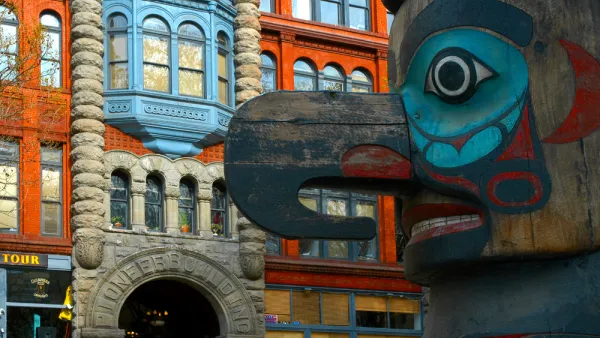
How Seattle Plans to Leverage Public Resources to Protect Arts and Culture
The Cultural Space Agency, proposed in Seattle, would be a new type of public development authority, a city agency with a mission to preserve and create arts and culture in the face of gentrification.
Disaster Gentrification and COVID-19
Disaster gentrification is a widely documented phenomenon, like in New Orleans after Hurricane Katrina. The coronavirus and the resulting economic downturn could have similar consequences.
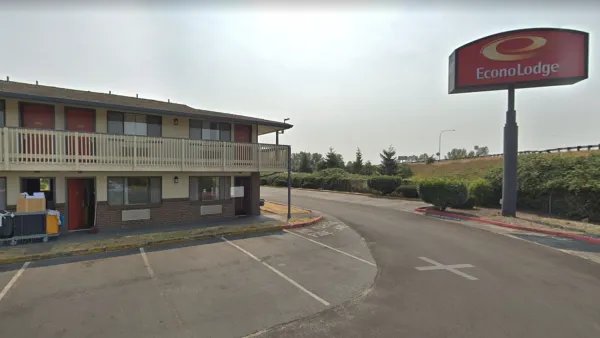
Dispute Over Siting of Coronavirus Quarantine Facility in Washington State
The Seattle area is ground zero for the coronavirus in the U.S., where 10 of the 11 deaths as of March 5 have occurred. King County's decision to purchase a motel in Kent for use as a quarantine facility is being met with protests by city officials.

Planetizen Federal Action Tracker
A weekly monitor of how Trump’s orders and actions are impacting planners and planning in America.

The state-sanctioned urbicide of Austin
People don’t kill cities. Freeways do.

US to reduce Colorado River water deliveries to Mexico
A new Colorado Treaty amendment reduces Mexico’s Colorado River water allocation by 250,000 acre feet.

Mamdani overhauls NYC's Vision Zero plan with 100 new policy goals
The overhaul aims to reduce traffic deaths and make streets safer for pedestrians, cyclists and drivers through lower speed limits, new safety infrastructure and more.

Amtrak not solely to blame for New Jersey commuter rail's unreliability, report finds
A new study from the Garden State Initiative found that NJ Transit’s budget grew 20% across a 4 year period, but reliability declined significantly over the same period.

EPA erases limits on planet-warming pollution from power plants
Under Monday’s plan, power plants would still have some limits on how much mercury, arsenic and other contaminants they can emit.

FREE Course: Walkable City 1: Why Walkability?
After describing his path towards focusing on walkability as the essence of good planning, Jeff Speck marches through his five principal reasons for making more walkable places.
Reinventing Malls: Planning Alchemy—Turning Gray Fields Into Gold
The course focuses on the opportunities and imperatives that shape reinvention of mall sites.

Eagle County Government
Harvard University Graduate School of Design
Nashville Planning Department
The Architects Foundation
University of Cincinnati Online
The Pocatello Development Authority
The Urban Renewal Agency of the City of Pocatello
Journal of the American Planning Association