The Trump administration is working on multiple fronts to liquidate public land in Alaska as the state struggles to balance its budget.


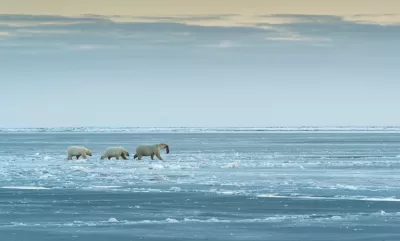
Jenny Rowland-Shea, Sung Chung, Sally Hardin, Matt Lee-Ashley, and Kate Kelly sound an alarm about the actions of the Trump administration to liquidate public lands in Alaska, aided by a state government beset by budget shortfalls as the oil and gas extraction industry falters.
The article describes the stakes of the Trump administration's efforts in superlative terms: "The Trump administration is quietly leading one of the largest liquidations of America’s public lands since the late 19th century," and, "[i]f fully implemented, this effort could result in the transfer, sale, or private exploitation of more than 28.3 million acres of public lands in Alaska…"
After explaining the context of the Alaskan economy's dependence on oil and gas companies, and the state government's dependence on the taxes generated by those companies, the article focuses on specific examples of the public land targeted by the Trump administration. Included in each section on these specific areas of Alaska are descriptions of the specific tactics used by the Trump administration to proceed with liquidation of the public land, including 9.2 million acres of the Tongass National Forest, 1.6 million acres in the Arctic National Wildlife Refuge, 13.35 million acres in the National Petroleum Reserve-Alaska, and more.
Hat tip to Chris D'Angleo for sharing the link to the source article.
FULL STORY: A Vast Liquidation of Public Lands Is Underway in Alaska

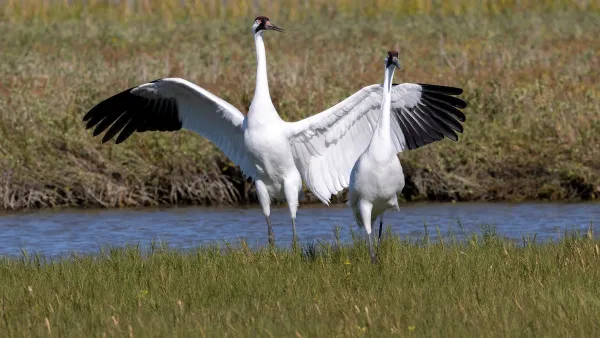
Key Wins for Conservation in 2024
The year brought some important victories to advocates for public lands, national monuments, and the reclamation of Indigenous history.
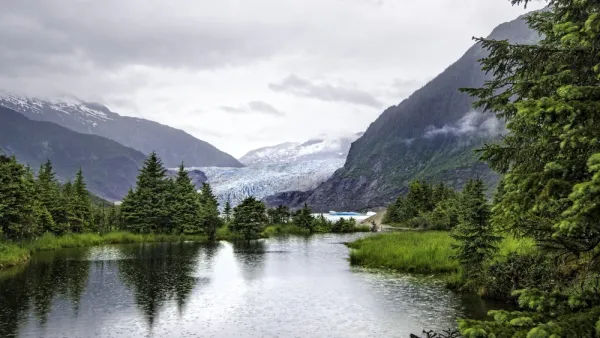
Protections Stripped From Alaska's Tongass National Forest
The Trump administration has, in the past week before the election, achieved one of the largest rollbacks of public land protections of its entire tenure.
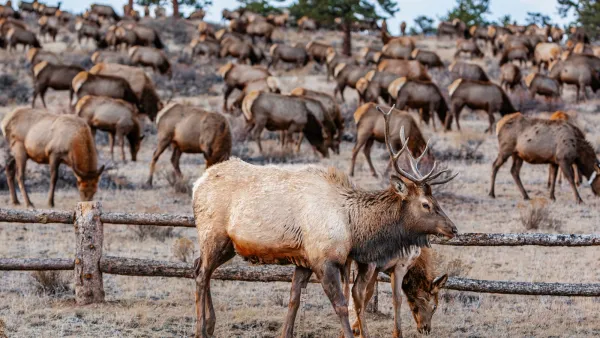
Colorado oil and gas land lease on public land could imperil nation's largest elk herd
The federal government approved the largest land lease to oil and gas interests in Colorado history.

Planetizen Federal Action Tracker
A weekly monitor of how Trump’s orders and actions are impacting planners and planning in America.

The state-sanctioned urbicide of Austin
People don’t kill cities. Freeways do.

US to reduce Colorado River water deliveries to Mexico
A new Colorado Treaty amendment reduces Mexico’s Colorado River water allocation by 250,000 acre feet.

5 New England states march closer to 800 megawatt wind energy project
Securing federal approval for the project may be complicated under the Trump administration, which has historically been hostile towards domestic wind power.

Baltimore to break ground on $50 million Transit Priority Project
The project will bring faster bus trips, safer streets and better bike connections to Baltimore.

Airbnb launches $250 million 'last-dollar financing' housing accelerator, makes first investment in Austin
The company will put $6.4 million towards affordable housing development in Texas’ capital.

FREE Course: Walkable City 1: Why Walkability?
After describing his path towards focusing on walkability as the essence of good planning, Jeff Speck marches through his five principal reasons for making more walkable places.
Reinventing Malls: Planning Alchemy—Turning Gray Fields Into Gold
The course focuses on the opportunities and imperatives that shape reinvention of mall sites.

Eagle County Government
Harvard University Graduate School of Design
Nashville Planning Department
The Architects Foundation
University of Cincinnati Online
The Pocatello Development Authority
The Urban Renewal Agency of the City of Pocatello
Journal of the American Planning Association