The Danish capital has an ambitious goal to be the world’s greenest and most bike-friendly city, and it is taking big steps to make that happen soon.


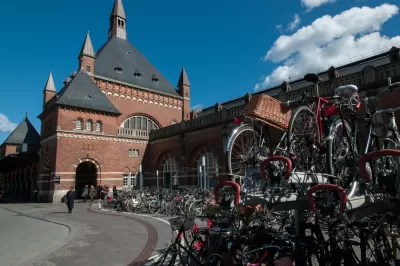
"Six years ago, the city of Copenhagen set the goal to become the first carbon-neutral capital in the world, shrinking energy use as it shifts to renewable energy and produces enough extra green power to offset other remaining emissions," writes Adele Peters.
The city is pursuing a variety of strategies and programs to reach that end by 2025. A focus on transportation is central to the plan, including urban planning and design that makes walking and access to transit priorities, a proposal to ban diesel vehicles from the city, and expansion of its already extensive bicycle network.
Peters reports that Copenhagen is also moving away from electricity to renewable energy. "To date, it has installed 62 massive wind turbines with a capacity of 158 megawatts; by 2025, it plans to have an installed capacity of 460 megawatts." The city is also planning longer-term strategies such as harnessing geothermal energy and increasing the energy efficiency of buildings.
Read the full story: How Copenhagen plans to reach carbon-neutral status in just six years

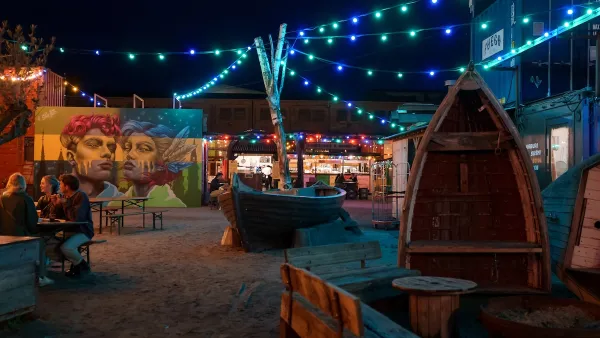
The coolest Copenhagen urban retrofit you’ve never heard of
In Denmark, a ship-building-site-turned-cultural-hub demonstrates the power of mixed-use spaces and organic planning.
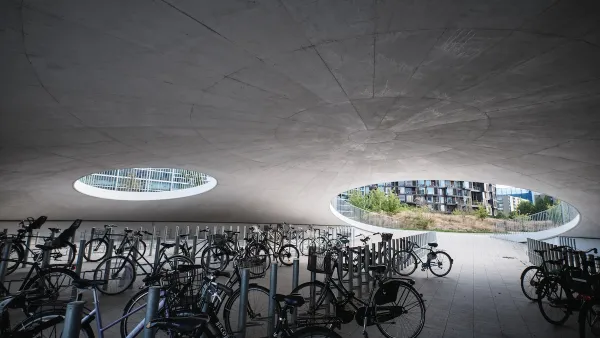
How Copenhagen Became a ‘Sponge City’
The Danish capital is implementing a massive, multi-pronged strategy to build resilience against flooding and shore up water supplies during drought periods.
Carbon Emissions Back on the Rise—Along With Cleaner Energy
Climate-friendly government policies and recent investments by energy companies are accelerating the growth of renewables.

Planetizen Federal Action Tracker
A weekly monitor of how Trump’s orders and actions are impacting planners and planning in America.

California plans to bury El Niño’s downpour
If the state plays its cards right, it may be able to store a billion acre-feet of El Niño’s water in aquifers.

Desperate measures: Advocates weigh draining Lake Powell to fill Colorado River
Draining the reservoir could reduce evaporation losses by a couple hundred thousand acre-feet.

California city breaks ground on transit connector
The project includes three mobility hubs and a pedestrian bridge.

After public outcry, Massachusetts city releases housing development tracker
Cambridge’s tracker currently shows 250 housing projects in various stages of development.

40 years after approval, Chicago breaks ground on new park
The park honors Jean Baptiste Point du Sable, the city’s first permanent non-native settler.

FREE Course: Walkable City 1: Why Walkability?
After describing his path towards focusing on walkability as the essence of good planning, Jeff Speck marches through his five principal reasons for making more walkable places.
Reinventing Malls: Planning Alchemy—Turning Gray Fields Into Gold
The course focuses on the opportunities and imperatives that shape reinvention of mall sites.

City of Rosemead
Rutgers University, Edward J. Bloustein School of Planning and Public Policy
One Hundred Miles
Hunter College, City University of New York (CUNY)
The Architects Foundation
University of Cincinnati Online
City of Cambridge
Montrose County
The Pocatello Development Authority