The Ride smartphone app, which has gathered millions of miles of bike trip data to help inform bike planning and encourage cycling, is moving on to micromobility.


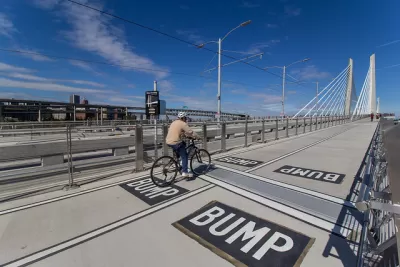
Jonathan Maus reports that the Ride App for tracking biking trips is shutting down this month. Ride App has recorded information through riders’ smartphones for 12 million cycling miles. "It would automatically (and anonymously) log bicycle trips and give users the ability to quickly rate their rides. The idea was to not only understand which bikeways people preferred, but their general level of satisfaction with them."
Ride Report started in 2015 in Portland, Oregon, with a device to count bicycle trips, and the Ride App followed. "[William] Henderson’s goal was to have thousands of 'rolling bikeway evaluators' that could help cities analyze and develop new cycling infrastructure while giving users encouragement to ride more by doling out playful badges for various riding milestones," writes Maus.
Ride Report will be shifting its focus to micromobility to help cities manage data related to shared electric bikes and scooters.
FULL STORY: https://bikeportland.org/2019/08/05/started-in-portland-the-ride-apps-ride-is-over-303007

Investing in the 'Smart Cities' Approach to Bike Planning
Smart cities tech isn't just for cars. Portland is out to prove that sensors and data can benefit all modes of travel.
Buy Mass Transit Tickets With a Smartphone In Portland
Portland launches first U.S. mobile ticketing apps to enable mass transit riders to buy tickets with their iPhone and Android smartphones.
In two U.S. cities, new technology is rewarding slower driving with a quicker commute
Albuquerque, New Mexico and Portland, Oregon have introduced traffic lights that are red by default, and turn green faster if drivers approach while going at or below the speed limit.

Planetizen Federal Action Tracker
A weekly monitor of how Trump’s orders and actions are impacting planners and planning in America.

The state-sanctioned urbicide of Austin
People don’t kill cities. Freeways do.

US to reduce Colorado River water deliveries to Mexico
A new Colorado Treaty amendment reduces Mexico’s Colorado River water allocation by 250,000 acre feet.

Amtrak not solely to blame for New Jersey commuter rail's unreliability, report finds
A new study from the Garden State Initiative found that NJ Transit’s budget grew 20% across a 4 year period, but reliability declined significantly over the same period.

EPA erases limits on planet-warming pollution from power plants
Under Monday’s plan, power plants would still have some limits on how much mercury, arsenic and other contaminants they can emit.

Phoenix announces new on-demand transit service, more frequent RAPID buses
Both new services will launch in October, and are part of Phoenix's Project Effective Access Solutions for Easing Congestion.

FREE Course: Walkable City 1: Why Walkability?
After describing his path towards focusing on walkability as the essence of good planning, Jeff Speck marches through his five principal reasons for making more walkable places.
Reinventing Malls: Planning Alchemy—Turning Gray Fields Into Gold
The course focuses on the opportunities and imperatives that shape reinvention of mall sites.

Eagle County Government
Harvard University Graduate School of Design
Nashville Planning Department
The Architects Foundation
University of Cincinnati Online
The Pocatello Development Authority
The Urban Renewal Agency of the City of Pocatello
Journal of the American Planning Association