A developer just bought a Denver-area golf course in the hopes of some day rezoning the site for residential and commercial development. Open space advocates have other ideas, as does the city (for now).



"While Denver was hosting urban planners from 18 nations recently for a conference on green space, residents were launching a campaign to preserve 155 acres of open space at the Park Hill Golf Course, which was sold to a developer last month," reports Bruce Finley.
The Park Hill property is subject to a 1997 conservation easement that requires the land to work either as a golf course or other recreational uses, like ball fields or tennis courts.
"That easement remains even after Westside Investment Partners bought the land for $24 million last month," according to Finley. "But Westside managing principal and founder Andy Klein aims to persuade City Council members to change the easement and rezone the property, which they have the power to do, to allow residential and commercial construction."
That's where Save Open Space Denver (SOS Denver)and the Inter-Neighborhood Cooperation come in—the organizations are advocating to preserve all 155 acres of the land in keeping with the easement.
According to Finley, the entire drama is playing out in context of a larger controversy about the role of open space in the future of Denver—a city that envisions itself as a "city within a park."
Meanwhile, the golf course is closed as the city implements a new stormwater management system on the site as part of a $1.4 billion citywide effort.
Read the full story: Denver residents take a stand on Park Hill Golf Course as green space dwindles citywide

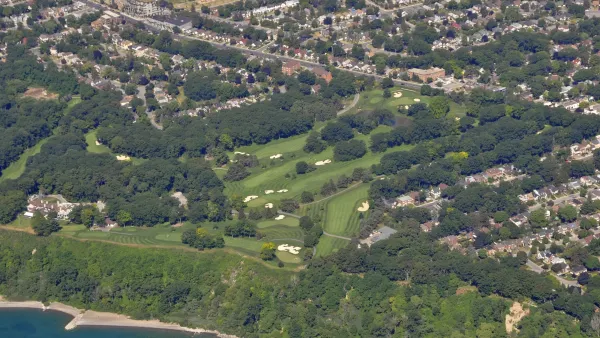
Toronto Searching for a Future for its Public Golf Courses
Amid calls to convert the city's golf courses to other uses, Toronto, Ontario city staff are trying to figure out a middle ground between competing interests.

Denver Voters Will Weigh Open Space Development
Two competing initiatives seek to change city regulations for residential and commercial development on the city's parklands and open spaces.
A Comprehensive Plan for Every Neighborhood Park
Minneapolis wants more equity in its parks spending—and new plans are a key step in the process of delivering more equitable results.

Planetizen Federal Action Tracker
A weekly monitor of how Trump’s orders and actions are impacting planners and planning in America.

Amtrak, CN end decades-long dispute with eight-year agreement
The new operating agreement establishes an updated framework for the companies to work together, including processes to resolve disputes.

Judges permit Denver to divert 77,000 acre feet from the Colorado River for reservoir expansion
Overuse and climate change have caused the Colorado River’s water levels to plummet.

NYC DOT wants faster, more permanent street upgrades
The city is examining ways to build more concrete infrastructure without getting entangled in 'decades-long' projects.

'Something we’ve never seen before:' rising utility rates could strain city finances nationwide
Data centers, climate change and other factors have caused utility rates in the United States to increase by 38% since 2020.

Trump to overrule local leaders, lease millions of acres of America’s Pacific Island territories’ seafloors to mining companies
International law says that the Indigenous people of America’s territories have a right to prior and informed consent regarding projects that impact their countries.

FREE Course: Walkable City 1: Why Walkability?
After describing his path towards focusing on walkability as the essence of good planning, Jeff Speck marches through his five principal reasons for making more walkable places.
Reinventing Malls: Planning Alchemy—Turning Gray Fields Into Gold
The course focuses on the opportunities and imperatives that shape reinvention of mall sites.

Harvard University Graduate School of Design
KFH Group Inc.
Greater Baltimore Committee
The Architects Foundation
University of Cincinnati Online
The Pocatello Development Authority
The Urban Renewal Agency of the City of Pocatello